Edge AI Market Projected to Surpass $80 Billion by 2029, New TrendForce Report Reveals

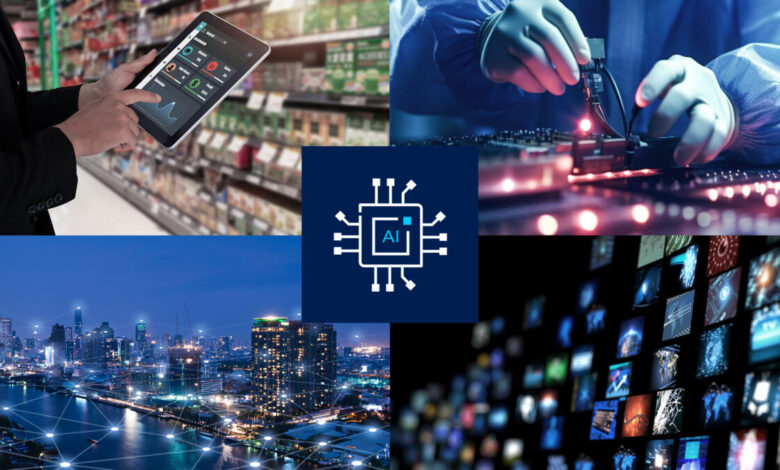
As digital transformation accelerates globally, a significant paradigm shift is underway in Artificial Intelligence. A new whitepaper released by market intelligence firm TrendForce and supported by COMPUTEX TAIPEI indicates that the “Edge AI” market is poised for explosive growth.
The report, titled “The Rise of Edge AI: Making Traffic Smoother, Factories Smarter, and Shopping More Convenient,” projects the global market will exceed $80 billion by 2029, growing at a Compound Annual Growth Rate (CAGR) of 23.2%.
Organized by TrendForce’s Topology Research Institute (TRI), the research highlights how advances in computing hardware are pushing intelligence away from centralized clouds and directly into everyday devices.
The Shift from Cloud to Edge
Traditionally, AI relied on sending data to data centers for processing. The TrendForce report details how Edge AI processes data locally on the device, offering distinct advantages over cloud-centric models:
- Real-time Analysis: Drastically lower latency for immediate decision-making.
- Privacy and Security: Data is processed on-device, enhancing privacy protection.
- Cost Efficiency: Preliminary filtering reduces the volume of data transmission, lowering bandwidth costs.
- Reliability: Decentralized, offline capabilities ensure function even without internet connectivity.
Transforming Key Industries
The study identifies four major sectors where Edge AI is currently driving innovation:
- Smart Transportation: Edge AI is revolutionizing traffic management through real-time identification of vehicles and pedestrians. The report notes that technologies like License Plate Recognition and traffic flow analysis are now supporting immediate decision-making for autonomous vehicles and traffic signals, significantly improving flow and enforcement.
- Smart Manufacturing (Industry 4.0): In the factory setting, the research highlights the shift toward “Digital Twins” and predictive maintenance. By processing data at the device level, manufacturers can achieve real-time defect detection and equipment status monitoring, allowing machinery to automatically generate inspection reports.
- Smart Retail: Retailers are utilizing Edge AI for customer behavior analysis, optimizing store layouts based on movement paths and dwell times. The report points to innovations such as shelf inventory management that automatically notifies staff for restocking and unmanned store checkouts utilizing machine vision.
- Consumer Electronics: Personal devices are becoming increasingly autonomous. The study describes how smartphones and wearables now use local AI to learn user habits, optimizing battery life and providing proactive health management—such as heart rate risk prediction—without compromising privacy.
The Generative AI Multiplier
A key trend identified by TrendForce is the integration of Generative AI into edge devices. This evolution moves beyond simple analysis to content creation. Future applications detailed in the whitepaper include:
- Automotive: Natural language driving analysis and maintenance recommendations.
- Robotics: Automated generation of action sequences and operation instructions.
- Retail: Dynamic generation of visual advertisements and personalized customer service agents.
Challenges and the Ecosystem
Despite the optimism, the report acknowledges hurdles, including power consumption constraints and the fragmentation of hardware standards. However, a robust supply chain is forming to meet these challenges. The study highlights key players like NVIDIA, Intel, Qualcomm, and AMD, who are developing specialized processors, while cloud providers like AWS and Microsoft extend their platforms to the edge.