Fortinet Targets AI-Powered Defense and Global Partnerships to Combat Escalating Cyber Threats

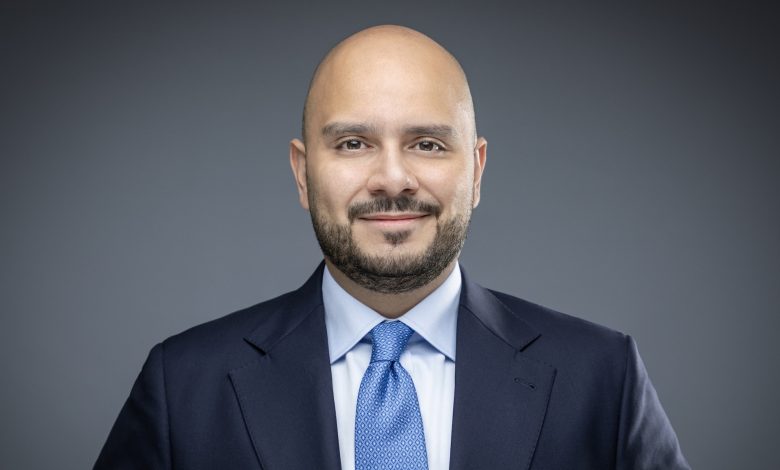
As the UAE accelerates AI adoption, 5G rollout, and cloud migration—fueling innovation in government, finance, and education—Shadi Khuffash, the Senior Regional Director for South Middle East at Fortinet, warns of widening attack surfaces and industrialized cybercrime.
What opportunities do you foresee for 2026, and how do you plan to leverage them?
The UAE’s strong economic growth is expected to continue in 2026, thanks to rapid digital transformation, acceleration of AI adoption and high penetration of 5G coverage and high-speed internet. Over the last year we witnessed extensive cloud adoption in the region and have seen government agencies embed AI into services in various sectors including law enforcement and education, a trend that is likely to continue. The banking and financial services sector is another area that is embracing new technologies and we will see interesting new use cases in the next twelve months.
While this progress brings many benefits, digital transformation does broaden the attack surface. At the same time, AI allows malicious actors increase the speed, frequency and scale of attacks. As a strategic and trusted cybersecurity partner in the region, Fortinet will continue to support organisations in protecting their critical digital and operational infrastructures. 2026 will see defenders requiring to move to machine-speed defense to combat cyberthreats, involving a continuous process of intelligence, validation, and containment.
What major challenges did you encounter this year, and how did you address them?
A big challenge has been and still is the continued industrialisation of cybercrime, the cost of which is set to become the size of the world’s third largest economy by 2029 when measured by GPP. To counter this, in 2025, Fortinet advanced its multi-faceted approach to cybersecurity. From a technology perspective, Fortinet continued to develop its unified platform vision, offering enhancements across the Fortinet Security Fabric covering cloud, AI, quantum safety and more.
Protecting the organisation is not enough, however. Combating international cybercrime requires a coordinated global response. Initiatives such as INTERPOL’s Operation Serengeti 2.0, supported by Fortinet and other private-sector partners, demonstrate how joint intelligence sharing and targeted disruption can dismantle criminal infrastructure. We also recently announced the Fortinet-Crime Stoppers International Cybercrime Bounty program, which will enable global communities to safely report cyberthreats, helping to scale deterrence and accountability.
Can you elaborate on your strategic partnerships this year and plans for next year?
Fortinet believes deeply in the strength of public-private partnerships to foster innovation and improve outcomes and will continue to partner with aligned organisations. Only recently, Fortinet announced a new initiative with Crime Stoppers International – the Global Cybercrime Bounty Programme – a first-of-its-kind initiative aimed to deter from and disrupt cybercrime through anonymous tips and rewards.
We were also named inaugural partner of The Forum of Incident Response and Security Teams (FIRST’s) new Community, Operational capacity, Resilience, and Empowerment initiative to empower cybersecurity and incident response teams worldwide through capacity building and community development. On the ground, we put continued focus on building regulatory partnerships in the countries we operate out of to align on compliance and regulation and foster private sector collaboration.
What will be your primary focus areas and strategic priorities for 2026?
Fortinet will continue its multi-pronged approach to protecting organisations from cyberattacks. We will continue to assist partners and customers to unify intelligence, automation, and human expertise into a single, responsive system that is going to be able to withstand what comes next. The next stage of cybersecurity will depend on how effectively humans and machines can operate together as adaptive systems.
We will seek to strengthen our public-private partnerships with the likes of governments, law enforcement, non-governmental institutions and other private-sector organisations around the globe to tackle the increasingly industrialised cybercrime ecosystem. At the same time, we will continue to work on tackling the cybersecurity skills gap and education programs.
How is your company approaching sustainability, digital transformation, or AI adoption in preparation for 2026?
Cybersecurity is essential for the sustainability of society and the global economy. Fortinet is committed to making progress, delivering value, and contributing to a secure and sustainable tomorrow. With more than 500 AI-related patents issued and pending, we remain committed to pushing the boundaries of AI innovation, as reflected in the continued expansion of AI capabilities across our products and services over the past year.
The growing scale of cybercrime also demands stronger public-private collaboration. For over a decade, we’ve partnered with law enforcement and cybersecurity agencies worldwide, sharing our threat intelligence and expertise. Our commitment to sustainability extends to helping tackle climate change, which remains an urgent global challenge. Along with our near-term greenhouse gas (GHG) emissions reduction targets, we also continue to focus on reducing the environmental impact of our products by improving our product energy efficiency while maximizing performance and adopting sustainable product packaging.