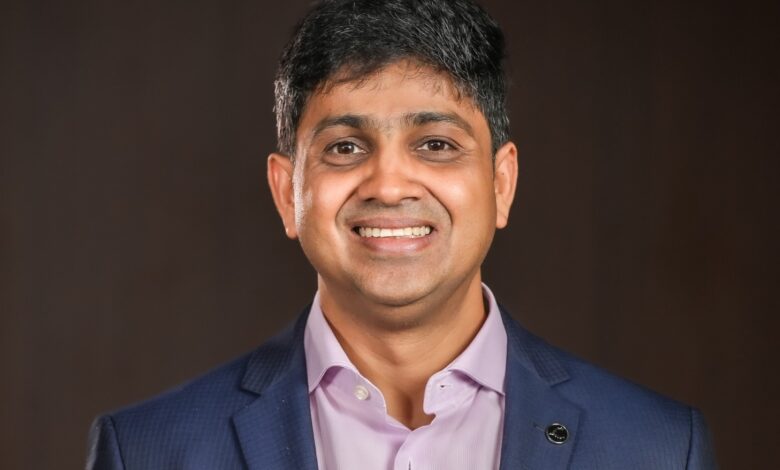
AI will not just replace jobs but redefine what “work” means, according to Abhishek Jain, CEO of EIRS. As organizations navigate distributed teams and flexible models, success will depend on intentional design, adaptability as a core skill, and embedding fairness into systems rather than treating diversity and inclusion as separate initiatives.
How will AI and automation redefine job roles, productivity, and workforce structure over the next decade?
AI and automation will not simply replace jobs; they will redefine what “work” actually means. Over the next decade, we’re likely to see fewer roles built around repetitive execution and more centred on judgment, creativity, and accountability. Productivity will no longer be measured by output volume alone, but by the quality of decision-making and the speed of insight.
Workforce structures will also evolve to become flatter, more project-driven, and less constrained by traditional hierarchies. People will increasingly work alongside intelligent systems, focusing on interpretation, ethics, and strategic thinking. The real shift will be cultural: organisations that treat AI as a partner, rather than a tool for cost-cutting, will unlock far greater and more sustainable value.
What is the optimal balance between remote, hybrid, and in-office work for performance and culture?
The idea of a single “optimal” model is increasingly becoming outdated. Today, what matters more is intentional design. Traditionally, some tasks benefit from physical proximity, especially collaboration, innovation, and onboarding, while others thrive in focused, remote environments. High-performing organizations are those that align work modes to outcomes, rather than forcing uniformity.
Culture, most importantly, is not built by office attendance alone; it is shaped by trust, clarity of purpose, and consistent leadership behaviours. When people understand why they are coming together, not just when, hybrid models become a strength rather than a compromise. Flexibility, when paired with accountability, tends to enhance both performance and engagement. Moreover, AI models should be trained to eliminate bias so that they can provide hiring grounds where AI is in charge of recruitment process.
Which skills will be most critical in the future workplace, and how should organizations approach continuous upskilling?
The most critical skill of the future is adaptability. Technical skills will continue to evolve rapidly, but the ability to learn, unlearn, and reapply knowledge will define long-term relevance. Additionally, digital fluency, systems thinking, and emotional intelligence remain essential. Continuous upskilling cannot remain an occasional training exercise; it must be embedded into everyday work.
Learning should happen in short cycles, supported by real-world application and feedback. Organizations that create psychological safety around experimentation, and allow people to grow through experience, not just instruction, will build more resilient and future-ready teams.
How should leadership and management evolve to effectively lead distributed, multi-generational teams?
Leadership is moving away from supervision and towards stewardship. In distributed, multi-generational teams, leaders can no longer rely on visibility or proximity to measure effectiveness. Instead, they must focus on alignment, trust, and outcomes.
This requires clearer communication, deeper listening, and greater empathy across different life stages and cultural contexts. Managers must also become facilitators, removing obstacles, providing context, and empowering teams to make critical decisions. The most effective leaders will be those who create coherence without micromanagement, and who recognise that flexibility and inclusion are not favours, but performance enablers.
What technologies will be essential to enable secure, efficient, and collaborative digital workplaces?
The future digital workplace will be built on integrated ecosystems rather than disconnected tools. Secure identity management, cloud collaboration platforms, robust cybersecurity frameworks, and most importantly, comprehensive insurance and risk management strategies will form a strong foundation. Beyond this, data intelligence and automation will help teams work smarter by reducing friction and cognitive overload.
However, technology alone is not the differentiator; how it is implemented matters more. Tools should simplify work, not complicate it, and security must be embedded seamlessly rather than treated as a barrier. Trust, reliability, and interoperability will define which technologies truly enable collaboration at scale.
How can organizations improve employee experience while addressing burnout, mental health, and work-life balance?
Employee experience improves when work itself is redesigned, not when wellbeing is treated as an add-on. Burnout often stems from unclear expectations, constant urgency, and lack of control, not from lack of resilience. Organizations need to address workload, decision fatigue, and the always-on culture enabled by technology.
Leaders play a critical role by modelling healthy boundaries and prioritizing outcomes over constant availability. When people feel trusted, supported, and able to disconnect without penalty, engagement naturally improves. Mental health is best supported through everyday practices that foster psychological safety, not just through formal programmes.
How will performance measurement and career progression change in a skills-based, flexible work environment?
Performance measurement is shifting from presence to impact. In flexible environments, time spent becomes less relevant than value created. This naturally drives a move toward skills-based evaluation, where contribution, collaboration, and learning agility matter as much as results. Career progression will also become less linear.
Instead of climbing predefined ladders, individuals will build portfolios of skills and experiences across roles and projects. This, in turn, not only creates more opportunity, but also greater responsibility for self-direction. Organizations that provide transparency, constructive feedback, and mobility will help people navigate this shift more confidently and equitably.
What role will workplace culture and purpose play in attracting and retaining talent in a remote-first era?
When location is no longer a constraint, culture becomes the true differentiator. People are drawn to organizations where purpose is clear and values are consistently lived, not just articulated. In a remote-first era, culture is shaped through decisions, communication norms, and leadership behaviour, not office perks.
Purpose gives meaning to flexibility, helping people feel connected to something larger than their individual role. Talent increasingly chooses environments where work aligns with personal values, and where contribution feels visible and appreciated, regardless of location.
How can diversity, equity, and inclusion be meaningfully embedded into future workplace models rather than treated as initiatives?
Diversity, Equity, and Inclusion (DEI) become meaningful when it is designed into systems, not managed as a separate programme. This means rethinking how people are hired, evaluated, developed, and promoted. Bias is often structural rather than intentional, and future workplace models must address this through data, transparency, and accountability.
Inclusion is also about everyday behaviour, who gets heard, who gets opportunities, and how decisions are made. When leaders take ownership of these dynamics and embed fairness into processes, DEI becomes part of how the organisation operates, not an initiative with an end date.
How should workplace policies and benefits evolve to meet changing employee expectations and societal norms?
Workplace policies need to move from rigid rules to guiding principles. Employees increasingly expect flexibility, fairness, and personalisation, recognizing that needs differ across life stages and circumstances. Benefits will extend beyond compensation to include wellbeing, learning, and long-term security.
Policies that focus on trust and outcomes, rather than control, tend to be more resilient and inclusive. As societal norms evolve, organisations that listen actively and adapt thoughtfully will build stronger relationships with their people, reinforcing loyalty and shared responsibility rather than compliance alone.