Data, Digital Agility and the New Blueprint for Inclusive Tech Leadership

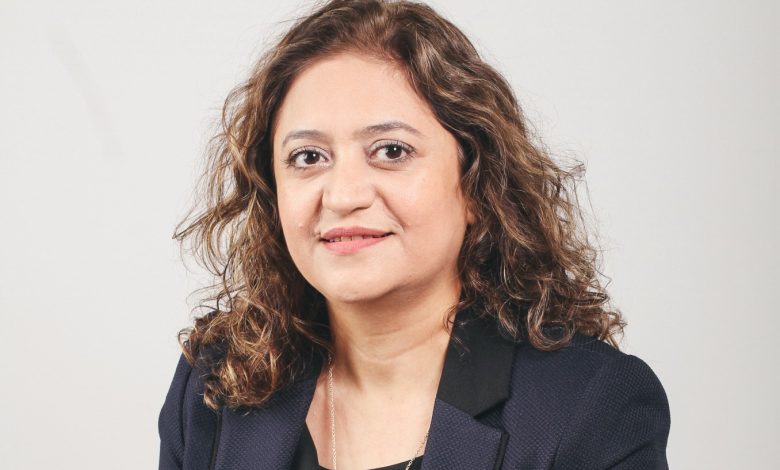
As Head of Marketing at Acer Middle East & Africa, Joumana Karam reflects on navigating regional complexity, breaking unspoken barriers in boardrooms, and preparing the next generation of women leaders to thrive in a fast-evolving, AI-driven technology landscape across MEA.
What defining moments or challenges most shaped your professional journey?
The pivotal defining moment was moving from product-centric roles into regional leadership across diverse markets in Middle East & Africa: shifting from a local mindset to a regional one and navigating the complexities of varied emerging markets each with its own regulatory and cultural nuances. The major challenge remains how to lead communications during periods of rapid digital transformation and customers behavioral evolution while balancing global brand guidelines with the unique cultural diversities of our region.
What barriers do women still face in leadership today that aren’t talked about enough?
One of the less discussed challenges is the “emotional tax” of being one of the few women in the boardroom or senior leadership settings. This often comes with the pressure to work twice as hard, continuously demonstrate credibility, and operate under heightened scrutiny in fast-paced environments, particularly within a tech-heavy industry.
Another important barrier is limited access to informal meetings and conversations, with many influential discussions, key decisions, and relationship-building moments happening outside formal meeting rooms.
How have you built credibility and influence in environments where women are underrepresented?
I built credibility through mastering the data. Data is the universal language in IT and hardware. By consistently delivering results, demonstrating a deep understanding of the products, markets and consumer behaviors, and translating complex technical specs into an easy narrative for the end-user & a compelling strategy for the channel, I made my expertise undeniable. As for influence, being part of the technology industry for more than 30 years, has allowed me to build genuine trust-based partnerships across MEA region and to lead effectively in traditionally male-dominated spaces.
How is technology—especially AI and automation—changing leadership expectations in your industry?
I am very proud to be part of the technology industry that has revolutionized our lives. And I was lucky to witness the big evolution: from the room-sized computer to the internet & cloud-based apps. And today with AI and automation we are entering a new phase of technological evolution that will deeply change our lives on all levels.
Leaders are expected to lead with a “digital-first” mindset by asking the right questions of the data. Leaders are expected to encourage the teams to use automation for efficiency, and AI agents that analyze real-time data allowing agile appropriate responses, while maintaining the human-centric leadership required to manage the people through the anxiety of technological transition.
What skills or mindsets will be most critical for the next generation of women leaders?
A “growth mindset” is essential. The next generation must be comfortable with constant learning. You must view every disruption as an opportunity rather than a threat. “Data storytelling” is another. The ability to look at spreadsheets of data/analytics and be able to see the human story behind it that will directly impact your business.
“Empathy” IQ is no longer the most important factor. “Emotional Intelligence” & “Adaptability Intelligence” are most critical for managing cross-functional teams in the hybrid world we live in.
What role have mentorship and sponsorship played in your career, and how do you support others today?
I have been fortunate to have leaders who advocated for my capabilities when I wasn’t in the room, and mentors who helped me find my voice. Today, I pay this forward by highlighting the work of my team and colleagues within my organization. I also use my social platforms & my media interviews to encourage the women in the Marketing & Tech space to advocate for their ideas, and to ensure that their contributions are recognized by regional and global leadership.
How can organizations move beyond policies to create cultures where women genuinely thrive?
It is not enough to have women in the room and think that maternity leave is enough as a policy. Organizations need to create an environment where woman can disagree with the majority without being labeled, and where career paths are not penalized for non-linear trajectories. To thrive, organizations need to redefine “Leadership” to include traits like collaboration, empathy and vulnerability.
What advice would you give young women considering careers in IT, security, or leadership roles?
Technology is an industry of perpetual change, so the most valuable assets for young women are the ability to learn quickly, to embrace the change, to speak up, to find your expertise and to build your network.
What does International Women’s Day mean to you, and what real change would you like to see beyond it?
For me, The International Women’s Day is a day to celebrate the “quiet leaders”, all the women across Middle East & Africa who are breaking barriers in the Technology industry every day without fanfare.
I look forward to the day when a woman is no longer an “exception” when being part of the executive leadership of a tech company in MEA region but a standard reality. I want to see more investment in female-led tech startups. I want to see more women leading the “Big tech” conversations all year-round and not just during the IWD period in March.