Huawei Calls for Agent-Oriented Mobile Networks to Support the ‘Agentverse’

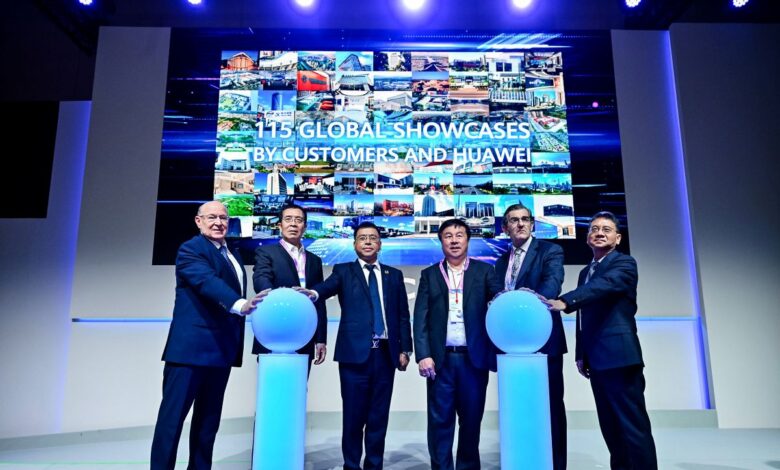
Huawei has outlined its vision for agent-oriented mobile networks, designed to support the rise of AI-powered digital agents and what it describes as the emerging “Agentverse.” Speaking at the Wireless Media & Analysts Roundtable during Mobile World Congress 2026 in Barcelona, Eric Zhao, Vice President and Chief Marketing Officer of Huawei’s Wireless Solution division, said the rapid growth of mobile AI is driving a major shift across the communications industry.
According to Zhao, the expected surge in intelligent digital agents connecting to networks will require significant upgrades to mobile infrastructure. He noted that with the potential for trillions of agent-based connections in the coming years, networks must evolve to unlock the full potential of advanced technologies such as 5G-Advanced (5G-A).
Huawei highlighted that AI agents are evolving from personal assistants into tools capable of driving large-scale automation across industries and society. In the consumer space, AI already generates a significant share of online content, while applications such as AI-assisted shopping and AI-generated video are gaining popularity. In industry, autonomous systems powered by AI agents are enabling new levels of automation, including coordinated robotic manufacturing.
This shift, Huawei said, is placing new technical demands on telecom networks, including:
- Higher and more balanced bandwidth, moving beyond the traditional asymmetric uplink and downlink model to support real-time AI interactions.
- Greater reliability and lower latency, which are essential for applications such as collaborative robotics and other safety-critical automated systems.
- Huawei’s agent-oriented network approach
To address these emerging requirements, Huawei proposed a framework for agent-oriented mobile networks designed to support AI-driven services. The company introduced several components within this vision, including an upgraded mobile broadband architecture with enhanced devices and algorithms, as well as advanced antenna technology capable of supporting ultra-high throughput and low latency.
Huawei also highlighted new technologies aimed at improving AI-driven network performance. These include a Token Block pipeline, designed to map AI workloads to network performance requirements, and an intent-based interface that can translate service demands directly into automated network actions.
Zhao concluded that while the short-term impact of new technologies is often overestimated, their long-term influence is frequently underestimated. With AI-driven connectivity expected to grow dramatically, he urged industry players to accelerate collaboration to unlock the full capabilities of 5G-A and prepare for the evolution toward 6G.
During Mobile World Congress 2026, Huawei showcased its latest connectivity solutions and AI-centric network technologies at its exhibition stand, highlighting its efforts to support the next generation of intelligent digital infrastructure.