Confidence, Adaptability and Influence Shaping Women’s Leadership in Tech

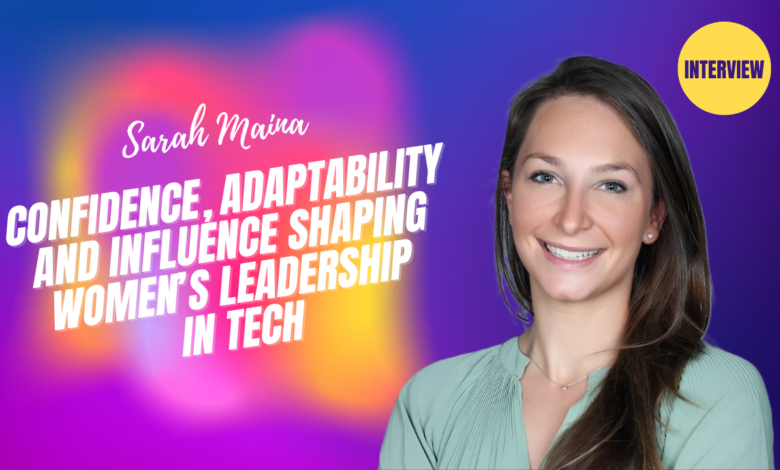
Sarah Maina, Regional Manager for France and the Middle East at AppsFlyer, shares insights from her experience leading across global markets and diverse teams. She reflects on building credibility in male-dominated environments, the evolving expectations of leadership in a technology-driven industry, and why adaptability, curiosity and strong communication will define the next generation of women leaders.
What defining moments or challenges most shaped your professional journey?
One defining moment in my journey was stepping into regional leadership roles with full commercial responsibility. That transition forced me to shift from focusing on my own performance to enabling others to succeed. It was both empowering and humbling. Another important challenge was building authority in environments where I was often one of the few women in the room.
Early on, I felt the pressure to prove myself constantly. Over time, I learned that credibility comes from consistency, preparation, and clarity, rather than volume. Relocating from London to the UAE and leading across different cultures also shaped me deeply. It strengthened my adaptability and taught me to lead with both structure and empathy.
What barriers do women still face in leadership today that aren’t talked about enough?
One barrier that is not discussed enough is the subtle pressure to constantly calibrate how you are perceived. Women often navigate a narrow space between being seen as too assertive or not assertive enough. That mental balancing act can be exhausting. Another less visible challenge is access to informal influence networks.
Many key decisions are influenced by relationships built outside formal meetings, and women are not always naturally included in those circles. There is also the emotional weight of representation. When you are one of the few women at a leadership table, you sometimes feel you are representing more than just yourself. These dynamics are rarely explicit, but they shape everyday leadership experiences.
How have you built credibility and influence in environments where women are underrepresented?
For me, credibility started with mastering the details. I made sure I understood the business deeply, from commercial drivers to product nuances. Preparation became a strength. Over time, I realized that influence is not about speaking the most, but about speaking with clarity and purpose.
I also learned to trust my own leadership style rather than trying to mirror others. Authenticity builds long term influence. Delivering results consistently helped remove doubt, but relationships were equally important. I invested time in understanding stakeholders, listening carefully, and aligning interests. Influence grows when people trust both your competence and your intentions.
How is technology, especially AI and automation, changing leadership expectations in your industry?
Leadership is becoming less about having all the answers and more about asking better questions. Technology is raising the bar for leaders. In marketing technology, AI and automation are transforming how performance is measured and optimized.
Personally, I have had to continuously upskill and stay curious. The pace of change means you cannot rely only on past experience. There is also a growing responsibility to think ethically about how technology is used. Adaptability and judgment are becoming just as important as technical understanding.
What skills or mindsets will be most critical for the next generation of women leaders?
Adaptability and resilience will be essential. Careers today are rarely linear, and change is constant. Strategic thinking, financial literacy, and strong communication skills will remain fundamental. Beyond skills, mindset will make the difference.
Confidence that is grounded in competence, curiosity that drives continuous learning, and the ability to stay calm under pressure are critical. I also believe emotional intelligence will be even more important in hybrid and global teams. The next generation of women leaders will need to feel comfortable taking ownership early, even before they feel fully ready. Growth often begins just outside your comfort zone.
What role have mentorship and sponsorship played in your career, and how do you support others today?
Mentorship gave me perspective and reassurance during pivotal moments. Sponsors, however, opened doors. Having leaders who trusted me with larger responsibilities before I felt completely ready accelerated my growth significantly. Today, I try to do the same for others.
I mentor at earlier stages of their careers, but I also focus on sponsorship by actively recommending high potential team members for opportunities and visibility. I believe support is not only about advice, but about creating tangible pathways for progression. Leadership carries a responsibility to lift others as you grow.
How can organizations move beyond policies to create cultures where women genuinely thrive?
Policies create structure, but culture determines daily experience. Organizations need to ensure that inclusion is embedded in leadership accountability and performance metrics. Transparency in promotions, feedback, and compensation builds trust. Small behaviors also matter greatly.
Who is given credit, who is invited into strategic conversations, and whose voice is amplified shape culture more than formal policies. Creating psychological safety is essential. When women feel they can express ideas without fear of judgment, innovation follows. Thriving cultures are built intentionally and consistently, not through one time initiatives.
What advice would you give young women considering careers in IT, security, or leadership roles?
My advice would be not to wait until you feel completely ready. Confidence grows through experience, not before it. Build strong foundations in business fundamentals and communication, as these skills are transferable across industries.
Do not hesitate to ask questions, especially in technical environments. Curiosity is a strength. Seek mentors early, but also take ownership of your development. Most importantly, do not underestimate the value of your perspective. Diverse viewpoints strengthen teams and industries. Technology needs more women shaping its future, not just participating in it.
What does International Women’s Day mean to you, and what real change would you like to see beyond it?
International Women’s Day is a moment to reflect on progress and acknowledge how far we have come. At the same time, it reminds me that meaningful change requires continuous commitment. I would like to see more women in P&L leadership roles and more transparent tracking of representation at executive levels.
Beyond symbolic recognition, sustainable progress comes from structural change. Inclusion should not be seasonal. It should be embedded in hiring, promotion, and leadership evaluation processes. Real change happens when equity becomes part of business strategy, not a separate conversation.