Jentic Launches Jentic Mini for OpenClaw with Access to 10,000+ APIs

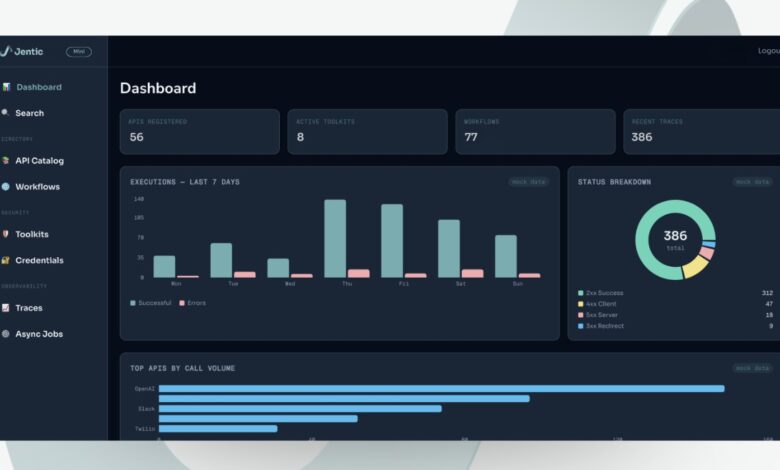
Jentic has announced Jentic Mini, a free, open source, self-hosted offering for developers building with OpenClaw, designed to make these types of general-purpose agents safer to use in real-world software environments.
Available now via the Jentic website and on GitHub, Jentic Mini gives developers a lightweight way to run Jentic in their own environment while adding a practical safety and control layer around agent access. At a time when general-purpose agents are becoming dramatically more capable, Jentic Mini is built to address one of the biggest barriers to real deployment: how to let agents interact with live systems without creating unacceptable security and permissioning risks.
OpenClaw and other general-purpose agents open up powerful new possibilities for developers. But they also introduce a hard operational problem. Agents need credentials, permissions and access to real tools in order to do useful work. Without the right controls, that creates obvious risks around compromised credentials, excessive permissions and unintended actions across production systems.
Jentic Mini is designed to solve that problem in a pragmatic way. It gives developers a clearer and more manageable way to govern how agents access tools, APIs and workflows, helping reduce the risks that come with broad, unmanaged credential exposure. Instead of treating security and permissions as an afterthought, Jentic Mini makes them a core part of how agent systems are deployed.
At the core of the launch is Jentic’s expanding API and workflow catalog, now spanning over 10,000 APIs, with agents actively curating and expanding that catalog over time. That gives developers a machine-usable map of the tools, APIs and workflows their agents can use, while enabling a more structured and controlled way to connect agents to real systems. It is, in effect, a Hugging Face for APIs and workflows.
While built for use with OpenClaw, Jentic Mini can also be used with other general-purpose agents, including NemoClaw, giving developers flexibility across models and environments.
Jentic is already available as a verified connector in Claude, Anthropic’s AI assistant, giving users secure access to their connected tools and APIs directly through Claude. The integration signals early validation of Jentic’s broader platform approach to safe, structured agent access of which Jentic Mini is the new open source offering for developers.
“The next era of software will not be built for humans. It will be built for agents, by agents.” said Sean Blanchfield, CEO and Co-Founder of Jentic. “Jentic Mini gives developers a free, open source foundation for that shift, connecting general-purpose agents to real systems through an AI-curated catalog of more than 10,000 APIs and workflows. We want to make it dramatically easier to deploy agents that do real work.”
By making Jentic Mini free, open source and self-hosted, Jentic is lowering the barrier to entry for developers while addressing one of the most immediate challenges in agent deployment: how to move from impressive demos to real-world use without compromising security, permissions or control. The company sees this launch as an important step toward making general-purpose agents more usable, more governable and more deployable in production.