Artificial intelligence is rapidly transforming enterprise storage from a passive data repository into a high-performance, intelligence-driven layer critical to business operations, according to Santosh Varghese, Managing Director of TOSH NXT TECH VENTURES FZCO. As organisations grapple with massive volumes of fast-moving, unstructured data, the focus is shifting beyond capacity to prioritise throughput, latency, metadata intelligence, and cyber resilience across hybrid environments.
How is AI changing enterprise storage needs and priorities?
AI has shifted enterprise storage from being a passive repository to becoming an active performance layer for the business. Organizations now need storage that can handle massive unstructured datasets, feed GPUs quickly, support real-time inference, and remain secure across hybrid environments. The priority is no longer just capacity; it is now throughput, latency, metadata intelligence, cyber resilience, and seamless data mobility across edge, core (On Prem) and cloud.
What challenges arise when scaling storage for high-volume, fast-moving AI data?
The biggest challenge is that AI data is not only large, but also fast, fragmented, and constantly changing. Enterprises struggle with ingest bottlenecks, expensive flash overuse, metadata sprawl, data gravity, inconsistent governance, and moving large datasets efficiently between training, tuning, and inference environments. Another issue is that many legacy storage environments were designed for transactional applications, not for AI pipelines that depend on parallel access and rapid retrieval of billions of files and objects.
How are high-capacity solutions evolving to support AI workloads and unstructured data?
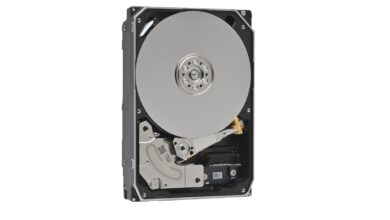
High-capacity solutions are evolving in two major ways: first, through denser HDD innovation for cost-efficient scale; second, through tighter integration with AI data pipelines. HAMR-based platforms are already pushing enterprise drive capacity to 30TB and up to 36TB, which is highly relevant for AI-era archives, data lakes, surveillance, backup, and unstructured repositories. This means organizations can retain more AI-relevant data economically, while using faster tiers only where performance is truly needed.
How do hybrid storage architectures balance cost, performance, and accessibility for AI?
A smart hybrid architecture places the right data on the right medium at the right time. High-performance flash or accelerated storage supports model training, feature pipelines, and low-latency inference, while object and high-capacity disk tiers handle colder or less frequently accessed datasets at a much lower cost. Hybrid multi-cloud designs also help enterprises keep sensitive data on-prem while extending analytics, backup, and collaboration into the cloud. In my view, this balance is essential because not all AI data deserves premium storage, but all of it must remain discoverable and governable.
What impact do AI-native or intelligent storage systems have on managing generative content?
AI-native storage is becoming transformative because it does more than store files — it helps make data usable for AI. Intelligent systems can enrich metadata, classify content, automate placement, improve retrieval, and prepare unstructured data for RAG and agentic workflows. New content-aware approaches are especially valuable for generative AI because the challenge is not only storing generated text, images, video, or code, but also making that content searchable, contextual, policy-aware, and ready for reuse
How can efficient storage strategies help reduce energy use and operational costs from AI growth?
Efficient storage strategy is one of the most practical ways to control AI cost. Data reduction technologies such as deduplication, compression, and compaction reduce the amount of physical infrastructure required, which directly lowers power, cooling, and rack footprint. Tiering data intelligently also prevents over-investment in expensive high-performance media. From a Tosh NXT perspective, the winning strategy is to combine high-capacity density, data efficiency, and policy-based lifecycle management so enterprises scale AI sustainably, not wastefully.
What steps should IT leaders take to prepare storage for expanding AI-generated data?
- Classify data by value, performance need, and compliance requirement.
- Build a tiered architecture across flash, object, and high capacity disk
- Strengthen metadata, indexing, and content discovery for unstructured data.
- Design for hybrid mobility across on-prem, edge, and cloud
- Validate storage for GPU and AI pipeline performance.
- Embed cyber resilience, immutability, and governance from day one.
- Measure energy efficiency and total cost per usable TB, not just raw capacity
Which emerging storage trend will most improve handling the AI data surge?
In my opinion, the most important emerging trend is the rise of the AI data platform — storage architectures that combine high-performance access, intelligent data services, metadata enrichment, and hybrid orchestration in one framework. This is powerful because the future challenge is not just storing more data; it is converting raw enterprise data into AI-ready data faster and more efficiently. Close behind that is the continued rise of high-density HAMR storage, which makes large-scale AI data retention far more economical.