UAE businesses are accelerating investment in artificial intelligence to improve productivity, streamline operations and build resilience, with spending rising by 521% over the past 13 months, according to new data from Pemo, the UAE’s leading spend management company.
The findings come from Pemo’s first UAE AI adoption report, built entirely from real corporate card and bill pay transactions captured between January and March 2026 with trend analysis spanning January 2025 to February 2026. Based on aggregated, anonymised data from more than 6,000 UAE businesses and over AED 1.4 billion in annual spend, the report offers a real-time view of how organisations are investing in AI across the market.
At a time of heightened geopolitical uncertainty across the Middle East, the data points to a clear shift in business priorities. Companies are increasingly investing in technologies that can deliver immediate operational gains, helping them run leaner, respond faster and maintain stability in a changing environment.
The report highlights that 12% of UAE businesses are actively using AI tools, based on confirmed transactions. While adoption is growing, most organisations remain in the early stages. Nearly two-thirds of AI-adopting businesses still rely on a single tool, while only 37% are using two or more, signalling that broader, organisation-wide deployment is still developing.
The data highlights a clear acceleration point in late 2025, when adoption began to scale more rapidly. October to December 2025 saw three times more first-time AI adopters than any quarter in 2024, marking a shift from experimentation to more consistent investment. That momentum has continued into 2026, with steady growth in both usage and spend.
Growth is being driven largely by the UAE’s SME ecosystem. While larger enterprises spend more per business, SMBs account for 59% of total AI spend, reflecting both their scale and agility in adopting tools that deliver immediate efficiency gains. Mid-sized firms are also among the most active users, recording the highest frequency of AI transactions.
At the same time, usage is becoming more sophisticated. A growing number of organisations are combining multiple AI tools across functions, from automation and software development to content and workflow management. This shift suggests AI is moving beyond isolated use cases and becoming more embedded in day-to-day operations.
This trajectory aligns with the UAE’s broader digital economy ambitions, where artificial intelligence is positioned as a cornerstone of future growth. The data suggests businesses are already acting on that vision, integrating AI into workflows as they look to remain competitive and efficient.
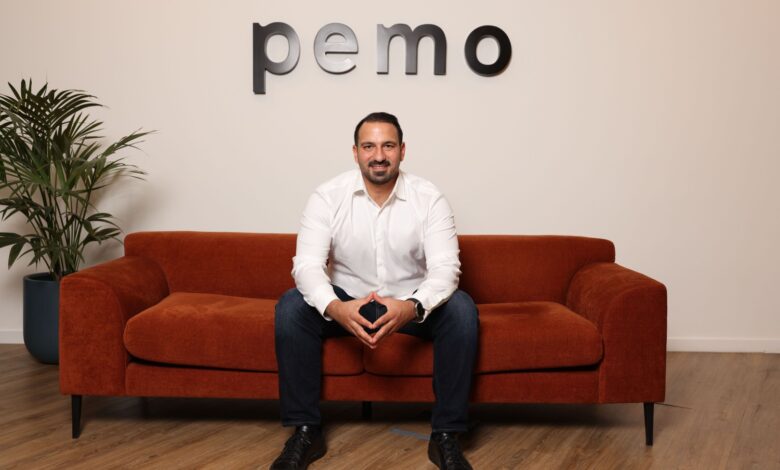
Commenting on the report, Ayham Gorani, Co-founder and CEO of Pemo, said, “Businesses are becoming much more focused on where AI delivers real value today. The priority is improving efficiency, reducing friction in day-to-day operations and enabling teams to move faster without adding complexity.
“In the current climate, that ability to do more with less is critical. As organisations see clear returns, adoption scales quickly, evolving from single tools into broader, more embedded use. That is what ultimately drives stronger productivity and more resilient operations.”
Despite the rapid rise in spending, adoption remains uneven across sectors, with many traditional industries still in the early phases. As AI becomes more accessible and integrated into everyday workflows, adoption is expected to broaden across the wider economy.
For now, the direction is clear. AI is moving beyond experimentation and becoming a practical tool for businesses focused on efficiency, resilience and long-term growth.