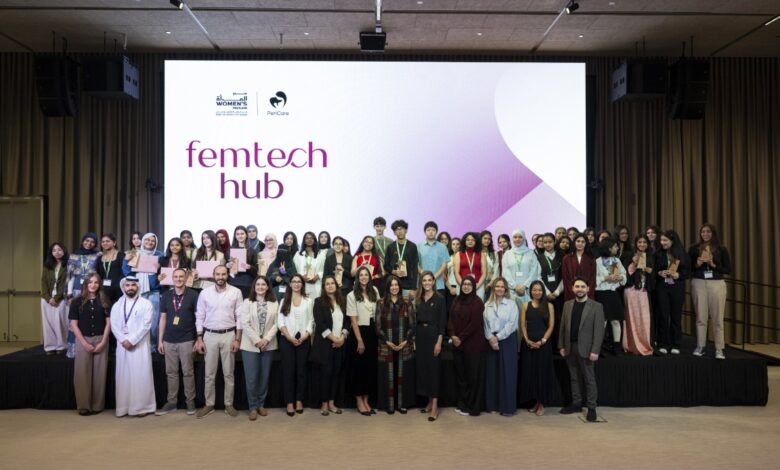
An AI-powered decision engine designed to eliminate clinical misdiagnosis, a menstrual-cycle-synced nutrition app and a wearable device to prevent and treat mastitis are among the winning innovations from the second edition of the FemTech Hackathon at the Women’s Pavilion. The hackathon brought together 46 students, aged 16-18 years, from 23 schools and 20 nationalities to explore some of the most pressing gaps in women’s health and highlighted how addressing these gaps could contribute USD 1 trillion annually to the global economy by 2040.
During the event, students worked in guided teams alongside eight mentors across scientific research, women’s health, entrepreneurship and technology to develop research-informed, tech-driven solutions. Ten teams – marking a 30 per cent increase in participation from the inaugural edition in 2025 – presented their ideas to a panel of expert judges, with three emerging as winners.
Maha Gorton, Head of Women’s Pavilion, Expo City Dubai, said: “The second edition of the FemTech Hackathon represents another positive step in our mission to shape a more inclusive, forward-thinking future for women’s health. Across the weekend, impactful ideas to solving critical healthcare challenges dominated discussions between young innovators and industry experts, highlighting what’s possible when emerging talent is given the right support and guidance.”
First place: Bloom
A wearable breast device designed to help prevent and treat mastitis by gently warming and unclogging milk ducts, while providing comfort and strengthening the bond between mother and newborn during breastfeeding.
Huda Al-Abbadi, a Bloom team member from Jumeirah College said: “Our experience at the FemTech Hackathon was amazing – it felt so refreshing to be able to collaborate with so many brilliant students on real life solutions that impact millions.”
As first-place winners, Bloom will receive a three-month incubation programme and equity-free R&D funding from PeriCare to support further development and market readiness.
Second place: Luma
An AI-powered B2B platform offering an exclusively female-oriented decision engine that allows clinicians to better diagnose women’s health issues more accurately and efficiently.
Luma participant Ann Mary Joseph from The Indian High School, Dubai said: “The supportive environment encouraged us to tackle big questions with courage. The highlight was the brainstorming sessions – they helped us bond, shape the Luma concept and refine it with expert mentors who guided us in the right direction.”
Third place: Nutra
A nutrition app synchronised with women’s menstrual cycles to support healthier lifestyles and habits.
Hala Hassan, representing Nutra from German International School, said: “I learned a lot about marketing and what goes into making a successful business. The mentors brought real-world insight to the table – sharing first-hand experiences of building their own businesses.”
Nutra was also awarded the FemTech Spirit Award, voted by mentors, for embodying the values of innovation and collaboration.
The judging panel included representatives from Meem Foundation, the UAE-philanthropic foundation championing innovative entrepreneurial solutions to gender inequality; venture capital firm Global Ventures; healthcare company Organon; social enterprise Companies Creating Change; and startup support organisation Leading Lines.
All three winning teams will now be invited to a series of career days in partnership with industry leaders, offering hands-on exposure to the real-world landscape of women’s health and femtech. They will also showcase their innovations at the upcoming Her Health Summit – a three-day conference bringing together scientists, clinicians, innovators and the wider community.
Building on the success of its inaugural edition, the FemTech Hackathon continues to evolve as part of a broader FemTech Hub – an expanding platform designed to engage students, mentors and experts in advancing women’s health through education, innovation and collaboration.