Adapting Innovation: Shure’s Evolution in the MEA Region

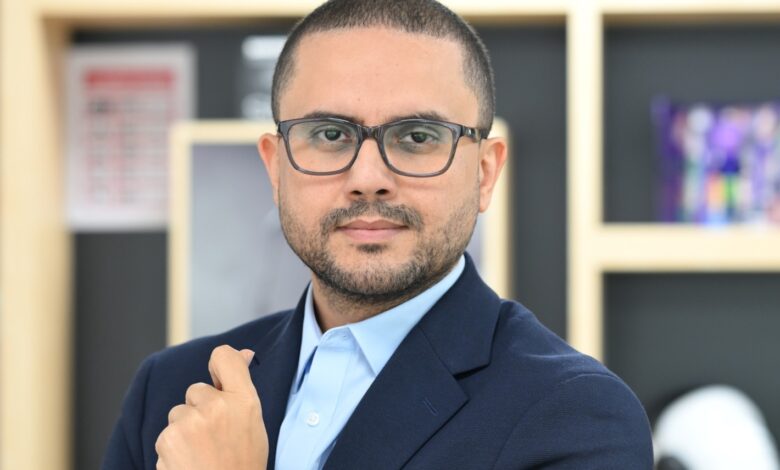
As hybrid and AI-driven work evolves, organisations across the Middle East and Africa are rethinking collaboration spaces. In this interview, Yassine Mannai, Associate Director – Sales & Marketing MEA, Turkey and CIS at Shure, discusses the shift from technology deployment to experience-led design, the role of high-quality audio in AI collaboration, and how intelligent meeting environments are shaping the future of communication.
The way people work has changed dramatically over the past few years. How has this shift influenced Shure’s innovation strategy across the Middle East and Africa?
As today’s work environment continues to evolve, we’re also increasingly a significant shift in what employees expect in terms of the overall quality of experience. Workplace geography notwithstanding, this expectation is now reshaping how organizations approach collaboration.
Across the Middle East, we’re seeing investment move beyond hardware procurement towards experience design. Leaders are asking a different question: How do we create environments where people can contribute effectively, make decisions faster, and stay engaged? That shift is influencing not only how we innovate, but also how we advise customers on workplace transformation.
AI is becoming central to workplace collaboration. What role does high-quality audio play in ensuring AI can deliver accurate and meaningful outcomes?
One of the biggest misconceptions around AI is that organisations view it primarily as a software conversation. In reality, AI performance is directly influenced by the quality of the information entering the system.
As businesses increasingly rely on meeting intelligence, automated documentation, multilingual collaboration, and workplace analytics, the quality of communication becomes a strategic consideration. Organisations are beginning to realise that communication infrastructure is no longer an operational expense; it has become a business intelligence asset. Hence creating a virtual in-room experience is mandatory to enable the room to become the main input fed to AI instead of individual inputs.
How does the MXA925 Ceiling Array Microphone address the evolving needs of modern meeting spaces and hybrid work environments?
The conversation around meeting spaces is changing. Organisations no longer want technology that simply works; they want technology that is invisible and turn their fixed hardware to an intelligent environment offering flexibility & scalability in the space.
Spaces are being redesigned more frequently, teams are more mobile, and organisations want solutions that can adapt without requiring complex reconfiguration. The Shure MX Ecosystem had a remarkable upgrade by adding the new AI-Enabled DSP to The MXA925, this is not a product upgrade, it is complete shift in designing hybrid meeting and learning spaces to accommodate and implement integration of collaboration tools and AI-powered workplace.
Many organisations are investing heavily in collaboration technology. What are the most common mistakes businesses make when designing meeting and conferencing experiences?
I believe many organisations are still measuring success by the technology they deploy rather than the outcomes they achieve.
The real objective is to create better conversations. Technology should remove barriers, not add complexity. Yet we still see organisations investing heavily in collaboration platforms without considering the room experience they are trying to enable.
The future of workplace collaboration will belong to organisations that design around people first and technology second. When that balance is achieved, communication becomes more effective, decisions happen faster, and teams perform at their best capabilities.
From government organisations to multinational enterprises, what workplace collaboration trends are you seeing emerge across the Middle East region?
The Middle East is increasingly becoming a global testbed for workplace innovation. What makes this region unique is the speed at which organisations are willing to adopt new technologies and rethink traditional operating models.
We are seeing growing interest in intelligent workplaces, AI-enabled collaboration, multilingual communication environments, and experiences designed around employee productivity rather than physical office presence. The conversation has evolved from digital transformation to digital maturity.
Shure has a long heritage in professional audio. How do you balance that legacy with the need to innovate in an increasingly AI-driven communications landscape?
Legacy can be a strength or a limitation. It depends on how you approach it.
For us, a century of experience in audio has given us a deep understanding of one fundamental challenge: helping people communicate clearly. While the technologies around us continue to evolve, that objective remains unchanged.
That is also how we approach innovation. We do not look at new technologies as trends to follow, but as tools that must serve a clear purpose. In an AI-driven communications landscape, the priority is to understand which technologies can genuinely improve human communication and apply them in ways that make collaboration simpler, more natural, and more effective.
The UAE is positioning itself as a leader in digital transformation. How does Shure contribute to this vision through its technology ecosystem, partnerships, and regional channel network, including partners such as NMK Electronics?
The UAE’s digital transformation agenda is not just about technology adoption; it is about reimagining how people connect, collaborate, learn, and access services in an increasingly digital world. By creating smarter, more connected environments, the nation is setting a global benchmark for innovation-driven progress and sustainable growth.
Shure is proud to contribute to this vision by enabling communication experiences that are intelligent, seamless, and built for the future. However, lasting transformation is achieved not through technology alone, but through strong partnerships and a shared commitment to innovation.
Through our collaboration with NMK Electronics and our broader regional channel ecosystem, we bring together Shure’s world-class audio expertise and deep local market knowledge, delivering solutions that are not only technologically advanced, but also scalable, impactful, and closely aligned with the UAE’s long-term ambitions for a digitally empowered society.
Looking ahead, how do you see AI, automation, and audio technologies converging to shape the future of communication, collaboration, and workplace experiences?
Looking ahead, the biggest shift will be from reactive communication to intelligent communication.
Today, meetings still depend heavily on people managing the experience, setting up rooms, adjusting devices, capturing notes, following up on actions, and ensuring everyone is heard. As AI, automation, and audio technologies converge, many of these layers will become more intuitive and predictive.
Audio will play a critical role in this evolution because it captures the context, tone, and intent behind conversations. The future of collaboration will not just be about recording what was said; it will be about helping organisations understand what matters, act faster, and create more inclusive experiences for every participant.