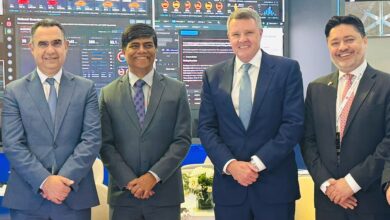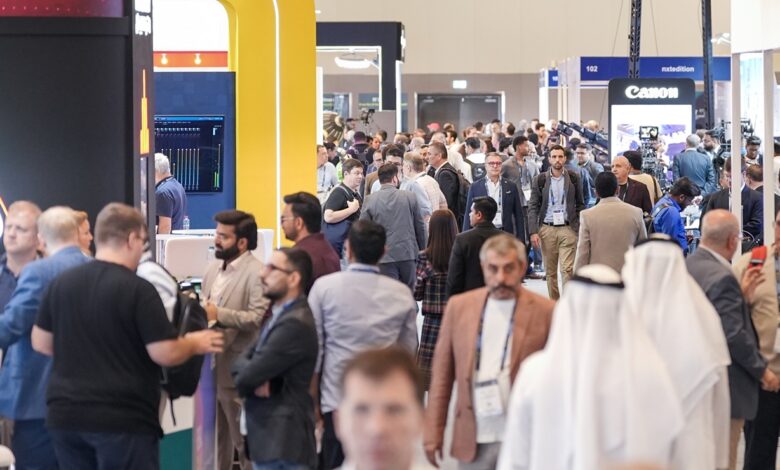
As broadcasters, creators, producers and technology leaders gathered for the second day of CABSAT 2026, discussions and demonstrations focused on how changing audience behaviour is reshaping the media industry. From platform-native formats and AI-enabled production to streaming economics and regional co-production, the event highlighted how media organisations are adapting their content strategies, technology infrastructure and commercial models to reach increasingly fragmented audiences.
Taking place at Dubai Exhibition Centre (DEC), Expo City Dubai, until October 7, the 33rd edition of CABSAT brings together more than 450 exhibitors and 700 brands from over 120 countries across broadcast, media, content creation and Pro AV. Many of the issues being discussed across the exhibition floor were also central to the opening day’s Contentverse Director’s Cut, where industry leaders examined changing viewing habits, streaming economics, content monetisation and the shift towards multiplatform distribution.
From broadcast feeds to multiplatform systems
The changing economics of streaming emerged as one of the key themes. Elie Habib, CEO of OSN+ and Anghami, said the streaming market is moving towards a greater emphasis on sustainable growth, retention and operational efficiency. Following the combination of OSN+ and Anghami, he pointed to profitability gains during 2026 and continued momentum for regional streaming services.
“You have to grow in a better way than simply buying your growth. You need to improve retention; otherwise, the cost of acquiring a user versus the revenue you get from that user becomes negative,” Habib said. The competition, however, is not only about attracting subscribers. Amit Malhotra, Head of International Business at JioStar, argued that the streaming experience itself is becoming increasingly important as audiences are presented with more choices.
JioHotstar’s scale in India, with around 500 million monthly active users and 300 million subscribers, provides a platform for JioStar to explore international expansion, including through its Prism offering. “Content can bring you in. Content is not the only thing that’s going to keep getting you back. It’s the experience today that really matters,” Malhotra said.
The conversations also extended beyond the formal conference programme, with the broadcast-grade podcast studio Off the Record hosting Contentverse speakers and other industry guests during the event.
Technology moves closer to the production workflow
The changing relationship between content and distribution is also influencing the technologies being showcased at CABSAT. LiveU is demonstrating its Q Era and wider IP-video ecosystem, with a focus on live production, operational efficiency and transmission resilience. Its latest solutions address areas including IP contribution, workflow automation and digital-first production environments.
“At CABSAT 2026, we’re showing broadcasters what’s possible when connectivity technology anticipates their needs rather than just responding to them, from intelligent, resilient bonding to story-centric workflows that follow the story from field to final edit, cutting the manual work in between,” said Mustafa Yavuz Bahadiroglu, LiveU Sales Director, MENA.
Elsewhere, ND SATCOM is showcasing SKYWAN 5G, focusing on secure and resilient satellite communications for government applications. The system is designed to support distributed networks and connectivity across demanding operational environments.
The broader exhibition reflects a shift towards technology environments that bring production, distribution and content management closer together. Solutions across production, post-production, cloud workflows, broadcast engineering, content management, immersive technology and Pro AV are increasingly designed to work across multiple stages of the content lifecycle.
For broadcasters and production companies, this means combining the reliability traditionally associated with broadcast infrastructure with more flexible, software-led workflows. For creators and rights owners, the shift also creates opportunities to extend content across platforms and markets, while exploring new approaches to monetisation.
Collaboration becomes part of the content equation
The Co-Production Salon, held in partnership with H-consult, provided another perspective on the changing regional content ecosystem. The initiative brought producers, content creators, commissioners, financiers and investors together to discuss projects, financing structures and international partnerships.
“Our participation at CABSAT this year has been highly successful, with strong footfall and continued momentum,” said Heba Korayem, Founder of the Co-Production Salon. “At the Co-Production Salon, we are bringing producers and platforms together with the technology, equipment and expertise they need under one roof. CABSAT provides an important opportunity to connect with the right partners, explore new solutions and help bring projects to life.”
The focus on collaboration reflects a broader shift in regional media, where international partnerships and co-production are becoming increasingly important to developing content that can travel beyond its original market. The BroadcastPro Manufacturer Awards 2026, taking place after the close of the second day, will also recognise technologies and solutions used across broadcast and media production.
The next phase of media
Across the second day, a consistent theme emerged: content remains central to the media business, but how that content is produced, distributed and experienced is changing rapidly. Audiences are increasingly moving between broadcast, streaming, social and other digital platforms, making adaptability a fundamental part of the modern media operation.
For media organisations, that means investing not simply in better production technology, but in workflows capable of supporting multiple platforms, formats and audiences. CABSAT 2026 continues through October 7 at Dubai Exhibition Centre, with its final day expected to bring further discussions across content, broadcasting, media technology and Pro AV.