Silicon Motion Technology Corporation will showcase its latest enterprise storage technologies at Supercomputing 2026 (SC26), highlighting PCIe Gen5 and Gen6 solid-state drive (SSD) controllers and reference platforms designed to support the growing storage requirements of AI infrastructure.
The company will exhibit at Booth #6816 at the event, taking place from November 16 to 19 in Chicago, Illinois. Its demonstrations will focus on storage solutions for AI factories, agentic AI and large-scale inference deployments, alongside enterprise PCIe NVMe boot drives and embedded storage technologies.
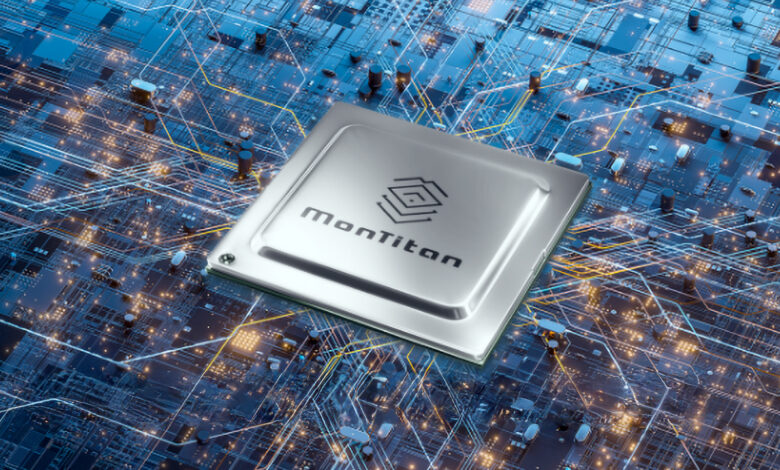
Among the technologies on display will be Silicon Motion’s MonTitan enterprise SSD controllers and reference platforms, as well as enterprise boot drive solutions demonstrated with the NVIDIA DPU platform. The company will also showcase its Ferri-eMMC embedded storage solution integrated with the ASPEED AST2600 Baseboard Management Controller (BMC).
“As AI infrastructure evolves to support multi-agent and increasingly complex agentic workloads, storage performance is becoming a critical factor in overall system performance and efficiency,” said Alex Chou, Senior Vice President of Enterprise Storage & Display Interface Solution Business at Silicon Motion. “Our PCIe Gen5 and Gen6 enterprise SSD controllers are designed to address these challenges by delivering high performance, low latency, scalable capacity, and power efficiency, helping customers build the next generation of AI infrastructure.”
Silicon Motion will demonstrate three enterprise SSD controller platforms targeting different storage requirements within AI infrastructure. The SM8366 MonTitan SSD Reference Design Kit is built around the company’s PCIe Gen5 SM8366 enterprise SSD controller. Designed for key-value (KV) cache offload and agentic AI infrastructure, the platform supports U.2, E1.S, E3.S and E1.L form factors, alongside TLC and QLC NAND configurations.
With QLC NAND, the reference platform supports SSD capacities of up to 256TB, providing additional storage capacity for AI inference workloads and KV cache offload. It also incorporates Silicon Motion’s patented PerformaShape QoS Engine, designed to maintain low latency and predictable performance under demanding workloads.
The company will also present the SM8466, a PCIe Gen6 enterprise SSD controller designed for high-performance computing and data-intensive applications. The controller delivers sequential throughput of up to 28GB/s and up to seven million random input/output operations per second (IOPS), with support for enterprise SSD capacities exceeding 512TB.
Another solution on display will be the SM8388, a power-efficient PCIe Gen5 enterprise SSD controller targeting high-capacity nearline storage applications. Its single-controller architecture is designed to balance storage performance, power consumption and total cost of ownership, particularly for hyperscale data centres and AI infrastructure deployments.
Beyond high-capacity storage, Silicon Motion will highlight its enterprise boot SSD solutions for servers, data processing units (DPUs), networking platforms and AI storage nodes. Its DRAM-less PCIe NVMe boot SSD solutions support M.2 and BGA form factors, providing compact and power-efficient storage options for different server architectures. The solutions are designed to address enterprise requirements for endurance, reliability and consistent operation.
The company will also demonstrate a PCIe Gen5 enterprise boot SSD solution with DRAM, targeting near-CPU storage applications that require frequent data access and predictable performance. Supporting M.2 2280 and E1.S form factors, the solution offers user capacities ranging from 480GB to 3.84TB and sequential read speeds of up to 14GB/s. Its intended applications include system logging, metadata management and workloads involving frequent read and write operations.
Through its SC26 demonstrations, Silicon Motion is highlighting the role of storage performance, capacity and reliability in supporting increasingly complex AI computing environments. As AI infrastructure expands to accommodate multi-agent workloads and large-scale inference, enterprise storage technologies will play an important role in managing data access, processing efficiency and overall system performance.