SUSE Expands Linux Management and AI Capabilities on Oracle Cloud Infrastructure

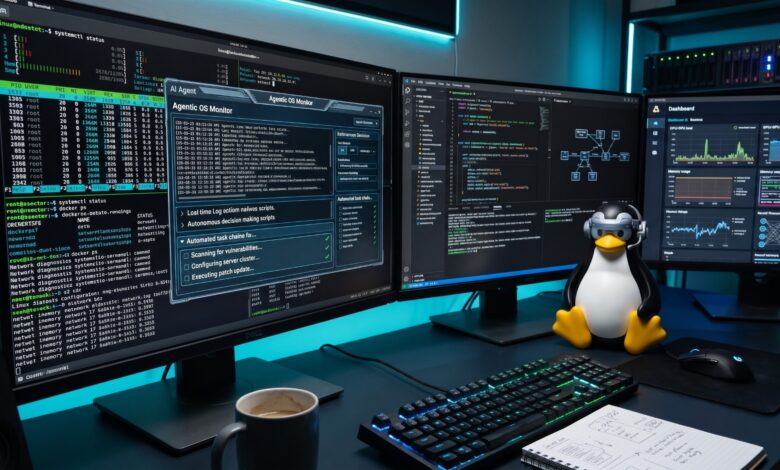
SUSE is expanding the availability of its open infrastructure portfolio on Oracle Cloud Infrastructure (OCI), including making its full stack available through the Oracle Marketplace. The expansion includes capabilities for centralised multi-Linux management, Model Context Protocol (MCP)-based agentic AI workflows and infrastructure deployment on OCI.
“Enterprise customers need absolute reliability and seamless performance when scaling sovereign AI or standardizing complex hybrid cloud environments,” said Jim Sarale, head of global partners and industries, SUSE. “SUSE is focused on providing IT leaders with a frictionless, enterprise-grade foundation designed to simplify operations across hybrid and multi-cloud environments.”
SUSE is enabling customers to use Multi-Linux Manager (MLM) and Multi-Linux Support (MLS) with workloads running on OCI. The capabilities are designed to help organisations manage different Linux distributions and versions through a single portal. The approach provides a common framework for managing Linux environments across hybrid infrastructure while allowing organisations to retain control over their systems.
SUSE is also working to make SUSE AI Factory part of its portfolio available on OCI to support enterprise AI deployments. The solution connects developer workstations with OCI Compute instances for model training, augmentation and inference.
According to SUSE, deploying AI Factory on OCI is intended to provide a foundation for sovereign AI while supporting data governance and operational control across hybrid environments. Organisations can use the platform as an orchestration layer within existing infrastructure or deploy it as a fully managed, full-stack solution.
SUSE said it has independently evaluated these solutions on OCI. Customers can use existing Oracle Universal Credits to purchase SUSE solutions, consolidating software and infrastructure expenditure through a single invoice. The arrangement is intended to simplify procurement by allowing enterprises to use their existing OCI commercial commitments to access SUSE offerings, potentially reducing the need for separate purchasing and contracting processes.