Redefining Leadership in Tech: Why Clarity, Not Volume, Drives Impact

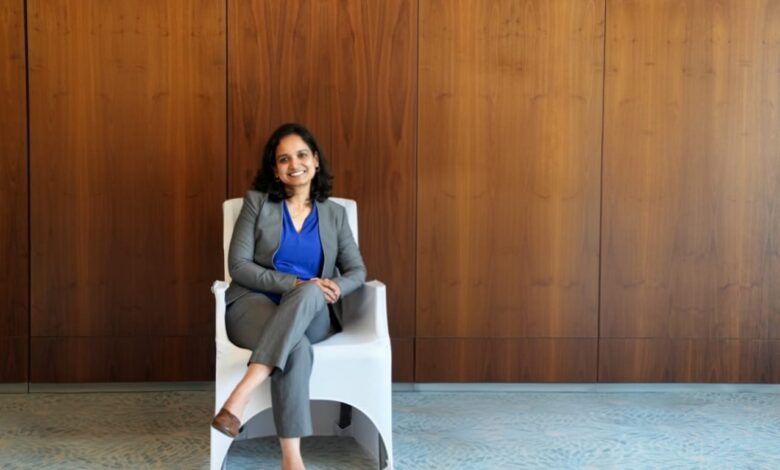
As Solution Architect – EMEA at Kissflow, Harini Satish believes the future of leadership in automation and AI belongs to those who combine systems thinking with decisive action and ethical judgment. From challenging assumptions in high-stakes enterprise environments to advocating for quieter, outcome-driven leadership styles, she shares how resilience, preparation, and authenticity are shaping the next generation of women leaders in technology.
What defining moments or challenges most shaped your professional journey?
One defining aspect of my journey has been working at the intersection of technology and business transformation. In enterprise environments, especially in automation and process consulting, you’re often navigating ambiguity in terms of unclear requirements, competing priorities, and high-stakes outcomes.
I learned that my value didn’t just come from understanding automation, but from being the person brave enough to challenge assumptions when everyone else was nodding along. Another key challenge was building authority in rooms where I was sometimes the only woman and sometimes one of the youngest as well. That forced me to sharpen my preparation, communication, and strategic thinking.
What barriers do women still face in leadership today that aren’t talked about enough?
A barrier that is not discussed enough is the pressure for women to ‘perform’ a specific type of leadership. There is a subtle expectation that to be a ‘leader,’ you must be aggressive or high-volume.
When women lead with a quieter, more collaborative approach, it’s often mislabeled as a lack of confidence rather than a strategic choice. This forces many of us to spend extra energy constantly ‘calibrating’ our tone just to be taken seriously. We need to stop equating ‘loudness’ with ‘leadership’ and start valuing clarity and outcomes.
How have you built credibility and influence in environments where women are underrepresented?
Credibility comes from clarity and consistency. I focus heavily on preparation, data-backed points, and structured communication. When you walk into a room with a well-articulated solution, the conversation shifts from “who you are” to “what you bring.” I build influence by anchoring tech conversations in business impact that talks about ROI and risk.
Whether I’m architecting a solution for a global enterprise or supporting my teenage son through his board exams, the mission is the same: providing a steady hand that cuts through the noise to drive clarity when the pressure is on.
How is technology especially AI and automation—changing leadership expectations in your industry?
In the automation space, we are seeing a shift from operational oversight to strategic orchestration. It’s no longer enough for a leader to simply ‘manage’ people; they must now intelligently redesign the systems those people work with.
At Kissflow, I see this daily: the expectation has moved from ‘Can you keep the engine running?’ to ‘Can you evolve the engine while it’s in motion?’ Leaders who can marry technical literacy with ethical judgment and change management will be the ones who define the next decade of digital scalability.
What skills or mindsets will be most critical for the next generation of women leaders?
Three stand out in my mind:
- Systems thinking – understanding how technology, people, compliance, and business goals connect.
- Decisiveness under ambiguity – not waiting for perfect clarity.
- Confidence without apology – owning expertise without softening it.
Adaptability will also be crucial. AI is evolving rapidly, and learning agility will matter more than static expertise.
What role have mentorship and sponsorship played in your career, and how do you support others today?
I wouldn’t be where I am without the mentors who challenged me early on. They didn’t just offer advice; they pushed me into the deep end with demanding ‘stretch’ projects that required me to grow every single day. While those moments were intense, I have zero regrets, they built the foundation of clarity and preparedness that I rely on today to manage the EMEA region.
Now, at Kissflow, I make it a priority to pay that forward. I specifically look for the ‘quiet’ talent – the women delivering incredible results who aren’t necessarily the loudest in the room. My goal is to provide them with the strategic context they need to take bold risks and, more importantly, to ensure their work is visible to the people making the big decisions.
How can organizations move beyond policies to create cultures where women genuinely thrive?
To move beyond policies, we have to stop trying to mold leaders into a single, standard shape. I saw this shift firsthand when I joined Kissflow. In my previous roles, I often felt the pressure to fit into a traditional ‘leadership box’ one that didn’t always account for my focus on quiet clarity and trust-building.
At Kissflow, the culture is built on the understanding that every one of us is different and that our uniqueness is an asset, not a hurdle. It was a surprising and welcome contrast to see that you can have your own way of leading without being forced to conform. Organizations that want to support women need to follow this lead: stop looking for a ‘type’ and start valuing the diverse ways we drive results and build teams.
What advice would you give young women considering careers in IT, security, or leadership roles?
Don’t exclude yourself from technical spaces because they seem intimidating. Technology is no longer a niche department; it is the foundation of every industry. My advice: build deep technical roots, but keep a wide business lens. Speak up early, even if your voice isn’t the loudest. Volunteer for difficult, messy projects, that is where the most growth happens.
What does International Women’s Day mean to you, and what real change would you like to see beyond it?
International Women’s Day is a moment of visibility, but real change happens in the quiet, consistent decisions made during the other 364 days of the year. For many women, the workplace is the primary platform where they can excel and prove their potential. That path to achievement should never be blocked by outdated stereotypes or a lack of exposure.
I want to move toward an industry where a woman leading global business transformations isn’t seen as an ‘exception’ or a ‘special case’ because of her gender. She should be seen as a leader who earned her place through hard work and expertise.
On a personal level, I want my son to see my career not as a rare feat, but as a standard. I want him to grow up knowing that a woman being a ‘steady hand’ in a technical, high-pressure role is simply what leadership looks like. We need to move past symbolic celebrations and focus on the structural progress that ensures every woman has the space to let her work speak for itself.