Redefining Leadership Through Courage, Accountability and Everyday Inclusion

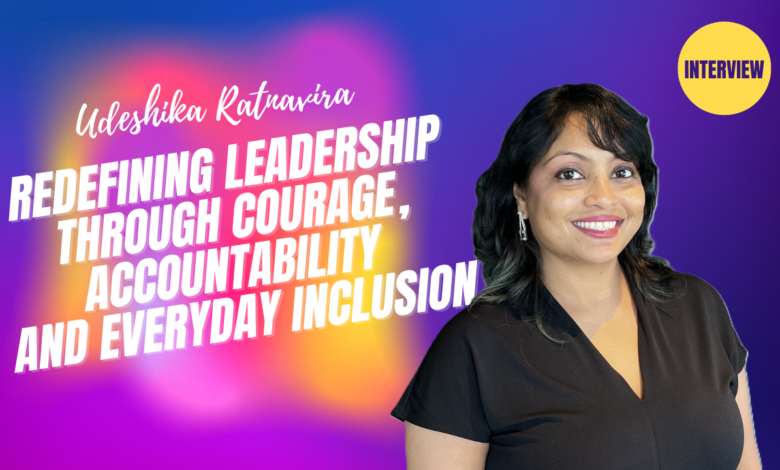
Udeshika Ratnavira, the Chief People Officer at WSO2, reflects on the defining moments that reshaped her understanding of leadership—from moving beyond quiet competence to embracing difficult decisions, shared ownership and accountability. In this candid conversation, she discusses the realities women still navigate beyond the workplace, the role of AI in reshaping expectations, and why true inclusion is built not on policies or one-day campaigns, but on consistent, practical support that enables people to thrive every day.
What defining moments or challenges most shaped your professional journey?
One defining moment for me was realising that being technically competent and being truly effective as a leader are not the same thing. Earlier in my career, I believed that doing good work quietly would naturally lead to impact. Over time I learned that leadership means stepping into uncomfortable conversations, making decisions when there is no perfect answer, and being accountable for people, not just the outcomes.
Another important lesson was learning to let go of hierarchy. Some of the best ideas and most honest feedback I’ve received have come from people removed from titles or reporting lines. That changed how I think about leadership and that’s how we work at WSO2 to date where anyone, irrespective of title or position, can challenge ideas. It’s less about authority and more about creating the conditions for people to do meaningful work.
What barriers do women still face in leadership today that aren’t talked about enough?
I wouldn’t say that organisations today (including WSO2) are creating barriers for women. In fact, many workplaces have made significant progress in building more inclusive and fair environments. What is less talked about is the reality that many women still operate within broader social and family expectations that sit outside the organisation. Balancing leadership roles with personal and family responsibilities can be very different from person to person, and some women simply have more flexibility and support than others.
At WSO2, we don’t hire or promote people to meet gender targets in leadership. We hire people because they are right for the role and promote based on performance. At the same time, we recognise that creating equal opportunity also means creating practical support. This is why we offer flexible working and childcare facilities for young parents (both mothers and fathers) in our Sri Lanka office, where we have our largest employee base.
How have you built credibility and influence in environments where women are underrepresented?
I have learned to focus on impact rather than visibility. Delivering on difficult problems, standing by my decisions, and being consistent in how I treat people has helped me build trust over time. I’m also very clear about not changing my leadership style to fit expectations. I don’t believe in command-and-control leadership. I believe in honest and open conversations, shared ownership and holding people to high standards, including myself. Credibility comes when people see that you are fair, transparent and willing to make hard calls.
How is technology—especially AI and automation—changing leadership expectations in your industry?
For leaders, especially in tech companies like WSO2, this means creating environments where technology helps people work smarter and faster across all functions, while still valuing human judgement, collaboration and accountability. The responsibility of leadership is to make sure these tools are used to remove friction and repetitive work, not to reduce people and to continuously help teams build the skills needed to stay relevant and confident as technology evolves.
What skills or mindsets will be most critical for the next generation of women leaders?
The most important mindset is the courage to be imperfect and still step forward. Waiting to feel fully ready is one of the biggest blockers I see. The ability to learn continuously, unlearn quickly, and ask for help without seeing it as weakness will be critical. And just as importantly, women leaders need to be comfortable setting boundaries and saying no to protect their energy and focus on work that actually matters!
What role have mentorship and sponsorship played in your career, and how do you support others today?
I have benefited more from honest sponsors than from formal mentors, meaning people who challenged me and were willing to be direct about where I needed to grow. Today, I try to do the same for others. I look for potential and actively put people into situations that stretch them, even when they are unsure of themselves and I support them through the discomfort rather than protecting them from it. That is my version of a ‘tough love’ leader!
How can organizations move beyond policies to create cultures where women genuinely thrive?
Policies create safety, but culture creates possibility. Real change happens when leaders are held accountable for how people experience work in their teams and not just for delivery. It also means rethinking how performance, leadership potential and ambition are recognised. If we only reward the loudest voices or the most visible work, we unintentionally exclude many capable people, not just only women.
What advice would you give young women considering careers in IT, security, or leadership roles?
Don’t wait to be invited. Step into opportunities before you feel completely ready. Build strong foundations in your craft, in whichever career path you choose to pursue because confidence grows from competence. Invest in communication and relationship-building early. Your impact will depend not only on what you know, but on how well you can influence and collaborate.
Also choose environments where the work feels meaningful to you because motivation lasts much longer than titles and paychecks. Ultimately, for anyone, male or female, one of the biggest hurdles we face is our own self-imposed limitations; you are often your own greatest obstacle. Don’t forget this, and keep pushing your own boundaries and fears.
What does International Women’s Day mean to you, and what real change would you like to see beyond it?
For me, International Women’s Day is not about special campaigns or symbolic moments. If an organisation truly believes in inclusion and fairness, that commitment should show up in everyday decisions in how people are hired, supported, developed and trusted with responsibility.
The real change I would like to see is less focus on one day, and much more daily awareness of the realities people carry into work, especially the different personal and family responsibilities many women continue to manage alongside their careers. Progress happens when organisations consistently create practical conditions that allow both women and men to sustain demanding, meaningful careers through flexible ways of working, supportive leaders and fair opportunities to grow.