Submer Targets Sovereign AI and Gigafactory-Scale, Liquid-Cooled Data Centers as MEA Hits 2026 Inflection Point

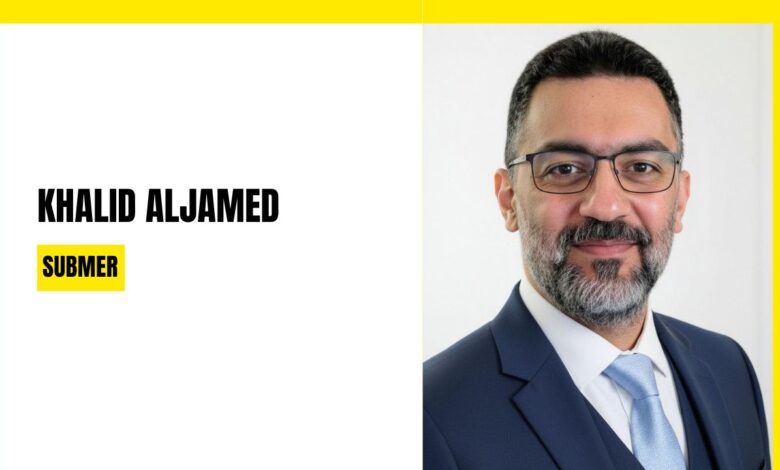
In 2026, Khalid Aljamed, General Manager, Middle East, Turkey & Africa, Submer aims to cement his company’s role as a trusted partner for sovereign AI infrastructure across the Middle East and Africa, combining strategic advisory, gigafactory-scale delivery, and advanced liquid cooling to build sustainable, high-density data centers in some of the world’s most demanding environments.
What opportunities do you foresee for 2026, and how do you plan to leverage them?
2026 represents an inflection point for AI infrastructure in the Middle East and Africa. We’re seeing three transformational opportunities that Submer MEA is uniquely positioned to capture:
- First, the rise of sovereign AI. Across the region, AI is now viewed as a strategic asset, on par with energy or national security. Initiatives such as Saudi Arabia’s Vision 2030 or the UAE’s National AI Strategy 2031 reflect a clear ambition: to retain control over data, compute capacity, and critical digital infrastructure. This is no longer theoretical policy; it is translating into concrete investment decisions. We are already engaged with several governments on sovereign AI cloud initiatives, and we expect this momentum to accelerate through 2026.
- Second, the emergence of gigafactory-scale infrastructure. Projects go far beyond incremental datacenter expansion. These are foundational builds, comparable to creating entirely new industrial ecosystems. They require partners who can operate across the full value chain – from early advisory and design to execution and operational readiness. This end-to-end capability is exactly where Submer adds the most value.
- Third, the rapid transition to liquid cooling. The physics are now non-negotiable. AI processors are moving well beyond 1,000 watts, rack densities are exceeding 150–175 kW, and traditional air cooling has reached its limits. Liquid cooling (both direct-to-chip and immersion) is becoming the default for advanced AI deployments. With more than a decade of hands-on experience and proven reference deployments, Submer is well positioned to deliver these technologies reliably and at scale.
By 2026, our goal is clear: to establish Submer MEA as the trusted partner for sovereign AI infrastructure, supporting governments and enterprises from initial vision through to operational capacity, with efficiency and sustainability embedded from day one.
What major challenges did you encounter this year, and how did you address them?
The 2024–2025 period was a formative phase for Submer in MEA. It confirmed the scale of the opportunity, while also requiring us to adapt our operating model to regional realities.
First, shifting from solutions delivery to strategic advisory. Many organizations in the region are still shaping their AI and datacenter roadmaps. Rather than starting with hardware decisions, stakeholders are focused on strategy, feasibility, and long-term economics. We responded by evolving toward an advisory-first engagement model, strengthening our ability to support clients across strategic planning, financial modelling, design, and build decisions. This allows us to engage earlier and create far more durable outcomes.
Second, building local credibility and institutional trust. In the GCC especially, trust is built through presence and long-term commitment. Large-scale projects typically involve public and semi-public stakeholders and cannot be supported through a remote or transactional model. We’ve addressed this by establishing our MEA headquarters in Saudi Arabia and investing in dedicated local technical and commercial teams. This has enabled deeper relationships, stronger partnerships, and true integration into the regional ecosystem.
Third, ensuring supply chain and execution readiness. Advanced AI and HPC deployments in MEA face real challenges, including limited OEM footprints, complex customs processes, and a shortage of specialized technical skills. To mitigate this, we offer an end-to-end execution model: forming deeper OEM partnerships to act as a regional integration player, exploring in-region inventory strategies to reduce lead times, and investing in training programs to build local technical capability. Delivery certainty is critical when clients are making multi-billion-dollar infrastructure investments.
Can you elaborate on your strategic partnerships this year and plans for next year?
Our partnership strategy is grounded in a clear philosophy: Submer does not aim to manufacture servers or become a construction firm. Our role is to architect the ecosystem and provide a single point of accountability for complex AI infrastructure.
On the silicon and technology side, we maintain deep technical collaborations with companies such as NVIDIA, Intel, and Supermicro. These alliances give us early access to roadmap and co-engineering opportunities, enabling us to advise clients with the authority of ‘silicon-validated’ designs, ensuring that our services and solutions are aligned with next-generation IT technology.
On the execution side, regional partnerships are equally critical. A recent example is our strategic agreement with Siemens, combining their leadership in power distribution, automation, and digitalization with Submer’s expertise in AI and high-density data center infrastructure. Together, we can deliver a fully integrated, future-ready infrastructure stack for MEA customers.
On thermal lifecycle innovation, our partnerships with companies such as Valvoline, ExxonMobil, and BP Castrol, allow us to address not just cooling hardware, but fluid chemistry, material compatibility, and long-term sustainability across the entire lifecycle of liquid-cooled systems.
Looking ahead to 2026, we are scaling this ecosystem across three dimensions:
- Formalizing our role as a regional integration partner for a major server OEM
- Expanding certified EPC partnerships across the region
- Deepening alliances with sovereign cloud providers and telcos to deliver compliant, ready-to-compute infrastructure aligned with local data residency and sovereignty initiatives and requirements
What will be your primary focus areas and strategic priorities for 2026?
2026 is about delivery at scale. Some of our 2026 priorities include:
- First, positioning Saudi Arabia and the UAE as global AI reference markets. These countries are central to the region’s AI ambitions. Our priorities include delivering flagship “lighthouse” projects at gigafactory scale. Additionally, we aim at launching a regional center of excellence where stakeholders can experience our technologies firsthand and developing a standardized operational playbook that can be replicated globally.
- Second, expanding our strategic advisory role. As projects move from intent to execution, Submer MEA will continue to scale its advisory capabilities, working closely with governments, sovereign funds, and large enterprises to shape long-term AI / HPC infrastructure strategies.
- Third, launching full IT integration services. In 2026, we will formally introduce Submer IT Integration Services in the region, offering clients a single point of accountability – from cooling and power infrastructure through to server integration and operational handover.
Finally, selective market expansion and innovation. While the GCC remains our core focus, we are selectively expanding into high-growth markets such as Egypt, Morocco, South Africa, and Turkey. In parallel, we continue to evolve our technology stack, with emphasis on modular MEP systems, faster deployment models, and AI-optimized datacenter and infrastructure reference designs.
How is your company approaching sustainability, digital transformation, or AI adoption in preparation for 2026?
In the Middle East and Africa, sustainability is not a branding exercise; it is a strategic necessity. Governments are scaling AI infrastructure in some of the world’s hottest and most water-constrained environments, while simultaneously committing to ambitious net-zero targets. That reality requires a fundamentally different approach to datacenter design.
At Submer, sustainability starts with physics. Traditional air-cooled datacenters are not compatible with the scale and density of modern AI. Liquid cooling removes heat directly at the source, delivering dramatically higher efficiency, no water consumption, and reliable performance even in desert climates. This is what makes large-scale AI both economically and environmentally viable in MEA.
We also view sustainability as a system, not a single technology. High-temperature liquid cooling enables waste heat reuse, supporting circular energy models with governments and industrial partners. In parallel, we design facilities to integrate seamlessly with renewable energy through co-location, long-term PPAs, and grid-balancing mechanisms.
Digital transformation underpins all of this. Every facility we deliver is designed as an intelligent, data-driven asset, using digital twins, real-time monitoring, and AI-based optimization to maximize efficiency, resilience, and lifecycle performance.
By 2026, sustainability will be embedded in procurement, financing, and national infrastructure strategies. Our advantage is that sustainability is not retrofitted; it is built into our technology, operating model, and culture from day one, positioning Submer to scale AI / HPC infrastructure in MEA responsibly and at pace.