Meta Launches Muse Code Beta and Muse Spark 1.2 to Advance AI-Powered Software Development

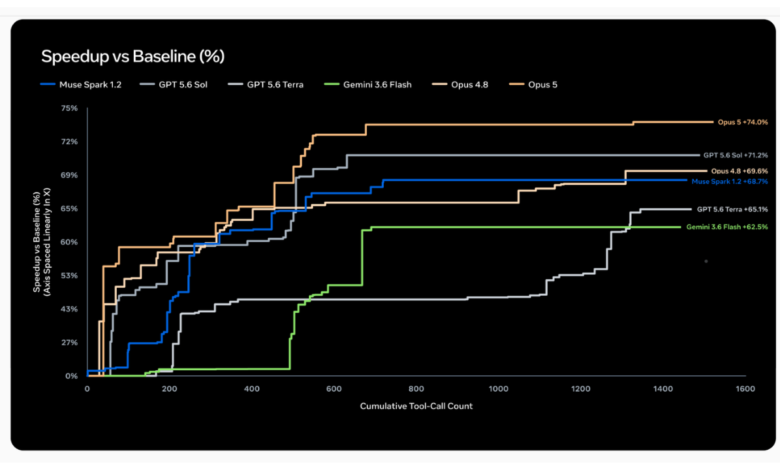
Meta has expanded its AI coding portfolio with the launch of Muse Code (beta), its first AI coding agent, alongside Muse Spark 1.2, an updated coding-focused large language model designed to power agentic software development.
The announcement follows the release of Muse Spark 1.1 last month and underscores Meta’s rapid pace of innovation across its AI development stack. Both Muse Code and Muse Spark 1.2 are now available to developers worldwide through expanded access via the Meta Model API.
Muse Code is designed as a terminal-based AI coding assistant capable of handling end-to-end engineering tasks from natural language prompts. Rather than generating snippets of code, the agent can plan, write, test and verify code across entire repositories, helping developers automate complex software engineering workflows.
The platform employs a multi-agent architecture, enabling several AI agents to work in parallel on different aspects of a development task. According to Meta, this approach accelerates execution and improves efficiency when working on large or complex codebases. Muse Code can be installed with a single command and is available through two pricing tiers, including an opt-in contributor tier aimed at making the service more accessible to developers.
Powering the new coding agent is Muse Spark 1.2, an enhanced version of Meta’s coding model that has been co-trained alongside Muse Code for tighter integration between the model and the agent. The update is designed to improve first-attempt coding accuracy, produce cleaner execution and reduce the need for repeated prompts during development.
Muse Spark 1.2 is built for long-running, multi-file software engineering workflows and features a 1 million-token context window, allowing developers to work across significantly larger codebases while maintaining context throughout extended coding sessions.
Meta said the model represents another step towards frontier-level AI coding capabilities, with larger and more advanced models already in development as the company continues to expand its generative AI ecosystem for developers.