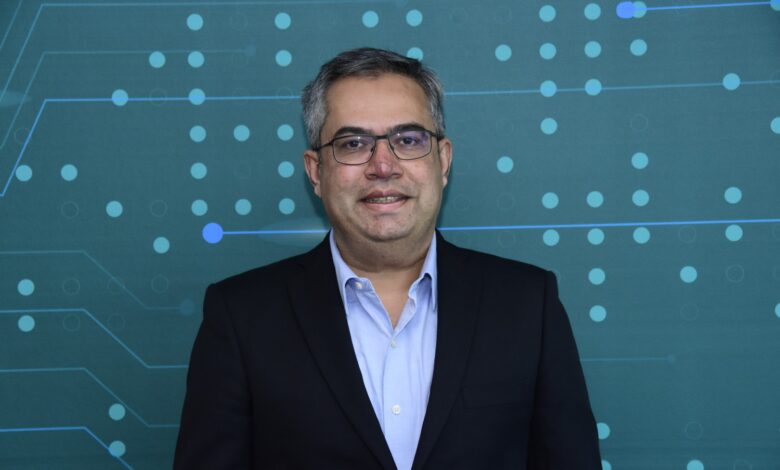
As artificial intelligence reshapes roles, accelerates learning cycles, and redefines productivity, the real competitive advantage lies in how organizations combine intelligent systems with human adaptability, empathy, and purpose. Richard Lobo, the Chief People Officer at Tech Mahindra, explains why the next decade will belong to companies that prioritize human-AI collaboration, continuous upskilling, holistic well-being, and deeply embedded cultures of inclusion and trust.
How will AI and automation redefine job roles, productivity, and workforce structure over the next decade?
AI and automation are shifting work from routine to cognitive tasks. At Tech Mahindra, AI is being embedded into the talent strategy, with roles such as machine learning operations, LLM engineers, and data scientists gaining priority, while employees are upskilled to meet these new demands.
Over the last three years, we have ramped up hiring for AI-native roles such as machine learning operations, large language model engineers, and data scientists, while upskilling our people to work with AI. In the long term, AI will augment human judgment by reducing routine hiring, investing more in high-impact domain + AI capabilities, and firmly emphasizing ethical and trusted AI practices.
AI also makes work more complex and cognitively demanding, increasing the need for human involvement in interpretation, context, and decision-making. Human-machine collaboration will define future productivity, the emphasis shifting away from traditional task execution toward strategic, analytical, and creative work. The most notable outcome is not what AI can automate, but how quickly it highlights the need for organizations to be ready to collaborate with intelligent systems.
The balance between technical capability and human adaptability is defining the next stage of workplace evolution. The value of AI will depend on the strength of the human systems that support it. Organizations succeed by rapidly scaling technology and reinforcing the human structures around it.
What is the optimal balance between remote, hybrid, and in-office work for performance and culture?
Hybrid work is now a long-term operating model. While intelligent systems improve speed, they also add to cognitive load. Employees must manage constant information, frequent tool switching, and ongoing digital visibility. Addressing this requires disciplined design.
Adopting asynchronous collaboration helps reduce the pressure to respond immediately. These practices support productivity by respecting human attention limits. Leaders should design work to align with human rhythms, rather than just meeting digital demands.
Which skills will be most critical in the future workplace, and how should organizations approach continuous upskilling?
AI has compressed learning timelines. Technical skills that once remained relevant for several years may now require renewal within eighteen months. Organizations cannot rely solely on traditional training programs to maintain their capabilities. Learning must operate as a continuous mechanism embedded within work. A future-ready workforce is one that learns at the same velocity as technology evolves; anything slower creates capability debt.
Some organizations are also creating human-AI collaboration labs that allow employees to experiment with new workflows before full deployment. These labs function as safe environments for testing, failure, and refinement. They accelerate skill development because teams learn through application rather than abstract instruction. When employees are given a safe space to experiment, their confidence and curiosity rise dramatically, two qualities that are indispensable in AI-augmented work.
The most critical skills will blend domain expertise with AI fluency, creative problem-solving, and power skills like empathy and judgment. Technical skills alone will not suffice; the ability to collaborate with AI systems will be equally vital. Tech Mahindra has introduced a range of initiatives, including job rotations, leadership development programs, skills training, and mentorship, to encourage employees to take on new challenges and roles. Our focus is on helping every employee grow with technology rather than be displaced by it.
How should leadership and management evolve to effectively lead distributed, multi-generational teams?
The presence of intelligent systems has increased the responsibility placed on leaders. Decisions that were once linear now involve interpreting algorithmic output, employee sentiment, and business context. Employees want clarity about how automated systems impact their workload, recognition, and future opportunities.
This requires leaders to engage with teams more deliberately. Leadership, therefore, becomes a balancing function. Analytical capability is needed to understand system behavior. Empathic capability is needed to understand how individuals respond to rapid shifts in work rhythm. Leaders who combine analytical sharpness with human sensitivity create the most trust and stability in AI-influenced environments.
What technologies will be essential to enable secure, efficient, and collaborative digital workplaces?
The future-ready workplace is not defined solely by technology. Intelligent systems can generate insights, accelerate cycles, and reduce errors. Human capability enables the interpretation of context, fosters trust, and promotes cohesion. The next phase of workforce development will belong to organizations that intentionally combine these strengths, where technology amplifies human judgment, and human judgment guides technology with purpose and responsibility.
Organizations that carefully shape this balance will be better positioned to manage volatility, sustain their culture, and unlock the full potential of AI-augmented work. Ultimately, the true measure of a future-ready workplace is not just in advancing its systems, but in how powerfully and confidently its people use those systems to drive meaningful results. This is where organizations will set themselves apart.
How can organizations improve employee experience while addressing burnout, mental health, and work-life balance?
Our commitment to creating a workplace that prioritizes employee well-being has always been a cornerstone of our approach. Post-COVID, we have further reinforced this commitment by implementing people-centric policies that address the physical, mental, and emotional health of our employees.
These include a comprehensive suite of wellness programs, flexible working arrangements, and continuous learning and development opportunities. Notably, we were among the first in the industry to appoint a ‘Wellness Officer’ to institutionalize holistic wellness, ensuring our employees have access to essential medical resources, including medicine and hospital care.
Our ‘Wellness First’ initiatives reflect this focus, with programs such as the Employee Assistance Program, which offers 24/7 counselling support and self-assessment tools to help manage and mitigate stress. At Tech Mahindra, we place ‘Wellness Before Business,’ ensuring that associate wellbeing remains at the forefront through an integrated and mature wellness experience. Through our Wealth of Wellness (WoW) program, we offer a range of preventive and personalized wellness initiatives, including the People Care Manager Program and the Mind Plan, both of which focus on enhancing mental health.
How will performance measurement and career progression change in a skills-based, flexible work environment?
Future performance management systems will be continuous rather than periodic reviews of past performance. They’ll focus on helping individuals perform better, with transparent metrics that don’t require manager intervention to understand. A system that’s future-focused and coaching-oriented will improve outcomes. Technology and systems are advancing, but managers need proper training. Companies must invest in training both those who give feedback and those who receive it, fostering collaboration rather than confrontation.
What role will workplace culture and purpose play in attracting and retaining talent in a remote-first era?
We firmly believe that the real competitive edge isn’t in strategy decks, it’s in the culture leaders choose to protect and evolve. Culture today is being impacted by changes in business models, employee experience, and learning. Leaders must hardwire resilience by reinforcing core values, enabling agile decision-making, and embedding innovation into everyday practice.
Culture doesn’t change because leaders declare it. It changes when people experience it every day, when they see the difference, and they want to come back to work because of it. Leaders must place immense emphasis on fostering psychological safety and keeping people deeply engaged, even in times of uncertainty.
Purpose is another factor shaping the future workplace. When workflows evolve rapidly, employees may struggle to maintain a clear understanding of their contributions. Organizations are countering this by linking transformation programs to broader goals, such as sustainability, social impact, or community well-being. This alignment enables employees to understand their role in a changing environment. It fosters psychological safety during transitions. Across geographies, purpose consistently emerges as the anchor people rely on when everything else feels in motion.
How can diversity, equity, and inclusion be meaningfully embedded into future workplace models rather than treated as initiatives?
To truly embed diversity, equity, and inclusion into workplace models, organizations must recognize people as their enduring source of competitive advantage and prioritize a people-first approach that attracts, develops, and retains top talent for sustained success.
Our intentional and global inclusivity is not just a value but a strategic imperative: by prioritizing local talent in 90 countries and actively cultivating differences in age, ethnicity, race, lifestyle, and social status, we ensure diversity, equity, and inclusion are foundational elements, not afterthoughts, in our organizational framework.
Committed to diversity, equity, and inclusion across all levels, Tech Mahindra has policies promoting gender equality and facilitating accessibility for differently abled employees, supported by employee resource groups. The organization further delivers regular diversity workshops, ensuring “everyone feels valued and empowered to contribute.”
These efforts are reinforced through integrated people practices that embed inclusion into talent planning, leadership development, and everyday decision-making. By aligning well-being, learning, and equitable growth opportunities into the employee lifecycle, Tech Mahindra continues to foster a workplace culture rooted in belonging, trust, and long-term impact.
How should workplace policies and benefits evolve to meet changing employee expectations and societal norms?
As we navigate an ever-evolving landscape of technology and societal changes, the workplace of tomorrow must be flexible, innovative, and resilient. It is not merely a matter of keeping up with the times; it’s about leading the way in a rapidly changing world. For us, the workplace of the future is one that values its workforce as its most precious asset and recognizes that investing in its growth and well-being is an investment in the organization’s own prosperity.
The next phase of workforce development will belong to organizations that intentionally combine these strengths, where technology amplifies human judgment, and human judgment guides technology with purpose and responsibility. Organizations that carefully shape this balance will be better positioned to manage volatility, sustain their culture, and unlock the full potential of AI-augmented work.
Ultimately, the true measure of a future-ready workplace is not just in advancing its systems, but in how powerfully and confidently its people use those systems to drive meaningful results. This is where organizations will set themselves apart.