Lenovo is expanding its Qira personal AI experience across more devices, markets and applications, extending its reach from PCs and smartphones to wearables and connected business services.
Announced at Lenovo Innovation World during IFA 2026, the latest expansion builds on the initial rollout of Lenovo and Motorola Qira, introduced earlier this year and extended to more than 20 Lenovo devices at Mobile World Congress in March.
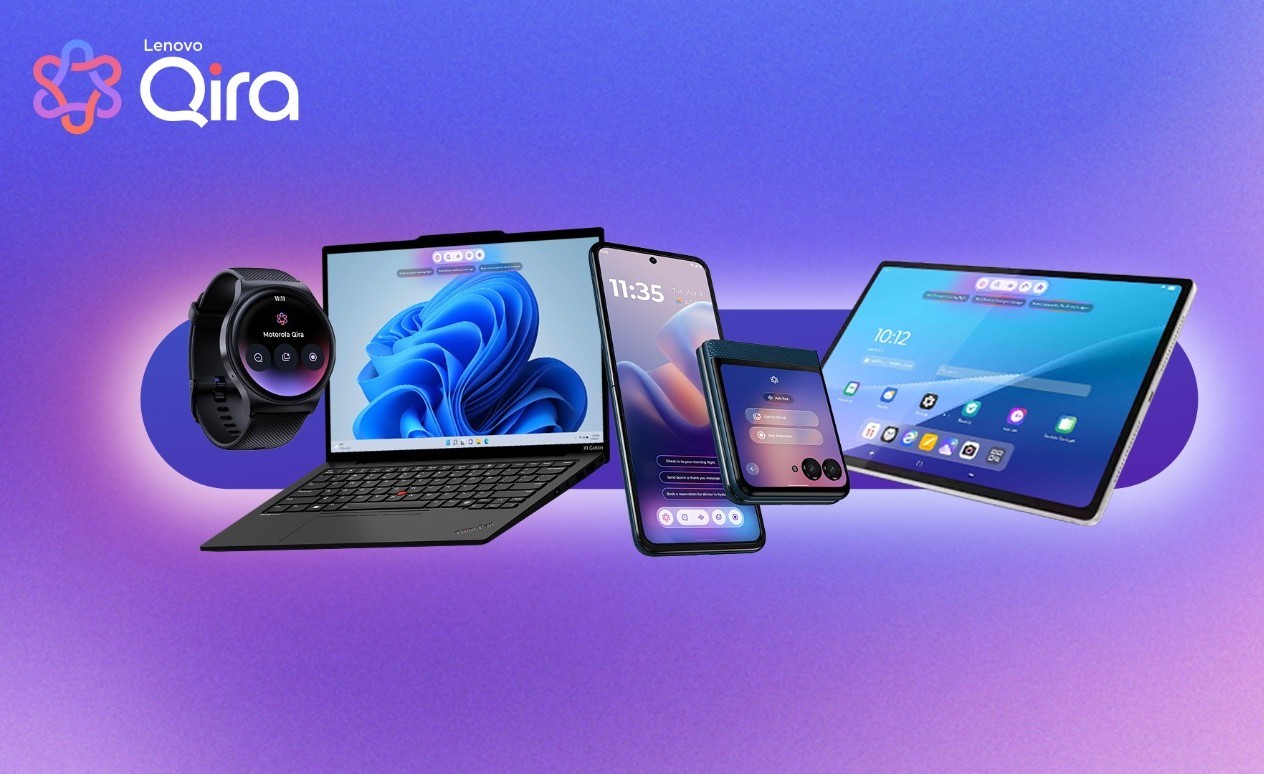
The next phase will bring support to eligible PCs with 16GB of memory, select Motorola devices receiving the Android 17 upgrade, and the moto watch ultra, which will be the first wearable to support Qira. Lenovo is also introducing integrations with commonly used productivity and collaboration applications through a new partnership with Workato.
The supported services include Gmail, Google Calendar, Google Contacts, Slack, Outlook Mail and Outlook Calendar, allowing users to interact with connected applications through natural-language requests.
Lenovo says Qira has shipped on millions of devices globally over the past five months, including select ThinkPad, Yoga, Legion and IdeaPad PCs, Lenovo tablets and Motorola edge smartphones. The platform currently supports six languages, with additional languages planned.
Extending AI Across the Enterprise Device Ecosystem
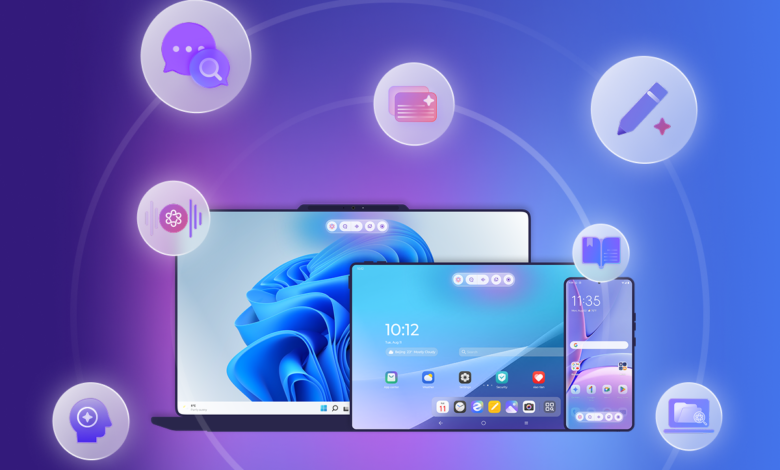
Qira is designed to provide a continuous AI experience as people move between devices during their working day. Rather than treating each device as a separate point of interaction, the platform aims to help users access relevant information and continue tasks across compatible PCs, smartphones and tablets.
Its capabilities include prioritised notification summaries, cross-device knowledge and a central interface for interacting with information and services. Lenovo says these features are intended to reduce the need to switch between devices and applications to keep track of updates or retrieve information.
The expansion to eligible PCs with 16GB of memory broadens access beyond higher-memory configurations. Lenovo is also continuing to optimise local models to strengthen the platform’s on-device AI foundation. Eligible users can download Lenovo Qira from the Lenovo website.
For Motorola, the rollout will take place gradually as eligible devices receive Android 17, with timing varying by device and market. On supported devices currently featuring moto ai, the upgrade will introduce Motorola Qira.
The addition of the moto watch ultra extends the experience to wearables. Users will be able to raise their wrist or say “Hey Qira” to ask general questions or access information through Qira’s cross-device knowledge.
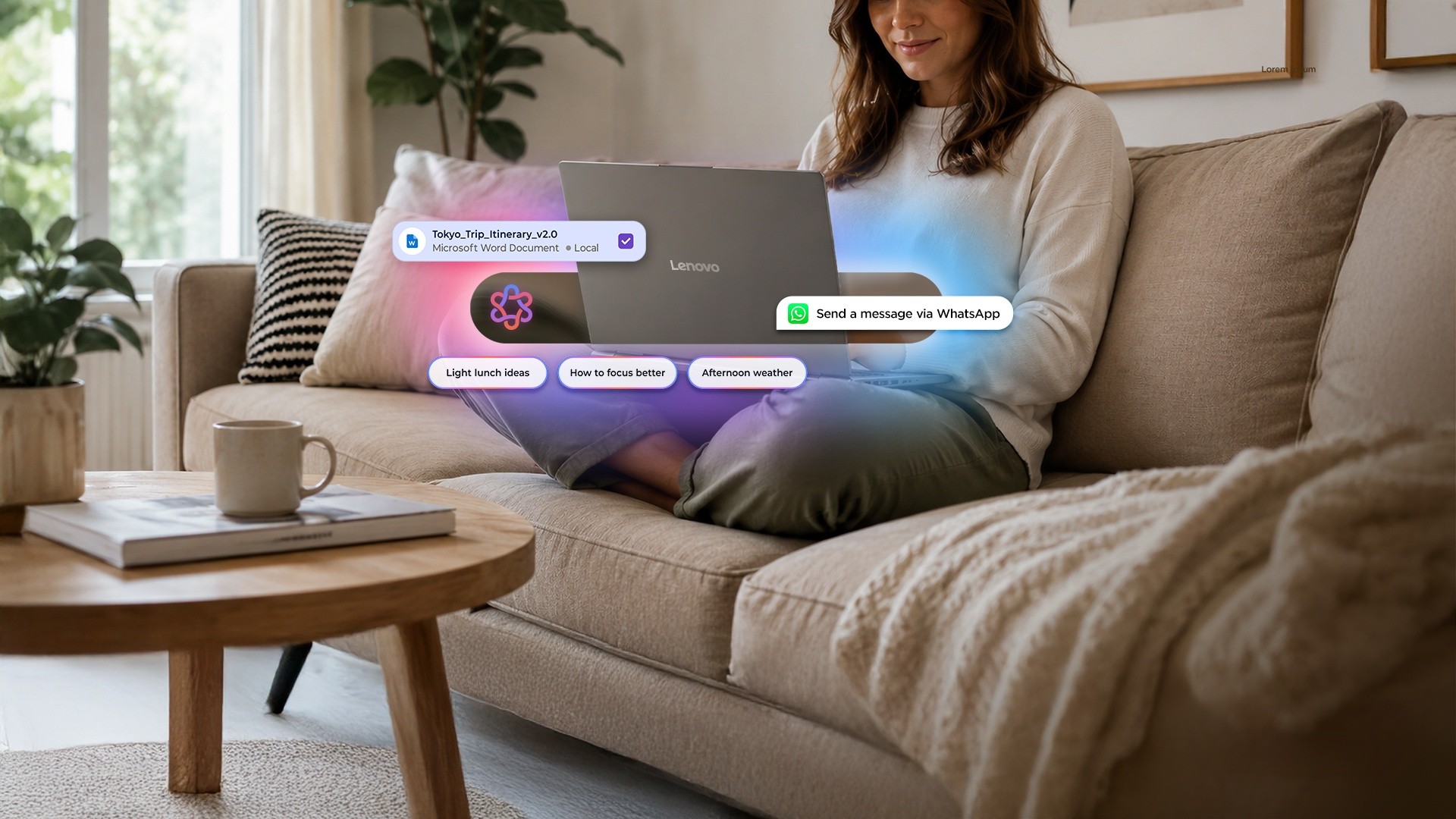
Connecting AI with Business Applications
A key element of the expansion is Qira’s ability to connect with everyday applications and services. Through Lenovo’s collaboration with Workato, users will be able to interact with supported email, calendar, contact and collaboration tools using natural-language requests.
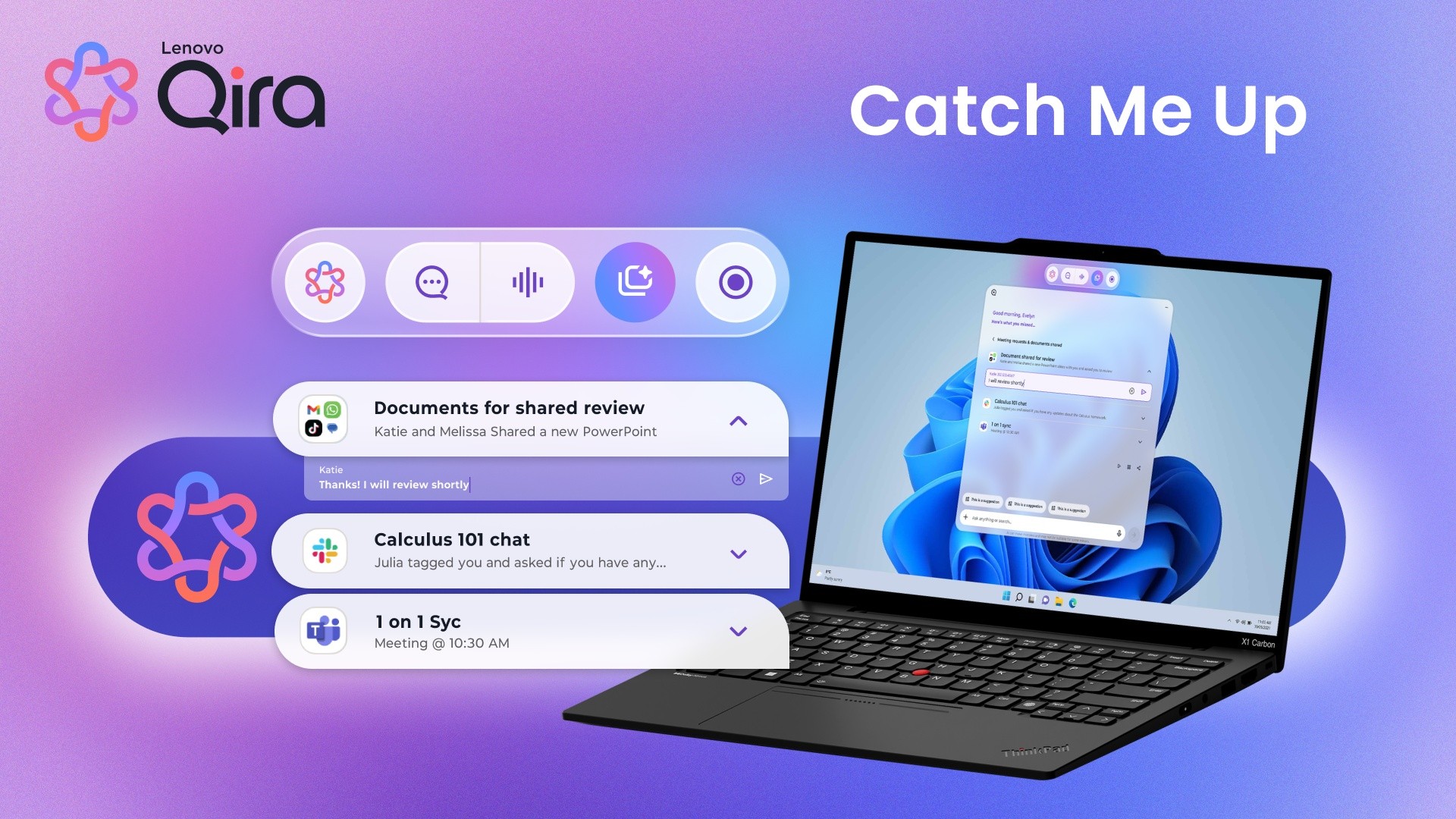
The integrations are intended to help users retrieve information and take action without repeatedly navigating between applications. For example, Qira’s Catch Me Up feature can summarise important updates from email, group chats and calendar events, allowing users to review relevant information and act through the Qira interface.
Lenovo says Catch Me Up has also been improved to generate summaries more quickly, responding to user interest in features that reduce the effort required to process incoming information.
The company is also expanding its integrations with Notion and Perplexity. Users can connect their Notion accounts to retrieve and edit project information through Qira, while the expanded Perplexity integration supports deeper research and the discovery of visual references.
These integrations are designed to help users continue working on documents, research and other projects without constantly switching between applications or devices.
Lenovo’s Vision for Personal AI
Lenovo says the aim is not to replicate an identical AI interface across every device, but to make each device useful in its own context while maintaining a connected experience.
“Personal AI should not be another app waiting for a prompt,” said Dan Dery, Vice President of AI Ecosystem, Lenovo. “It should understand what matters to you, move with you across devices and help orchestrate the next step across the agents, applications and services you choose. With this next evolution of Lenovo & Motorola Qira, we are bringing that vision closer to reality through intelligence that is built into the device, designed around the person and developed with privacy, choice and control at its core.”
Lenovo says the availability, timing and functionality of the features announced at IFA may vary by device, market, configuration and platform.
Some features may require software updates, user permission, supported applications or services, account sign-in, internet connectivity, or specific hardware and software configurations. Partner integrations and connected application functionality may also vary by market, service and account type.
The company expects Qira to expand to additional device families by the end of 2026, including the wearables category.