Leading with Clarity: Navigating Complexity, Confidence and Change in Tech

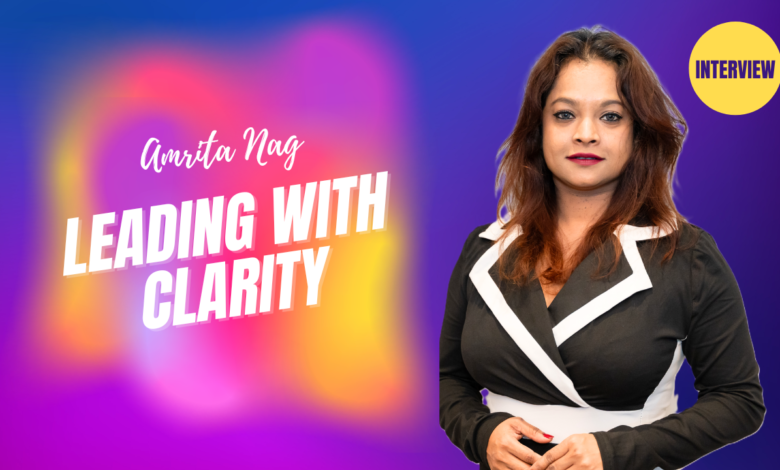
Amrita Nag, Country Marketing Head – ASUS Business (Middle East & East Africa), reflects on building credibility across diverse markets, leading through ambiguity, and shaping inclusive ecosystems in the tech industry. In this International Women’s Day conversation, she shares insights on the subtle barriers women still face in leadership, the evolving expectations of AI-driven workplaces, and why authenticity, decisiveness and trust in one’s voice will define the next generation of women leaders.
What defining moments or challenges most shaped your professional journey?’
I’ve grown the most when things weren’t clear and I had to figure them out on the fly. Taking on multi‑country roles, building momentum across very different markets, and scaling in ecosystems that were still evolving pushed me in the best way. I stopped waiting for perfect conditions and started creating a simple framework, bring in the right people, and keep moving. That’s shaped how I lead today and given me real confidence navigating complexity.
What barriers do women still face in leadership today that aren’t talked about enough?
One barrier I still see for women in tech leadership is being taken seriously from the very beginning. There’s often an extra layer of proving your credibility before your expertise is fully recognized. Women also walk a tighter line when it comes to tone being direct and confident, but aware that the same behavior is judged differently for men. And with fewer women in senior roles, the path can feel isolating at times. When you don’t see many people like you in leadership, it naturally makes the journey feel less visible. Real change happens when organisations address these everyday dynamics and give women the same trust, visibility, and space to lead authentically.
How have you built credibility and influence in environments where women are underrepresented?
I’ve built credibility mostly through consistency, delivering well, delivering on time, and communicating with clarity. Even in rooms where women are underrepresented, people start trusting you when your work speaks for itself. I also focus on building genuine relationships and understanding what matters to different stakeholders. And honestly, leaning into my own leadership style, instead of trying to blend in, has made the biggest difference. Authenticity carries influence.
How is technology—especially AI and automation—changing leadership expectations in your industry
What I’ve noticed is that AI and automation are shifting leadership away from managing tasks and more toward managing clarity. Teams now have access to so much information and so many tools that the real expectation from leaders is to help people prioritise, make sense of what matters, and stay aligned. AI handles the routine work, but humans still set direction. So leadership is becoming less about technical depth and more about guiding people through complexity, asking better questions, and creating an environment where teams feel confident using new technologies. In many ways, the biggest change isn’t the technology itself, it’s how leaders support people in adapting to it.
What skills or mindsets will be most critical for the next generation of women leaders?
I think the most important skill for future women leaders is learning to trust their voice early. With how fast everything moves, being decisive and comfortable sharing ideas before they’re ‘perfect will matter a lot. Pair that with adaptability and strong boundaries, and you have a leadership style that’s both confident and sustainable. For women in tech, the ability to merge empathy with data-driven decision-making will be a superpower.
What role have mentorship and sponsorship played in your career, and how do you support others today?
Mentorship and sponsorship have both mattered in different ways. Mentors helped me think things through and gave me honest guidance, while sponsors were the ones who actually pushed me forward and opened doors. Today, I try to do a bit of both for others, whether that’s giving advice when they need clarity or making sure their good work is seen and acknowledged. Sometimes the smallest support makes the biggest difference.
How can organizations move beyond policies to create cultures where women genuinely thrive?
I think organisations create real change when they focus less on writing policies and more on how people actually treat each other day‑to‑day. Culture shows up in the small moments, who gets heard in meetings, who gets credit for their work, who gets stretch opportunities, and whose ideas are taken seriously.
If those everyday behaviours aren’t fair, no policy will fix it. What makes women thrive is feeling trusted, supported, and given room to grow without constantly having to prove themselves. When leaders call out bias in real time, share opportunities openly, and back women publicly, that’s when inclusion becomes part of the culture instead of something written in a document.
What advice would you give young women considering careers in IT, security, or leadership roles?
My advice would be: don’t wait to feel ‘ready.’ Tech and security are fast‑moving fields, and nobody has all the answers at the beginning. What matters is curiosity, the willingness to learn, and the confidence to take up space even when you’re still figuring things out. Also, build a network early, not just mentors, but peers who grow with you.
The industry can feel big from the outside, but the moment you find your community, it becomes much easier to navigate. And finally, trust your perspective. Diverse viewpoints are needed in tech more than ever. Your ideas and your way of thinking bring value, so don’t hold back from contributing just because you’re starting out.
What does International Women’s Day mean to you, and what real change would you like to see beyond it?
For me, International Women’s Day is simply a moment to appreciate women for who they are and the roles they play at home, at work, in their communities, in whatever path they choose. It’s not just about career milestones; it’s about acknowledging the strength, care, and resilience women bring into every part of life. What I’d love to see beyond IWD is a world where this respect and appreciation is part of our everyday mindset, not tied to a date on the calendar, but woven into how we speak to, support, and value women in all fields, all year round.