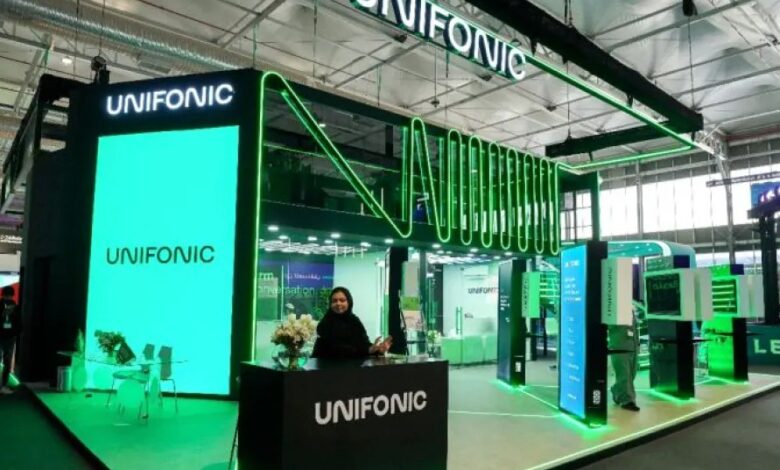
Unifonic, a Saudi technology company serving organisations across the Middle East, is entering a new phase of growth by positioning itself as an AI-native Customer Experience (CX) platform for emerging markets. The company aims to help enterprises and public sector organisations deliver adaptive, predictive and ROI-driven customer experiences.
Building on its regional experience in enabling customer communications, Unifonic is evolving from a traditional communication platform into a sovereign, AI-native CX platform designed for emerging markets. Unlike legacy CPaaS solutions that provide individual communication APIs with AI capabilities added separately, Unifonic has integrated its capabilities into a unified AI governance and control layer, known as Agentic Studio. The platform embeds AI at its core, helping organisations transform fragmented interactions into seamless customer journeys.
The repositioning comes as the global AI landscape shifts, with predictive and personalised engagement becoming an expectation rather than a differentiator. As customer demands increase, enterprises need AI systems that can understand intent, maintain context and take meaningful actions beyond automated responses. As organisations transition from fragmented automation to production-scale execution in the ‘Autonomous AI’ era, Unifonic is supporting enterprises and public sector entities with specialised Agentic CX services to enhance and transform customer operations.
As part of this transformation, Unifonic will launch a redesigned corporate website that reflects its identity as a sovereign, AI-native CX platform for emerging markets. The new digital experience will highlight its Agentic AI capabilities, industry-focused solutions and expertise, providing enterprises with a simpler way to explore its portfolio of AI-driven customer engagement solutions.
Unifonic’s ROI-focused architecture is built around sovereignty, regional understanding and autonomous execution. Through multi-agent orchestration, the platform enables predictive and human-like customer experiences while managing complex workflows with governance, compliance and a Human-in-the-Loop approach to minimise risks.
The company’s AI-native foundation is strengthened by sovereign AI capabilities, regional data expertise, localisation and live multi-agent systems. By combining advanced language models, real-time data and omnichannel orchestration, Unifonic enables AI agents to reason, make decisions and resolve complex workflows while maintaining consistent context across channels.
These agentic capabilities support the complete customer lifecycle, from acquisition to retention, including marketing automation and customer care. Agentic marketing can transform campaign planning, execution and optimisation by enabling AI agents to understand business objectives, develop strategies, execute campaigns, monitor performance and seek human input when required. This enables faster launches, continuous optimisation, scalable personalisation and consistent brand experiences.
Similarly, Agentic Customer Care allows AI agents to move beyond answering queries by resolving complete customer workflows, including complex support processes and appointment management across systems. This approach ensures that every stage of the customer journey is supported by coordinated AI agents capable of understanding intent and driving measurable business outcomes.
While enabling autonomous execution, Unifonic maintains human oversight through supervised governance models. Designed for mission-critical environments, the platform follows compliance-by-design principles, ensuring auditability and adherence to regulatory requirements.
Ahmed Hamdan, CEO and Co-founder of Unifonic, stated: “The cornerstone of this strategic repositioning is our ongoing integration of autonomous AI agents that can reason, plan and act independently. We are also re-engineering the overall service model so that enterprises are supported to orchestrate outcomes across every system and channel, transforming the overall customer experience into a competitive advantage for brands.”
Mohammed Sleeq, Chief Operating Officer at Unifonic, stated: “By resolving issues on first contact, our platform drives measurable business impact. We have achieved up to 85% automation and faster resolution times, empowering human teams to focus on high-priority tasks that require empathy and critical judgment.”
The repositioning follows Unifonic’s acquisition of SESTEK, a conversational AI company with 25 years of research and development expertise and advanced speech recognition technology. The integration enables the platform to deliver dialect recognition accuracy of 97% in English and 95% in Arabic, exceeding the capabilities of many generic global models.
Karim Zaki, Chief Product and Technology Officer, commented: “Our cloud-agnostic architecture and proprietary regional data provide the sovereign foundation for secure, culturally fluent AI in mission-critical environments. Strategic partnerships enable us to deliver high-speed, human-like and Arabic-first experiences, helping enterprises to move from experimentation to production-scale execution. Moreover, our sophisticated agent framework enables enterprises to go beyond manual, technical configurations – framing high-level business goals that can be autonomously achieved by AI agents.”
He added: “By prioritising customer-centric and goal-oriented development, as well as leveraging our two decades of regulatory expertise, we solve real business challenges, ensuring our platform delivers measurable ROI and remains fully compliant for high-stakes sectors like banking, finance and the public sector.”
Unifonic supports customer interactions for more than 5,000 organisations, helping enterprises navigate the AI-driven era through production-scale orchestration, specialised AI agents, governance controls and human oversight. The company’s shift from automation-led engagement to agentic orchestration aims to help organisations adopt secure, culturally relevant and ROI-driven AI solutions as they move towards the ‘Autonomous AI’ era.