Huawei Highlights Full-Stack AI Strategy for Saudi Arabia at LEAP 2026

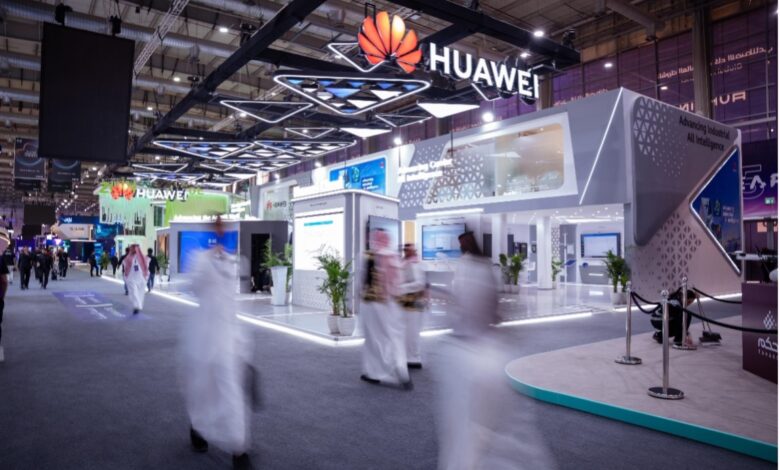
Huawei has outlined its strategy for supporting Saudi Arabia’s transition towards AI-driven growth, highlighting full-stack capabilities spanning connectivity, computing, cloud infrastructure and ecosystem development at LEAP 2026.
The company said Saudi Arabia’s ICT market had reached US$53 billion, representing 89.5% growth since 2017, while the digital economy accounted for 16% of GDP. With 5G coverage reaching 86%, Huawei said the Kingdom had established a strong digital foundation but would require deeper infrastructure capabilities to move towards large-scale AI adoption.
According to Huawei, the next phase of digital transformation will require more than AI applications, with connectivity, compute, cloud and ecosystem capabilities playing an increasingly important role in supporting enterprise and government AI deployments.
Huawei is expanding its AI-focused portfolio with technologies including Agentic RAN, AI OTN and AI WAN, alongside connectivity platforms such as 5G, routers and DWDM. The company said it invests more than 20% of its annual revenue in R&D, supporting the development of in-house capabilities spanning network chips, general-purpose processors, AI chips, storage and optical modules.
Huawei is also promoting an open technology ecosystem through platforms including HarmonyOS, openEuler and GaussDB, while its AI infrastructure portfolio includes the Atlas SuperPoD, which can support up to 8,192 NPUs. The company said these capabilities allow it to combine connectivity, computing and AI Cloud to support AI deployments across sectors including government, energy and financial services.
Huawei’s AI-Centric Network incorporates lossless transmission, network autonomy, performance assurance and built-in security. On the cloud side, Huawei Cloud operates Class C 3AZ public cloud nodes, which the company described as the Kingdom’s highest security classification. The infrastructure keeps data within Saudi Arabia while providing response times of less than 25 milliseconds, supporting applications requiring data sovereignty and security.
Alongside its technology investments, Huawei is seeking to expand the local ecosystem supporting AI adoption in the Kingdom. The company works with more than 800 global independent software vendors (ISVs), 1,500 local system integrators and 300 delivery partners, bringing together technology providers, industry expertise and local delivery capabilities.
Huawei is also investing in skills development through more than 30 ICT Academies across Saudi Arabia. The company said these programmes support the training of approximately 10,000 ICT professionals each year, contributing to the development of local digital and AI capabilities.
Huawei said it would continue investing in full-stack AI infrastructure, ecosystem development and local talent as Saudi Arabia moves towards broader AI adoption. The company added that its focus would remain on helping customers and partners move beyond deploying individual AI applications towards generating measurable industry value, while supporting the Kingdom’s broader Vision 2030 objectives.