Nedaa Focuses on Mission-Critical Communications, Interoperability and AI-Driven Public Safety

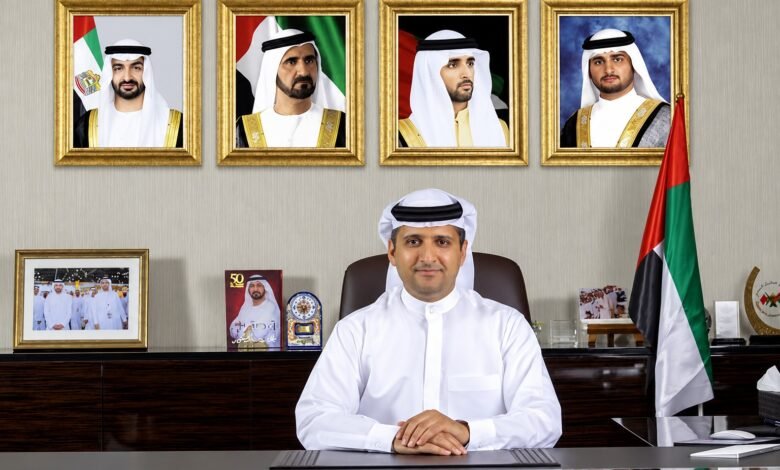
H.E. Mansour Juma Bu Osaiba, CEO of the Professional Communication Corporation – Nedaa, discusses how advances in mission-critical broadband, dedicated 5G networks, AI and secure communications are shaping the future of public safety in Dubai and the wider Middle East.
As governments across the Middle East accelerate investments in smart cities, artificial intelligence and digitally enabled public services, the importance of reliable, secure and interoperable communication infrastructure is becoming increasingly apparent. For emergency responders and government entities, the ability to exchange information in real time, coordinate operations and maintain uninterrupted connectivity is not simply a technological requirement but a fundamental component of public safety.
The Professional Communication Corporation – Nedaa, the sole and exclusive security network provider for the Government of Dubai, is at the forefront of this transformation. Its focus is on strengthening the communications infrastructure that supports emergency services, government entities and critical service operators, while exploring how emerging technologies can improve operational effectiveness.
Ahead of GITEX Global 2026, H.E. Mansour Juma Bu Osaiba, CEO of Nedaa, discusses the organisation’s priorities, the evolution of mission-critical communications, the practical role of AI in public safety and the growing importance of cybersecurity, data sovereignty and infrastructure resilience.
GITEX and the Future of Mission-Critical Communications
For Nedaa, GITEX Global 2026 provides an opportunity to demonstrate how developments in communications technology can translate into safer cities and more effective public services. The organisation’s priorities this year centre on the convergence of mission-critical voice and broadband communications, interoperability and real-time information sharing.
These capabilities are becoming increasingly important as urban environments grow more complex and emergency response requirements evolve. Across the Middle East, ambitious urban development programmes and investments in public safety infrastructure are creating opportunities for technological collaboration and knowledge exchange.
H.E. Mansour Juma Bu Osaiba believes the region’s growth presents significant opportunities for specialised communication solutions, particularly in the UAE and Saudi Arabia, where governments are investing in advanced infrastructure and digitally enabled public services. For Nedaa, however, its responsibilities remain closely aligned with Dubai’s strategic objectives and the operational requirements of the entities it serves.
Building More Intelligent and Connected Cities
Over the next three to five years, the regional technology landscape is expected to evolve towards a more integrated approach to digital transformation, where the success of technology investments is increasingly measured by their tangible impact on people’s lives.
H.E. Mansour Juma Bu Osaiba identifies intelligent transportation systems, connected emergency services and digitally enabled government operations as areas where the greatest opportunities will emerge. These applications will require communication networks capable of supporting multiple agencies simultaneously, facilitating reliable information exchange and enabling coordinated responses.
One particularly significant development will be the integration of mission-critical communications into broader urban management ecosystems. The evolution of 5G, intelligent sensing and real-time data exchange will allow authorities to anticipate incidents, coordinate resources more effectively and respond to complex situations with greater precision.
This transition places greater emphasis on interoperability, ensuring that different communication platforms and operational systems can work together rather than functioning as isolated technology environments. For emergency services, the ability to access and share accurate information across agencies can make a considerable difference to response times and operational outcomes.
Bringing AI into Mission-Critical Operations
Artificial intelligence is moving beyond experimentation and into practical enterprise deployment. However, its application in public safety requires a more considered approach than conventional commercial use cases.
According to H.E. Mansour Juma Bu Osaiba, the greatest value of AI in mission-critical environments lies in its ability to support human judgement when time and accuracy are essential. Intelligent network monitoring, video analytics and automated incident identification are among the capabilities that could significantly enhance operational effectiveness.
Through collaborations with technology partners, Nedaa is examining how these innovations can complement existing communication systems. The objective is to introduce capabilities that strengthen situational awareness and support operational decision-making without compromising the reliability of established infrastructure.
Nevertheless, deploying AI in public safety environments comes with considerable responsibilities. Reliability, accountability, information accuracy and human oversight must remain central considerations before these technologies are integrated into live operational environments.
This is particularly important when decisions and actions can have direct consequences for public safety. Moving AI from pilot projects into production therefore requires more than technical readiness; it demands confidence in the accuracy, consistency and accountability of the systems being deployed.
Supply Chain Resilience and Local Technical Capabilities
Global supply chain uncertainty continues to influence technology procurement and infrastructure planning. Geopolitical tensions, trade restrictions, shipping disruptions and component shortages can affect equipment availability, maintenance schedules and the ability to sustain critical infrastructure.
For an organisation responsible for communications supporting emergency services, these challenges have implications that extend well beyond conventional procurement considerations.
H.E. Mansour Juma Bu Osaiba emphasises that emergency services cannot afford interruptions arising from external market conditions. This reality shapes Nedaa’s approach to procurement, infrastructure maintenance and technology partnerships.
The organisation is focused on anticipating operational requirements, maintaining dependable relationships with technology suppliers and ensuring continuity throughout the equipment lifecycle. Developing technical capabilities within Dubai is equally important, allowing Nedaa to address operational requirements locally and reduce external dependencies.
This approach reflects a broader understanding of infrastructure resilience. Maintaining network availability is only one part of the equation; the wider ecosystem responsible for equipment, technical support, maintenance and operational continuity must also remain dependable.
Security, Data Sovereignty and Operational Independence
As governments and enterprises become increasingly connected, protecting sensitive information and maintaining control over critical infrastructure have become essential priorities. For organisations supporting emergency responders and government entities, cybersecurity and data protection are particularly significant.
H.E. Mansour Juma Bu Osaiba describes information exchanged by emergency responders and government entities as inherently sensitive, making its protection an institutional responsibility and an essential component of public trust.
Nedaa’s dedicated TETRA and broadband communication networks provide a controlled environment for mission-critical operations. Its security approach is underpinned by encryption, access management, network redundancy and adherence to recognised technical standards.
As communication technologies evolve, the challenge will be to expand connectivity and accessibility without compromising information security, operational independence or the integrity of essential government services.
The increasing adoption of broadband communications and emerging connectivity technologies will make this balance even more important. Organisations must ensure that the benefits of interconnected systems do not introduce vulnerabilities into infrastructure supporting critical public services.
Priorities for the Next 24 Months
Looking beyond GITEX Global 2026, Nedaa’s priorities for the next 12 to 24 months will be guided primarily by Dubai’s evolving operational requirements rather than geographical expansion alone.
H.E. Mansour Juma Bu Osaiba says the organisation intends to advance mission-critical broadband services, facilitate greater interoperability between operational systems and explore additional applications of dedicated 5G connectivity.
Developing Emirati technical expertise and deepening collaboration with specialised technology partners will also remain integral to its strategy. Building local capabilities is particularly important as communication infrastructure becomes more sophisticated and the demand for specialised technical knowledge increases.
For Nedaa, the ultimate measure of success is not simply the deployment of new technologies or the expansion of its service portfolio. It is the confidence that Dubai’s emergency responders, government entities and critical service operators place in its networks, particularly when circumstances demand immediate and coordinated action.
As the Middle East continues to invest in intelligent infrastructure and digitally enabled public services, mission-critical communications will remain a foundational element of the region’s smart city ambitions. Nedaa’s focus on secure connectivity, interoperability and technological evolution reflects the growing recognition that the effectiveness of a connected city ultimately depends on its ability to communicate, coordinate and respond when it matters most.