Saudi Arabia’s AI Ambitions Put Data Centre Infrastructure Under Pressure

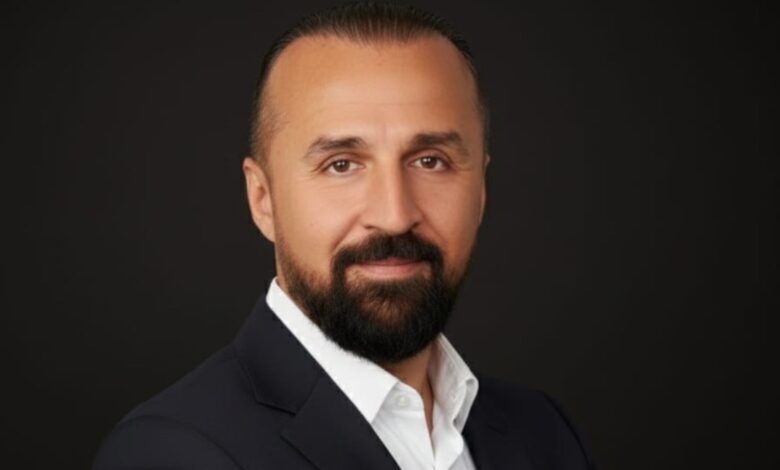
As Saudi Arabia moves to build AI and HPC capacity at unprecedented scale, the challenge is shifting from securing GPUs to delivering the power, cooling and infrastructure needed to support them. Afif Hamdan, Regional Head of Channels & Alliances, Middle East, Africa & Turkey at Submer, discusses the Kingdom’s push towards sovereign AI, the rise of high-density data centres and why infrastructure planning will determine how quickly the region can turn AI ambitions into operational capacity.
What are you showcasing at LEAP 2026 that is genuinely new, and what problem does it solve for customers?
We are arriving at LEAP as a different company from the one the market knew two years ago. Submer started as a liquid cooling specialist. Today our capabilities run across advanced thermal solutions, modular AI and HPC infrastructure, data centre design and development, and AI cloud platforms and services.
Together with inferX, our NVIDIA Cloud Partner business, and Radian Arc’s edge GPU platform, that gives us reach from hyperscale AI and HPC facilities through to compute running inside telecom networks. The problem customers describe to us is fragmented delivery. Facilities, cooling, compute and operations get procured separately, which leaves gaps between suppliers that nobody has actually contracted to close.
Then a project slips, accountability blurs, and the schedule slips further while people work out whose problem it is. Very few companies can take responsibility across every layer of that stack. We can, and that is really what we are bringing to LEAP.
Saudi Arabia is investing heavily in AI and digital transformation. What are you seeing from Saudi customers that differs from demand in other markets, and how is this influencing your product strategy?
Saudi Arabia stands apart in three ways. The first is scale. Many markets are still retrofitting halls designed for 10kW racks. Here, customers are building greenfield AI and HPC infrastructure at gigawatt scale, engineered for 100kW-plus densities from day one.
The second is sovereignty, and the definition has widened considerably. Where data resides is now the starting point of the conversation rather than the end of it. Customers expect engineering, integration and long-term service capability to sit inside the Kingdom. That is why we established Submer Arabia as a wholly owned regional headquarters, with engineering and delivery capability behind it.
The third is the operating environment. High ambient temperatures and water scarcity make zero-water, dry-cooled design a basic engineering requirement in this market. Put together, the conversation has moved from buying AI hardware to building national AI and HPC capability. That shapes our strategy directly: in-Kingdom integration and after-sales, a local partner ecosystem, and reference designs that compress the time between decision and energised capacity.
What is the biggest technology challenge your customers in the Middle East are asking you to solve right now?
The market no longer has a GPU problem. It has an infrastructure problem. According to the Ministry of Communications and Information Technology, Saudi Arabia had roughly 467MW of operational data centre capacity in Q1 2026, against announced national pipelines measured in gigawatts. Closing that gap is a question of power, permitting, long-lead equipment and delivery capacity.
The questions have changed with it. Customers used to ask us how to cool a rack. Now they ask how to get from project approval to operational capacity in the shortest possible time, and they ask it in the first meeting. On the engineering side that comes down to two things: removing more than 100kW per rack in 45°C ambient conditions without consuming water, and modernising an estate that was designed for a tenth of that density. On the commercial side it comes down to ownership. When facilities, thermal systems, IT and operations are all contracted separately, nobody owns the outcome.
LEAP brings together global technology companies, startups, investors and government organisations. What partnership or ecosystem opportunities are you looking for at the event that could accelerate your growth in Saudi Arabia or the wider region?
We are looking at the ecosystem fairly broadly, but the conversations that matter most to us are with delivery partners. Consulting engineers, EPC firms, design-and-build organisations, local industrial partners. These are the organisations that turn a reference design into an energised facility, and they are also where the localisation ambition becomes real through in-Kingdom integration and assembly. If we get that layer right, everything else becomes easier.
Alongside that, silicon providers and OEM/ODM partners, where we can extend factory integration into deployment, lifecycle support and long-term operations inside the Kingdom. And telecom operators, sovereign AI initiatives and emerging cloud providers, where inferX and Radian Arc open up opportunities to deploy AI and HPC infrastructure from the core out to the edge.
Channel and distribution partners run through all of it. Infrastructure at regional scale simply cannot be delivered through direct engagement alone. LEAP matters because governments, investors, operators and technology providers all end up in the same conversations. Projects of this size get built through ecosystems, and the ecosystem tends to assemble itself in rooms like this one.
How important is Saudi Arabia to your regional growth strategy, and are you using the Kingdom as a launchpad for expansion across the wider GCC, Middle East and Africa?
Saudi Arabia sits at the centre of our regional strategy. Submer Arabia is our wholly owned regional headquarters for the Middle East, Turkey and Africa, and we are building our commercial, engineering and partner ecosystem from the Kingdom.
We also treat it as the proving ground for the next generation of AI and HPC infrastructure. What we establish here becomes the blueprint for the wider region: reference architectures, in-Kingdom integration and after-sales capability, partner and distribution frameworks. The commercial framework we built in the Kingdom has already become the template for the Gulf and Africa, and we are applying the same approach across Turkey and North Africa now.
Customers across the region want proven execution, which is fair enough given how much of this market is still announcement rather than delivery. Saudi Arabia lets us build those references first.
Looking ahead three years, which technology do you believe will have the biggest impact on your customers in the Middle East, and what are businesses still underestimating today?
The biggest change will not be a new GPU or another model. It will be AI factories taking their place as critical national infrastructure, alongside power, water and telecommunications. What drives that is the shift from training to inference. Training concentrates compute into a handful of hyperscale campuses. Inference pushes it out into telecom networks, enterprises and cities, closer to where the decisions actually get made.
That makes core-to-edge infrastructure far more important than most roadmaps currently assume, particularly for sovereign AI. As for what businesses underestimate, I would say it is everything sitting behind the chip. Power above all. Energisation, substations, grid connection: these run on timelines that have nothing to do with procurement cycles, and no amount of commercial pressure compresses them.
Water is close behind. Then there is day-two operations, which almost nobody budgets for properly at the design stage, and by that I mean trained technicians, spares held in-country, real service-level accountability. And design lock-in, which is the one I would flag hardest. A facility built on air-cooling assumptions has fixed its density ceiling before it opens. People tend to discover that about eighteen months later.