Saudi Arabia’s Next Technology Advantage Will Come From Connected, Sovereign and AI-Driven Ecosystems

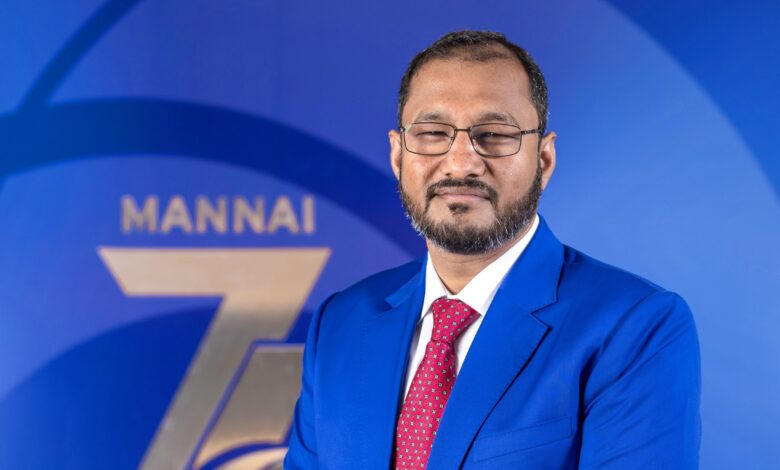
As Saudi Arabia accelerates its digital transformation, businesses are shifting their focus from adopting individual technologies to building integrated ecosystems that deliver measurable outcomes. Lakshimi Narayanan, General Manager at Mannai Information Technology Saudi Arabia, discusses the Kingdom’s growing demand for sovereign-ready technology, AI governance and connected platforms, and why Saudi Arabia could become a launchpad for the next generation of regional technology capabilities.
What are you showcasing at LEAP 2026 that is genuinely new, and what problem does it solve for customers?
As Mannai Information Technology, we are demonstrating how multiple technologies can operate as one integrated ecosystem to solve real operational challenges. A connected stadium is a good example. Most people see the fan experience, but underneath that are hundreds of systems managing security, connectivity, operations, analytics, workforce, assets and customer engagement.
Our focus is on bringing these technologies together so customers are not left managing disconnected platforms. The problem we solve is complexity. Organisations today need technology that works together instead of more techologies. Whether it is a venue, a city, an airport or an enterprise, value comes when data, decisions, operations and governance are connected rather than fragmented. The future advantage will come from making technology work as one system.
Saudi Arabia is investing heavily in AI and digital transformation. What are you seeing from Saudi customers that differs from demand in other markets, and how is this influencing your product strategy?
What is unique about Saudi Arabia is the level of ambition. In many markets customers ask how technology can improve an existing process. In the Kingdom, customers are often redesigning entire industries, cities and services at the same time. That changes the conversation considerably.
Customers are asking for platforms that give them ownership of capability rather than dependency on a vendor. Sovereign data management, AI governance, Arabic language readiness and long-term scalability are now central requirements rather than optional considerations. Our strategy, as a result, focuses on open architectures, sovereign-ready deployments and solutions that help organisations build internal capability.
We believe the long-term winners will be organisations that go beyond outsourcing their transformation and owning it. Saudi Arabia is asking how to build capability with technology which is a step ahead of how to adopt it, and that is a very different conversation.
What is the biggest technology challenge your customers in the Middle East are asking you to solve right now?
The challenge is no longer access to technology. The challenge is converting technology investment into measurable business outcomes. Most organisations have access to cloud, AI, analytics and automation. What they need help with is integrating these capabilities into day-to-day operations and decision-making.
The most common question we hear how to connect data, people and processes so decisions can be made faster and with greater confidence so data governance, integration and operational transformation have become necessary. Technology creates potential value and organisational adoption is what converts it into results, and that remains the hardest part of any transformation journey.
LEAP brings together global technology companies, startups, investors and government organisations. What partnership or ecosystem opportunities are you looking for at the event that could accelerate your growth in Saudi Arabia or the wider region?
We have always believed that no single company can deliver transformation on its own. The most valuable partnerships are the ones that combine innovation, domain expertise and delivery capability to solve complex customer challenges.
At LEAP, we are particularly interested in engaging with AI innovators, sovereign technology providers, industry-specific software companies and emerging Saudi technology firms. We see enormous potential in combining global innovation with local knowledge and execution capability. Equally important are partnerships that contribute to Saudi talent development and product creation within the Kingdom.
Our objective is not simply to bring technology into Saudi Arabia, but to participate in building technology capability that can eventually serve the wider region from the Kingdom. The strongest ecosystems are not built around products. They are built around shared outcomes and shared ambition.
How important is Saudi Arabia to your regional growth strategy, and are you using the Kingdom as a launchpad for expansion across the wider GCC, Middle East and Africa?
Saudi Arabia is absolutely central to our regional strategy. The scale of investment, the clarity of national direction and the pace of execution create opportunities that are difficult to find anywhere else. More importantly, the Kingdom is setting standards in areas such as AI governance, sovereign infrastructure and digital transformation that will influence the wider region.
Our intention is to build long-term capability inside Saudi Arabia, not simply operate within it. Through our Saudi-based teams, delivery capabilities and product initiatives, we see the Kingdom becoming a centre from which innovations, expertise and locally developed solutions can be extended across the GCC, Middle East and Africa. That aligns closely with our long-term commitment to the market.
We do not see Saudi Arabia as a market we serve. We see it as a market from which the next generation of regional technology capability will emerge.
Looking ahead three years, which technology do you believe will have the biggest impact on your customers in the Middle East, and what are businesses still underestimating today?
Agentic AI will have prominent impact. The industry has largely focused on systems that generate information or recommendations. The next stage is systems that can execute multi-step processes, coordinate activities and drive operational outcomes with human oversight.
That will fundamentally change how organisations operate. What many businesses still underestimate is that the challenge is beyond the model and includes governance, identity, accountability and organisational readiness. As AI becomes embedded within business processes, organisations must be able to explain how decisions were made, who remains accountable and how risks are monitored.
The companies preparing for that today will move significantly faster than those treating AI as a technology project rather than a business transformation programme. The next competitive advantage will come from governing it, trusting it and embedding it into how the organisation operates every day.