AIQ Takes Industrial AI From Pilot Projects to Live Energy Operations, Expands Global Footprint

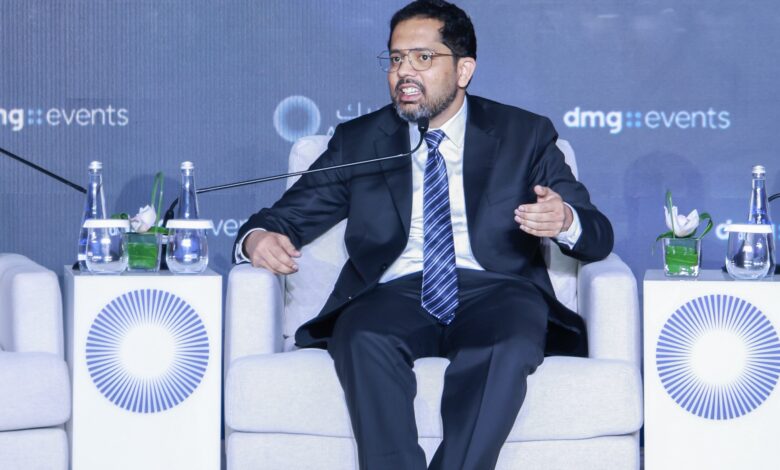
At ADIPEC 2026, AIQ is showcasing its transition towards large-scale industrial AI deployment, with more than 500 wells now running its autonomous RoboWell solution and the introduction of Genesis, an AI-native operating system designed to coordinate AI agents, applications and operational data across the energy sector.
AIQ is accelerating the deployment of artificial intelligence across the energy sector, moving beyond pilot projects towards large-scale operational applications as it expands its international footprint. The UAE-based technology company has developed more than 200 AI use cases and 40 AI models, agents and workflows since 2020, drawing on petabytes of real-world field data to address operational challenges across the energy industry.
Speaking to Arabian Reseller at ADIPEC 2026 in Abu Dhabi, Saravan Penubarthi, Chief Technology Officer at AIQ, said the company’s focus over the past year has been on scaling its industrial AI capabilities and taking solutions beyond the UAE.
AIQ’s technologies are already deployed across ADNOC’s producing wells, all its rigs and approximately 30% of its reservoirs. Penubarthi said the company’s approach is centred on identifying specific business challenges, developing solutions around them and scaling successful deployments based on measurable outcomes rather than introducing technology for its own sake.
This approach is also supporting the company’s international expansion. AIQ has secured a large-scale, multi-year commercial computer vision engagement with a leading Indian industrial conglomerate, while its activities in Egypt, Kuwait, Vietnam, Kazakhstan, Indonesia, Malaysia and Colombia are at various stages. The company also sees opportunities in North America.
One of its most significant operational achievements has been the deployment of RoboWell, AIQ’s autonomous well-control solution, across more than 500 onshore and offshore wells. The offshore milestone is particularly significant given the operational complexity and safety requirements associated with offshore oil production.
RoboWell continuously adjusts to changing operating conditions to maintain wells at their target production rates. According to AIQ, the solution has delivered gas-lift consumption optimisation of up to 30%. By reducing the need for physical interventions and offshore visits, the technology also contributes to safer operations and lower emissions.
Penubarthi said the offshore deployment demonstrates the maturity of AIQ’s autonomous capabilities and their readiness for wider adoption. However, he stressed that operational trust is as important as technical performance, particularly in environments where incorrect decisions can have significant consequences.
RoboWell is designed to handle repetitive, clearly defined tasks within parameters established by engineers, with human oversight and traceability built into its operations. AIQ also plans to offer the solution through its collaboration with Siemens Energy.
Moving from individual AI applications to orchestration
While individual AI models and applications are delivering measurable benefits, AIQ believes the next phase of industrial AI adoption will depend on connecting these capabilities rather than deploying them in isolation.
Penubarthi described 2025 as the year of agentic AI and 2026 as the year of orchestration. He said the growing number of AI agents across industrial environments risks recreating the fragmentation previously associated with standalone enterprise applications.
For instance, an AI agent optimising an individual well may not have visibility into maintenance schedules or broader reservoir management plans. Coordinating these systems allows operational decisions to account for a wider range of variables and deliver outcomes across the entire operation.
This is the thinking behind Genesis, which AIQ describes as the world’s first AI-native operating system for energy. The platform is designed to analyse and visualise operational information while enabling decision-making by people or autonomously.
Genesis brings together AI agents, applications and data into a coordinated environment, allowing operators to see the underlying information, understand the logic behind recommendations and review or modify proposed actions before execution.
For technology vendors and system integrators, an important aspect of the platform is its open architecture. Genesis is designed to be tool-agnostic, without dependence on a single AI model, and can work with third-party applications as well as platforms developed in-house by energy operators.
This approach is intended to give customers flexibility in selecting the models