azakaw Puts AI at the Centre of Compliance Transformation Across the GCC

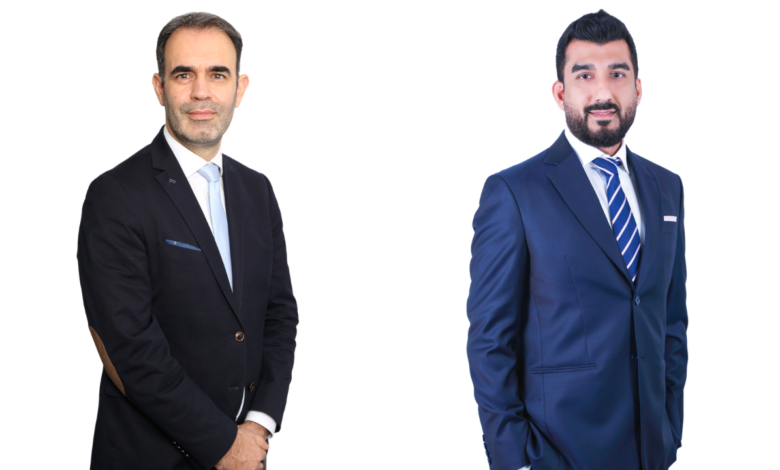
Cristiano Machado, Deputy CEO and CTO of azakaw, and Zohaib Awan, Group Director of Business Development at j. awan & partners and azakaw, discuss how the company is combining AI-driven automation, regional regulatory expertise and human oversight to transform compliance operations. They explore the platform’s origins, its recognition in the Chartis RiskTech KYC Data and Solutions 2026 Quadrant Report, measurable improvements in KYC processes and plans to expand across the GCC and Africa.
As financial institutions across the Middle East face increasingly complex regulatory requirements, compliance teams are under pressure to manage growing volumes of customer information, strengthen risk controls and maintain audit-ready records without adding to operational costs.
For azakaw, addressing this challenge means moving beyond fragmented compliance tools towards an integrated, AI-powered platform built around the realities of regulated businesses.
Developed out of the compliance practice at j. awan & partners, azakaw draws on more than a decade of experience advising regulated organisations across the Gulf. The platform was created after the firm’s compliance teams encountered the limitations of disconnected systems, with customer documents collected through email, information entered manually into spreadsheets and screening conducted across separate applications.
Cristiano Machado, Deputy CEO and CTO of azakaw, explains that the company set out to bring the entire compliance lifecycle together, from customer onboarding and screening to ongoing monitoring and governance. Available in Arabic and English, the platform is configured to reflect individual regulatory requirements.
The connection with j. awan & partners and j. awan capital remains central to its development. Their compliance professionals continue to use the platform in their work with regulated clients, providing direct feedback from regulatory applications, inspections and remediation programmes. This practical experience also helps the product team respond to changing requirements.
Automating Compliance Without Losing Human Oversight
azakaw’s central proposition is to reduce the time compliance professionals spend preparing cases so they can focus on decisions that require experience and judgement.
The platform automates document reading, identity verification, sanctions and adverse media screening, potential match resolution and risk assessment. It can also prepare customer risk ratings with supporting explanations, allowing officers to review the findings rather than assemble information manually.
Machado emphasises that AI supports the decision-making process but does not replace the compliance officer. Decisions involving customer acceptance, risk ratings, source-of-funds assessments and suspicious activity reporting remain with authorised personnel.
Every recommendation and subsequent decision is recorded, including the reasoning behind it. Cases that fall below the AI model’s confidence threshold are escalated to human officers. This creates an auditable record of what the technology proposed and what the responsible professional ultimately approved.
The distinction is particularly important in financial services, where accountability remains with the regulated institution and its authorised personnel.
Built Around GCC Regulatory Requirements
Operating across the GCC requires compliance platforms to accommodate different regulatory frameworks, documentation requirements, reporting formats and data residency rules.
Zohaib Awan, Group Director of Business Development at j. awan & partners and azakaw, says the platform is designed to help regulated firms manage these differences without having to build separate compliance systems for every market.
azakaw uses a common foundation based on Financial Action Task Force (FATF) recommendations, with configurable regulatory layers covering the Central Bank of the UAE, DFSA, ADGM FSRA, SCA and VARA, as well as SAMA and the CMA in Saudi Arabia.
These configurations account for each regulator’s documentation requirements, risk factors, review cycles and reporting formats. Regulatory changes can be incorporated into the relevant configuration and made available to firms operating under that framework.
Local identity integration and language support are equally important. In Saudi Arabia, azakaw connects with Nafath, Absher and Yakeen to obtain verified identity information from official government sources. Its matching capabilities also account for Arabic and English names, transliteration differences and additional identifiers to reduce false positives.
Data residency is another consideration. The company currently operates infrastructure in the UAE, Saudi Arabia, Kuwait and Europe, with cloud and on-premise deployment options depending on client and regulatory requirements.
Awan also highlights implementation as a key differentiator. Rather than simply providing software access, azakaw configures each client’s risk appetite, organisational hierarchy, maker-checker controls and escalation workflows before go-live. Its subscription model incorporates baseline volumes, with unit costs decreasing as customer and transaction volumes grow.
Chartis Recognition Strengthens Market Position
azakaw’s inclusion in the Chartis RiskTech KYC Data and Solutions 2026 Quadrant Report, under the Point Solutions category, marks an important milestone in its development.
The recognition followed the company’s first submission to Chartis, a global risk technology research and advisory firm. The assessment considered the platform’s architecture, capabilities, market coverage and development roadmap.
Machado says the recognition reflects the progress made in developing a platform that can be assessed alongside established international KYC technology providers.
Chartis highlighted azakaw’s modern architecture, onboarding capabilities, workflows, platform depth and integrations with regional identity infrastructure.
For Awan, the recognition provides an independent reference point for financial institutions evaluating compliance technology. It also reinforces the case for locally developed solutions that understand Gulf regulatory requirements while meeting international technology benchmarks.
Delivering Measurable Operational Improvements
The business case for compliance automation ultimately rests on its impact on efficiency, cost and risk management.
According to azakaw, customer onboarding is approximately five times faster across its client base compared with previous manual processes. Compliance costs have declined by around 30%, while false positives have fallen by up to 80%.
Individual client examples illustrate these improvements. A wealth manager in Abu Dhabi cut onboarding time by half, moving from days to hours. A law firm recovered approximately one-third of the time its team spent on compliance each week, allowing it to accommodate growth without additional recruitment. A DFSA-regulated prime broker now enables customers to complete document uploads in under 15 minutes.
The company also reports onboarding approvals up to 75% faster and annual customer churn of 1.97%.
These outcomes are supported by an implementation model that draws on the wider expertise of j. awan & partners, which has more than 50 compliance and risk officers and over 200 active compliance mandates. Its professionals can also assist clients with KYC remediation, regulatory findings and continuous compliance monitoring when additional support is required.
Expanding Across the GCC and Africa
Regional expansion remains a priority, with Saudi Arabia and the UAE at the centre of azakaw’s growth strategy.
The company currently supports more than 800 clients, including nearly 80 in Saudi Arabia. Its Nafath integration supports its Saudi proposition, while its UAE PASS integration is ongoing as it deepens its presence across the UAE’s onshore market, DIFC and ADGM.
Awan identifies Kuwait, Qatar, Bahrain and Oman as other important markets. The company already serves clients in Kuwait and is building on the wider group’s presence in Doha to support expansion across the region.
Beyond the Gulf, Nigeria and South Africa are emerging as key African markets. The company is also working towards expanding its infrastructure in Africa to support local hosting requirements.
Alongside geographical growth, product development is increasingly focused on AI. Recent additions include AI-powered customer risk assessment, which prepares proposed ratings and supporting reasoning for compliance officers, and an AI layer that monitors regulatory rulebooks, identifies changes and recommends updates to platform configurations.
Machado says the longer-term direction is to extend AI across document evaluation, verification, cross-checking and fraud detection, giving compliance teams greater capacity to manage customers while retaining control over critical decisions.
The company is also opening its partner and reseller programme to consultancies, systems integrators and resellers looking to introduce azakaw to clients in their respective markets.
Making Compliance Technology More Practical
As regulatory expectations increase and financial institutions expand across markets, compliance technology must do more than automate individual checks. It needs to connect processes, accommodate local requirements and provide a clear record of every decision.
azakaw’s approach combines the experience of compliance practitioners with AI-driven preparation and human accountability. With an established client base across the GCC, recognition from Chartis and expansion plans spanning Africa, the company is looking to take this model into additional markets.
Its proposition is straightforward: automate the work that slows compliance teams down, while keeping the decisions that matter in human hands.