Huawei Showcases AI-Led Solutions To Accelerate Oil And Gas Industry Transformation

Huawei showcased its artificial intelligence (AI)-driven oil and gas solutions at the 42nd Abu Dhabi International Petroleum Exhibition and Conference (ADIPEC 2026), held from November 2 to 5 at the Abu Dhabi National Exhibition Centre (ADNEC).
Exhibiting in the event’s AI Zone, the company presented its approach to improving productivity across the oil and gas value chain through an integrated framework combining data infrastructure, large AI models and AI agents. The demonstrations covered exploration, field development, production, pipeline transportation and refining, reflecting the industry’s growing focus on applying AI to operational processes rather than limiting its use to experimental projects.
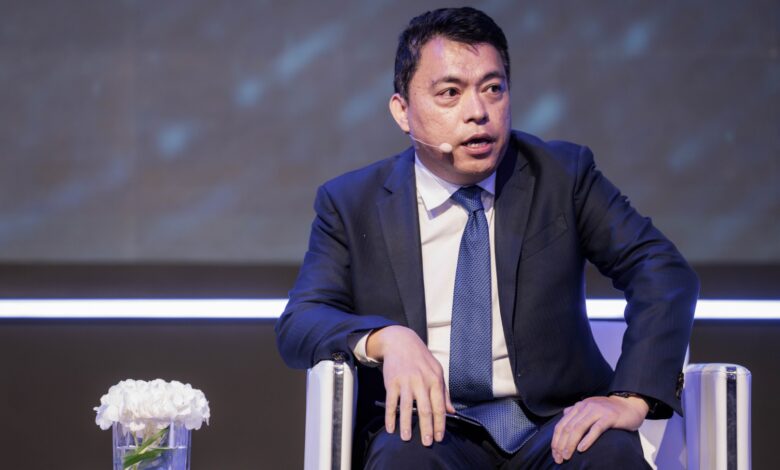
Jiang Wangcheng, CEO of Huawei’s Oil, Gas and Mining Business Unit (BU), outlined the company’s strategy for supporting the industry’s intelligent transformation. He said the rapid adoption of AI is bringing the sector to a critical stage, with data, connectivity and AI increasingly being integrated into core business operations.
Huawei highlighted several examples of the technology’s application. AI-powered large-model full-waveform inversion has increased seismic data processing efficiency by 10 times, while AI-driven code refactoring has reduced module migration time from three weeks to one day. Computer vision models have also improved the accuracy of alarms in high-risk scenarios to more than 90%.
AI Across The Oil And Gas Value Chain
Deng Bi, President of Huawei’s Oil & Gas BU, discussed the application of AI across exploration, development, production and operational safety. He highlighted the company’s work in AI-assisted exploration, intelligent oilfield development and safety management, while emphasising the role of its partner ecosystem in translating technology deployments into business outcomes.
Pipeline operations were another area of focus. Pu Qiang, Director of Huawei’s Pipeline Network and City Gas BU Solution Sales Department, explained how the company combines cloud, pipeline, edge and device technologies with distributed fibre-optic sensing and AI to support continuous pipeline monitoring. According to Huawei, these technologies have been deployed across more than 30,000 kilometres of oil and gas pipelines, enabling earlier risk detection and supporting more intelligent operational decision-making.
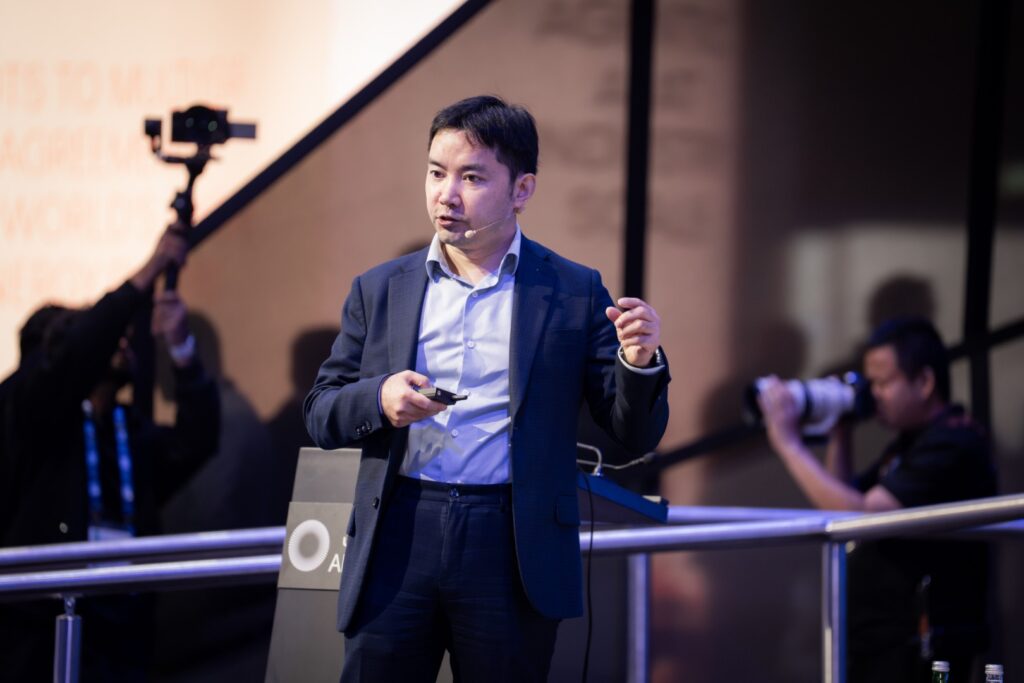
Li Rui, Solution Director of Huawei’s Chemical & Building Materials BU, presented the company’s intelligent chemical industry solutions and their potential applications in the Middle East and other markets. He discussed a time-series large model and autonomous operations solution developed jointly by Huawei and an ecosystem partner for process industries.
The solution is designed to support increasingly autonomous operations in petrochemical and chemical facilities, including scenarios where minimal or no personnel are required on-site. Huawei Middle East also participated in discussions on the future of autonomous oilfields. Ghassan El Rayah, Solution Director at Huawei Middle East, explored how operators can progress from data-driven insights to AI-enabled decision-making and automated action. The discussion covered applications in reservoir management, drilling optimisation, production scheduling and equipment operations and maintenance.
Faisal Malik, Solution Director at Huawei Middle East & Central Asia, addressed the convergence of AI agents and computing infrastructure. His presentation examined the computing requirements of the energy sector, including high-performance computing (HPC), distributed storage and data centre networking. These technologies are intended to support large-model training and inference, real-time industrial control and the processing of large volumes of operational data.
Building The Infrastructure For Industrial AI
At its exhibition stand, Huawei demonstrated solutions covering exploration, development, production, pipeline storage and transportation, and refining. The showcase also included ICT infrastructure such as TaiShan HPC, Atlas AI computing, high-performance storage and full-scenario networking. The company’s approach combines connectivity, cloud, computing and AI, with solutions developed alongside ecosystem partners to support digitalisation and automation across the oil and gas industry.
Huawei’s participation at ADIPEC also reflected three broader developments in industrial AI. First, AI is moving beyond proof-of-concept deployments towards integration into production environments, where AI agents can perform tasks and support closed-loop operations. Second, collaboration between technology providers and industry partners is becoming increasingly important in moving beyond individual digital applications towards wider transformation across the industrial value chain. Third, the underlying digital infrastructure is becoming central to scaling AI deployments across exploration, production, transportation, refining and sales.
Huawei believes the oil and gas industry is transitioning from an era focused on visibility and connectivity towards one in which intelligent applications and measurable business outcomes take priority. The company said it would continue working with customers and partners globally to advance the industry’s adoption of AI, with a focus on improving safety, operational efficiency and sustainability.