Binance Blockchain Week 2026 Highlights AI Security Resilience and Enterprise Infrastructure in Bangkok

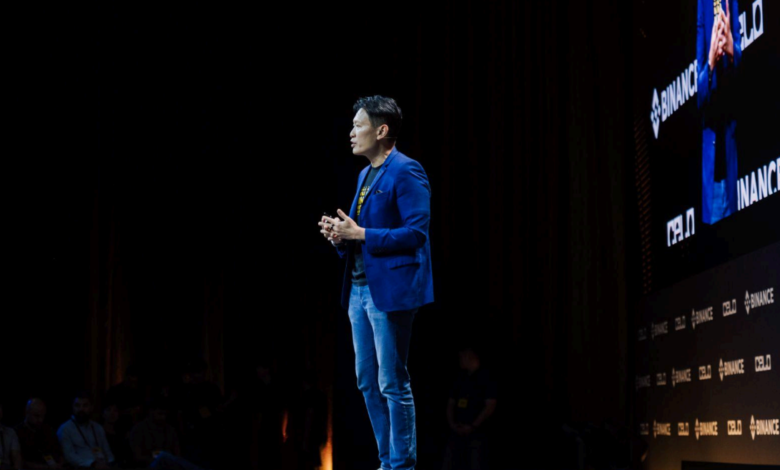
Over 4,100 attendees from 110 countries gathered in Bangkok on November 28–29 for Binance Blockchain Week 2026 under the theme “Evolve.” Bringing together executives from the technology, cybersecurity, government, and financial sectors, Day 1 placed a heavy emphasis on enterprise security architecture, AI-driven cyber threats, and cross-sector ecosystem collaboration.
During his opening keynote, Binance co-CEO Richard Teng noted that 2026 marks a turning point as institutions shift from observing digital assets to actively building on them, while cautioning that AI tools have emerged as a critical new attack surface. Touching on how Binance fully covered user losses following the industry’s largest coordinated attack, Teng emphasized that industry-wide cooperation is essential for scaling securely, concluding: “Evolve is more than this year’s theme, it’s our responsibility.”
Securing Digital Infrastructure in the AI Era
A major focus for technology leaders was the panel Collective Resilience: Securing the Digital Asset Industry in the AI Era, featuring security executives from Binance, Microsoft, Mandiant, and AWS. Binance Chief Security Officer Jimmy Su noted that AI lowers the barrier for attackers by filling technical knowledge gaps and accelerating intrusions into unfamiliar systems.
- Machine-Speed Defense: Silvia Lam Ihensekhien, Chief Security Advisor for Greater China at Microsoft, stressed that AI-enabled threats demand matching automation, stating: “You need defense at machine speed.”
- Security Fundamentals: Vivek Chudgar, Managing Director JAPAC at Mandiant Consulting, Google, reminded organizations not to overlook core hygiene: “AI changes the scale and speed of cyber attacks, but it doesn’t change the fundamentals,”
- Recovery & Architecture: Pooja Saha, Senior Security & Compliance Solutions BD Manager for APJC at AWS, urged IT teams to prioritize recovery planning alongside prevention.
Jimmy Su detailed Binance’s architectural overhaul—placing the strictest controls closest to core assets to contain potential breaches—and added: “We have an opportunity to move from individual security to collective resilience. Lessons learned in one company can be applied across the entire industry,”Cross-Border Incident
Response and Ecosystem Trust
In the Compliance on Digital Rails session, incident responders broke down the containment of the October 29 attack on Binance. Deputy Chief Compliance Officer Antonio Alvarez Lorenzo highlighted rapid coordination across blockchains and partners, “The stronger we are together, the more we collaborate, the taller the walls we can build around the regulated financial system. That’s better for everyone in it.”
Jonno Newman, Head of Deployment Strategy APAC at TRM Labs, underscored the scale of the containment effort, “We talk about this being the biggest crypto hack in human history, but it’s also the biggest recovery in human history. Getting nearly $3 billion in stablecoins frozen within an hour is a massive achievement.” Tom McLouth of Chainalysis credited pre-established industry relationships for the rapid response, while Pol. Lt. Col. Thanatus Kangruambutr of the Royal Thai Police emphasized the need for cross-border coordination, “One thing we need is trust – trust between law enforcement and the private sector.” ‘
CZ Calls for an Industry Security Alliance
Closing Day 1 in a fireside chat with The Starting Block host Gareth Jenkinson, Binance founder Changpeng Zhao (CZ) praised the transparent communication during the October 29 incident, “What Binance did well was they covered the users. The incident response was good. I think they communicated with the users throughout, no users were kept in the dark. There was very little panic that I saw. And none of the users, and none of the partners panicked.”
CZ urged technology and digital asset firms to invest heavily in security and form a unified industry security alliance to share best practices and cross-check defenses. Looking ahead, he noted that blockchain, the internet, and AI are complementary technologies, observing that as AI agents execute more transactions, both humans and AI systems will require upgraded digital payment rails.