Cisco and NVIDIA Develop High-Density Optical Technology for Next-Generation AI Infrastructure

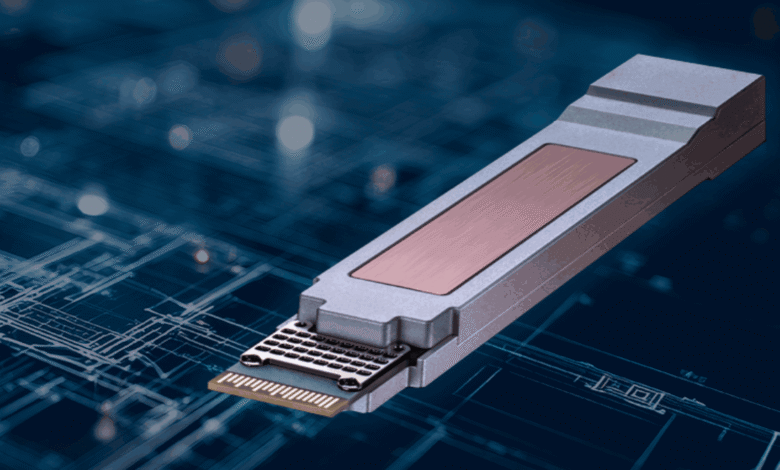
Cisco and NVIDIA have announced a collaboration to develop Ultra-Dense Small Form Factor Pluggable (USFP), a high-density optical module designed to support 400Gb/s-per-lane connectivity in next-generation AI infrastructure.
As AI models become more complex and demand for inference increases, data centre operators need to connect larger numbers of computing systems while managing network capacity, power consumption and operating costs. The new module is intended to increase data throughput per watt and per switch, helping operators scale AI infrastructure without expanding their existing network footprint.
USFP is designed to support the transition from 200Gb/s-per-lane to 400Gb/s-per-lane Ethernet AI fabrics. It builds on the established deployment model of pluggable transceivers, allowing operators to adopt higher-speed optical technology without requiring a complete overhaul of their data centre infrastructure.
Comparable in size to an OSFP module, USFP is designed to deliver four times the bandwidth and front-panel bandwidth density, alongside approximately 1.3 times the power efficiency, compared with 200Gb/s-per-lane pluggable modules. The companies said this would allow AI infrastructure operators to scale computing capacity within the same network footprint while reducing networking’s share of the overall power budget.
“Building the world’s largest AI factories starts with rethinking the smallest of connections,” said Gilad Shainer, senior vice president NVIDIA. “With USFP, NVIDIA and Cisco are building an ecosystem to reinvent pluggable optics — connecting more computing with greater efficiency to power the next generation of AI factories.”
“AI builders need an interconnect architecture that can scale performance without locking them into a more complex operating model,” said Bill Gartner, senior vice president and general manager of optical systems and optics at Cisco. “Cisco and NVIDIA recognized that scaling pluggable optics to 400Gb/s per lane would require more than another incremental extension of today’s module designs. Through our collaboration, USFP is designed to deliver a new level of bandwidth density while preserving the serviceability, deployment flexibility and operational simplicity of pluggable optics.
Cisco and NVIDIA are working with TE Connectivity and Amphenol to develop USFP cages, connectors and modules, with additional partners expected to join the initiative.
The shared form factor is intended to provide suppliers with a common foundation for developing high-density pluggable components for 400Gb/s-per-lane Ethernet fabrics. The companies aim to establish a broader hardware ecosystem to support the deployment of next-generation AI factories.
The collaboration builds on Cisco and NVIDIA’s existing work to enable interoperability between NVIDIA Spectrum-X Ethernet networking and Ethernet networks based on Cisco Silicon One. The integration is intended to simplify AI infrastructure deployment for enterprises, neocloud providers and sovereign cloud operators.
The companies also plan to establish an open industry specification for USFP through an upcoming community-led, multi-source project.