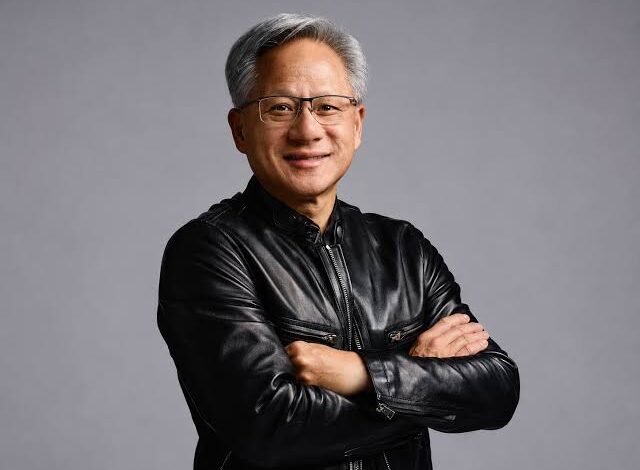
Nvidia has reinstated co-founder Jensen Huang as president and chief executive, reversing its decision to rule out his return just days after he stepped down amid controversy surrounding his personal relationships and alleged links to a Chinese intelligence operation.
The board voted unanimously to reinstate Huang with immediate effect, saying it was satisfied with his candour and ability to lead the company. It also said that, following input from senior US government officials, it did not consider his return to pose a national security risk.
The decision followed sustained pressure from US President Donald Trump, who had publicly called for Huang’s return. Trump welcomed the board’s announcement, describing it as the correct decision and saying the US government had no evidence that Huang had engaged in unlawful conduct.
Nvidia shares rose nearly 33% following the announcement, with the company potentially adding around $900 billion to its market value. The reaction underlined the extent to which investors associate Huang’s leadership with Nvidia’s position at the centre of the global AI infrastructure market.
Founder Influence And Business Continuity
Huang resigned on November 12 after reports emerged of extramarital relationships, including one with a Chinese businesswoman whom US authorities reportedly suspect of having links to Beijing. China has denied the espionage allegations. Huang has also faced allegations involving relationships with Nvidia employees.
His departure had raised concerns about continuity at a company where he has played a central role in product strategy, chip development, major customer relationships and engagement with governments. Nvidia had appointed CFO Colette Kress as interim CEO, with the company initially indicating that operations would continue as usual.
The board’s reversal highlights the influence Huang continues to wield across Nvidia’s business and the wider AI ecosystem. He transformed the company from a graphics processor manufacturer into the dominant supplier of AI processors, while maintaining close relationships with major cloud providers, technology companies and industry partners.
The implications extend across Nvidia’s extensive partner network, including semiconductor suppliers, infrastructure providers, cloud platforms and enterprises investing in AI computing capacity.
Compliance And Governance Remain Under Scrutiny
Huang’s return does not bring the investigations surrounding Nvidia to a close. The company is facing scrutiny from US authorities, including the Securities and Exchange Commission and the Department of Justice, over matters ranging from potential accounting irregularities to alleged chip smuggling.
Nvidia has established an independent board committee to investigate whether foreign intelligence efforts targeted Huang. It has also formed a separate committee focused on national security and export controls and is beginning the search for a new chief compliance officer. Kress will continue as chief financial officer.
The company is also facing shareholder litigation alleging that Nvidia and Huang concealed information about his reported relationship with the Chinese businesswoman. These allegations remain subject to legal proceedings.
The questions surrounding advanced AI chip exports to China are particularly significant. US restrictions have tightened, while Nvidia has sought to maintain access to the Chinese market. Huang’s leadership has been closely associated with the company’s efforts to navigate this increasingly complicated commercial and regulatory environment.
For Nvidia’s partners and customers, the immediate question is whether the leadership reversal will restore confidence and provide continuity. The longer-term test will be whether the company can maintain its AI market position while addressing the governance, compliance and export-control concerns that have brought it under renewed scrutiny.