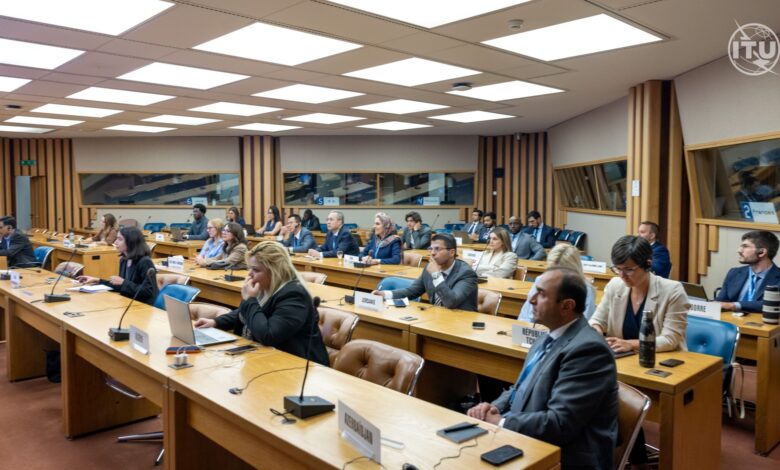
The International Telecommunication Union (ITU), the Permanent Mission of Lebanon in Geneva and the RIPE NCC co-hosted a session of the ITU Demystifying Digital Series, bringing together representatives from 35 diplomatic missions and delegations to examine how the Internet’s technical foundations are coordinated and how policy objectives can be translated into practical outcomes.
Titled “How the Internet Works: Technical Coordination, Public Policy and Practical Cooperation”, the session brought together policymakers, diplomats and members of the technical community to discuss Internet infrastructure, technical coordination, digital governance and the role of multistakeholder cooperation.
The session was opened by Tomas Lamanauskas, Deputy Secretary-General of the ITU; H.E. Caroline Ziadeh, Ambassador and Permanent Representative of Lebanon to the United Nations Office and other international organisations in Geneva; and Hans Petter Holen, CEO of the RIPE NCC.
Lamanauskas highlighted the role of cooperation between governments, international organisations, industry and the technical community in expanding connectivity and strengthening digital infrastructure. He also pointed to the multistakeholder model and the World Summit on the Information Society (WSIS) Forum as mechanisms for bringing different areas of expertise together.
For Lebanon, digital resilience has particular significance given the challenges facing the country. H.E. Ambassador Caroline Ziadeh stressed that reliable communications and resilient digital infrastructure are important not only for economic and digital development, but also for maintaining continuity during periods of disruption.
“Resilience must be understood in all its dimensions, including connectivity and digital infrastructure,” Ziadeh said. “For Lebanon, especially in the context of the challenges we face today, strengthening this resilience requires close cooperation between government, operators, the technical community and international partners.”
Holen highlighted the global nature of the Internet and the need for coordination across borders. He emphasised the role of governments, regulators, the ITU and the wider technical community in maintaining an Internet based on globally coordinated resources, open standards and interoperable networks.
He also encouraged policymakers and diplomats to involve technical experts early in policy discussions, before positions and negotiating language become established. The session examined different layers of the Internet ecosystem and the respective roles of technical coordination, Internet governance and broader digital governance.
Hisham Ibrahim, Chief Community Officer at the RIPE NCC, outlined how the Internet ecosystem operates and discussed the role of the technical community. He distinguished between technical coordination, Internet governance and digital governance, noting that while the areas increasingly intersect, they have different functions.
The discussion also covered open standards, globally unique identifiers, interoperability and trust as foundations for maintaining a single global Internet. Holen subsequently explained the role of the Regional Internet Registries (RIRs) and the RIPE NCC in coordinating and registering Internet number resources. He also outlined the organisation’s work with network operators, governments, regulators and other stakeholders to support Internet stability, security and resilience.
The final section focused on translating policy commitments into implementation. Chafic Chaya, Regional Manager for Public Policy and Government Affairs at the RIPE NCC, discussed examples of cooperation with governments, regulators, the ITU and regional and international organisations.
The discussion connected these efforts with the WSIS+20 outcome, the Global Digital Compact and the Sustainable Development Goals, highlighting the role of institutional partnerships, operational capability, capacity building and measurement in turning international commitments into practical progress.
A recurring theme throughout the session was the role of the technical community in connecting policy objectives with implementation. Open standards, technical coordination, capacity building and measurement can provide practical mechanisms for turning international digital commitments into outcomes at national and operational levels.
The speakers also highlighted the importance of engaging technical expertise early, strengthening national capabilities and ensuring that international policy discussions remain connected to the organisations responsible for implementation. The session concluded with an open dialogue between diplomats, ITU representatives and members of the technical community, providing an opportunity to discuss potential areas for further cooperation.