Trust Before Readiness Shapes Leadership Success

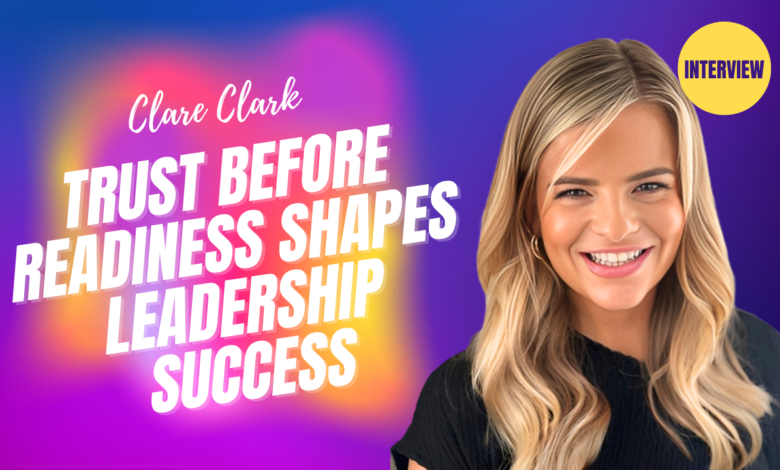
Several defining moments shaped Clare Clark’s rise in HR leadership at IFS, but they all circle back to one truth: being trusted with big responsibilities before feeling fully ready. Thrown into high-stakes ambiguity without a playbook, she learned to balance priorities, shed perfectionism, and lead through questions and principled decisions – especially in male-dominated spaces. From tackling the “likability double bind” and informal networks that sideline women, to building credibility via consistency and courage, Clark shares hard-won insights on self-trust, adaptability, sponsorship’s power, and why real change demands shared accountability beyond International Women’s Day.
What defining moments or challenges most shaped your professional journey?
Several defining moments stand out in my career, but they all share a common thread, being trusted with responsibility before I felt completely ready, and having leaders who were willing to advocate for me. Early on, I was often asked to step into ambiguous, high‑stakes situations where there was no playbook. I had to think on my feet, balance competing priorities, and find solutions that supported the businesses goals while still feeling confident that the right decisions were being made. Those experiences accelerated my growth in ways comfort never could, they built my judgment, resilience, and confidence very quickly.
Another pivotal challenge was learning to let go of perfectionism. Like many women, I felt an unspoken pressure to be technically flawless before speaking up or stepping forward, particularly in environments where leadership was predominantly male. Over time, I came to understand that leadership isn’t about having every answer, it’s about asking questions, creating clarity for others, and making principled decisions even when the path forward isn’t immediately obvious. It is also about not being afraid to speak up or challenge.
What barriers do women still face in leadership today that aren’t talked about enough?
One of the least discussed barriers is the double bind around likability and authority. Women are still expected to be collaborative and empathetic, yet decisive and firm, qualities that are often interpreted very differently depending on who is displaying them. Another significant barrier is access to informal power networks. Many leadership decisions are shaped outside formal meetings, inside conversations, social settings, and long‑established relationships. In male‑dominated environments, women are often excluded from these networks, not out of intent, but by default.
The impact on visibility, sponsorship, and progression is very real. This is compounded by the fact that many senior women still carry the primary caregiving responsibilities at home, which further limits access to those informal spaces where influence is often built.
How have you built credibility and influence in environments where women are underrepresented?
I’ve learned that credibility is built through consistency, clarity, and courage. Consistency in delivering outcomes, clarity in how I communicate my thinking, and courage in holding my ground when it matters, even if it’s uncomfortable.
I’ve also been deliberate about focusing on impact rather than permission. Instead of waiting to be invited into conversations, I’ve contributed value where I could see it was needed. Over time, that creates trust. Influence, in my experience, doesn’t come from your title, it comes from being known as someone who brings perspective, calm, and solutions when it counts. Its working hard to build relationships with stakeholders and having a mutual level of trust for the input you can bring.
What skills or mindsets will be most critical for the next generation of women leaders?
The most critical mindset for the next generation of women leaders is self‑trust and the confidence to step forward before feeling completely ready, and to trust their judgment even when they don’t fit traditional leadership stereotypes. That self‑belief is what enables women to take risks, voice perspectives, and shape environments rather than simply adapt to them.
From a skills perspective, adaptability and systems thinking will be essential. Future leaders will need to navigate constant change, connect people, technology, and culture, and make decisions in increasingly complex environments. Just as important is the ability to build strong alliances. Leadership is not a solo pursuit, and influence grows when women actively create networks of support, sponsorship, and shared leadership rather than carrying the burden alone.
Relationship‑building and personal brand are critical. Women need to feel confident articulating what they bring to the table and making their impact visible, rather than assuming it will speak for itself. Not every environment is ready for that, and not every system rewards it equally, but progress happens when individuals are willing to advocate for change and when leaders, both men and women, actively reinforce and support that shift.
Real change is never driven by one group alone. It requires shared responsibility and leaders who sponsor talent, challenge outdated norms, and create space for different leadership styles to thrive. I truly believe that the strongest teams are built on diversity of thought and leadership. If everyone thinks and acts the same way, you can only expect the same results. Progress comes when different perspectives are valued and allowed to lead.
What roles have mentorship and sponsorship played in your career, and how do you support others today?
Mentorship and sponsorship have both played pivotal but very different roles in my career. Mentorship gave me perspective. At key moments, I benefited from leaders who helped me step back, make sense of complexity, and build confidence in my own judgement or sometimes hold the mirror up. Those conversations were often less about tactical advice and more about sense checking decisions, navigating ambiguity, and understanding how to lead through influence rather than authority.
Some of my most impactful mentors have been male leaders who were willing to challenge me, push my thinking, and advocate strongly for me. They didn’t try to make me lead like them instead, they backed my potential, encouraged me to trust my own style, and were vocal supporters of my progression. That allyship mattered enormously, particularly in moments where confidence, visibility, or sponsorship made the difference. Sponsorship, however, was the real accelerator.
The most defining moment in my career came from people who were willing to advocate for me when I wasn’t in the room and who put my name forward for stretch opportunities, trusted me before I felt fully ready, and were prepared to take a risk on potential rather than polish.
What advice would you give young women considering careers in IT, security, or leadership roles?
My first piece of advice is not to wait until you feel completely ready because that moment rarely comes. I was just 21 when I started my career in HR, after a leader took a chance on me and offered an opportunity that, on paper, I may not have been fully prepared for. That trust, and being thrown into the deep end, shaped everything that followed. Being given responsibility early forced me to learn quickly, build confidence, and develop judgment through real experience rather than theory. That opportunity didn’t just define my first role, it set the direction for my career.
I would also encourage young women to invest early in relationships and visibility. Technical capability matters, but so does being known for your perspective, your curiosity, and the value you bring. Speak up, share your thinking, and don’t assume your work will always speak for itself.
Finally, be intentional about the environments and leaders you choose. Look for people who are willing to back potential, not just polish, and who understand that strong leadership comes in many forms. The industries shaping our future need diverse voices and ways of thinking and by stepping into these spaces, women don’t just build their own careers, they help redefine what leadership looks like for those who follow.
What does International Women’s Day mean to you, and what real change would you like to see beyond it?
International Women’s Day is an important moment for visibility and reflection, but for me its real value lies in what happens beyond the day itself. It’s a chance to recognise progress, but also to be honest about where change is still too slow or too superficial. Celebration matters but it cannot replace sustained action.
As a mum to a two‑year‑old daughter and a five‑year‑old son, this feels deeply personal. I want both of my children to grow up seeing leadership as something that looks and feels inclusive, where opportunity isn’t shaped by gender or outdated expectations.
That’s why it’s so important that we keep pushing the needle for change, not just for today’s workforce, but for the next generation. The real change I want to see is consistency. Equity shouldn’t depend on annual campaigns or symbolic gestures it needs to show up in everyday decisions, who is sponsored, whose voices are heard, how potential is recognised, and how flexibility and caregiving responsibilities are genuinely supported. Inclusion must be embedded into how organisations operate, not treated as a moment in the calendar.
Most importantly, responsibility cannot sit with women alone. Meaningful progress requires leaders at every level, men and women, to actively challenge outdated norms, create space for different leadership styles, and hold themselves accountable. When that responsibility is shared, International Women’s Day becomes less about marking a moment and more about measuring real, lasting progress.