From Proof-of-Concept to Production: How ASUS Business is Anchoring AI PCs in the Enterprise

The enterprise conversation surrounding artificial intelligence has entered a decisive new phase. The initial wave of curiosity—defined by isolated software pilots, experimental sandboxes, and cloud-hosted chatbot queries—is giving way to a much more grounded imperative: scaling AI into everyday business operations without compromising IT governance, enterprise security, or endpoint manageability.
Nowhere is this shift more evident than at the device level. While hyperscale cloud infrastructure and massive data center investments capture headlines, the physical endpoint where employees consume, process, and act on corporate data remains the vital frontline of digital transformation.
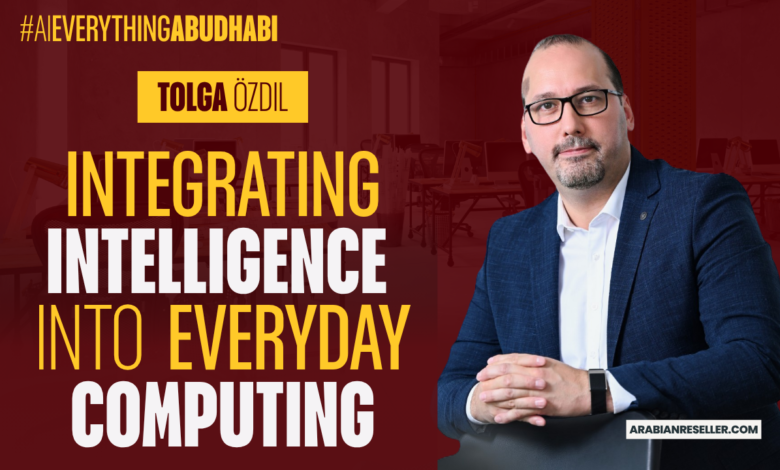
According to Tolga Özdil, Regional Commercial Director, Middle East, Turkey & Africa (META) at ASUS, the category of AI-enabled PCs has quickly transitioned from an industry novelty into an essential component of modern enterprise architecture.
“AI PCs aren’t a new category of device anymore,” says Özdil. “They have become an active part of the wider IT infrastructure. As companies have moved past experimentation, the focus is shifting towards the way AI can deliver practical value in daily workflows, while also meeting security, manageability, and reliability needs.”
A Pragmatic Shift Across the Middle East
Across the UAE and the wider Middle East, digital mandates are advancing rapidly. Regional governments, educational bodies, healthcare providers, financial institutions, and hospitality conglomerates are heavily accelerating modernization roadmaps. Yet, Chief Information Officers (CIOs) and enterprise IT buyers in these markets are approaching hardware procurement with renewed scrutiny.
The conversation across the META region has become distinctly utilitarian. Rather than asking about theoretical benchmark spikes, business leaders want to know what an AI PC can tangibly deliver to an employee on a Monday morning—and how seamlessly it integrates into existing fleet architecture.
“The conversation has become more practical,” Özdil observes. “Businesses are increasingly asking what an AI PC can actually do for their employees and how it can fit into their existing IT environments. There is also greater focus on performance, battery life, security, device management, and longevity. Organisations want devices that can support current AI applications but also remain relevant as those applications evolve.”
In long-term public and private sector projects across the UAE and Saudi Arabia, equipment refresh cycles must factor in hardware longevity. An endpoint deployed today must possess the silicon headroom and neural processing capabilities to stay viable three to five years down the line, even as workplace software stacks integrate progressively heavier machine-learning models.
Balancing Local Processing and Cloud Intelligence
A critical architectural consideration for modern enterprises is determining where AI workloads should physically execute. While cloud computing delivers access to high-capacity foundational models, relying exclusively on centralized data centers introduces latency overheads, continuous network bandwidth demands, and heightened compliance and data privacy concerns.
To address this, ASUS Business structures its commercial PC portfolio around hybrid computing: deploying Neural Processing Units (NPUs) and robust silicon on the endpoint for immediate, local tasks, while preserving flexible connectivity to enterprise cloud instances for heavy workloads.
“For ASUS Business, that means looking beyond the AI capabilities of the PC itself,” explains Özdil. “The device needs to provide the processing power to run AI workloads locally where appropriate. It should also give businesses the flexibility to use cloud resources as needed. This balance can help companies use AI better without compromising the security and manageability expected from enterprise devices.”
Local execution directly protects proprietary data. By running tasks such as document summarization, real-time audio clean-up, content generation, and localized data processing directly on the device’s NPU, sensitive corporate telemetry never leaves the endpoint perimeter.
However, local execution also requires deeper hardware-level security. “ASUS is looking at AI PCs as part of a broader computing environment, rather than as a standalone AI device,” Özdil notes. “Security also needs to be built into that environment. Features such as ASUS ExpertGuardian, including protections around the BIOS and device integrity, are designed to provide an additional layer of protection at the device level.”
The Evolution of the Endpoint: Tools to Active Agents
Over the next two to three years, the workplace PC is expected to transition from a passive screen to a more intelligent, proactive collaborator. While the PC will remain the primary enterprise endpoint for accessing enterprise cloud services, local NPU enhancements mean intelligent capabilities will run quietly in the background without user intervention.
“Over the next couple of years, the traditional business PC will remain primarily an endpoint for accessing AI applications and cloud services,” says Özdil. “AI-enabled PCs, however, are likely to take a more active role in workplace workflows by handling some tasks locally, such as summarisation, content creation, and data processing. How much they can do will depend on their hardware and the AI capabilities available.”
The broader objective is frictionless integration. “A major change is that AI becomes a part of everyday computing rather than something employees access separately,” adds Özdil. “As NPUs become more capable, more AI processing can happen locally, while the PC continues to work with cloud-based services for more demanding workloads. This could make the PC a more intelligent and responsive workplace tool, while still requiring companies to maintain control over security, data, and device management.”
Translating UAE’s AI Infrastructure into Frontline Capability
The UAE has positioned itself as a global nexus for AI development, committing billions to sovereign cloud infrastructure, regional high-performance computing centers, and dedicated digital ministries. Yet high-performance data centers only solve one half of the transformation equation; value must ultimately land in the hands of the knowledge worker, the hospital clinician, the teacher, and the civil servant.
“The opportunity is to help translate investment in AI infrastructure into practical computing capabilities for organisations and employees,” Özdil points out. “AI infrastructure is not only about data centres and large-scale computing. Organisations also need devices that can bring AI capabilities to employees, classrooms, and frontline teams. ASUS Business can support this through AI-enabled commercial PCs designed around different use cases, from enterprise and government environments to education and SMBs.”
He also emphasizes that sustainability and total cost of ownership (TCO) remain core to regional initiatives: “There is also an opportunity to support organisations as they build more secure and sustainable device environments, particularly as AI adoption increases the importance of computing performance, security, and lifecycle management.”
Redefining the Commercial PC Vendor
As compute requirements grow more complex, hardware vendors can no longer operate solely as suppliers of raw silicon and chassis. For enterprise IT leaders, managing thousands of distributed hybrid endpoints—each running machine learning tasks—demands simplified deployment, streamlined fleet analytics, and continuous support.
“The role of the business PC vendor is becoming more vast,” Özdil concludes. “Rather than just processing power, companies now need devices that can be deployed, managed, protected, and maintained across their lifecycle. ASUS approaches this through a combination of hardware-level security, device management capabilities, support, and services. The larger aim is to make AI adoption practical for IT teams, so they can use AI devices without adding unnecessary complexity to their existing infrastructure.”
As Middle East enterprises accelerate into the era of scaled artificial intelligence, the success of adoption will not solely be judged by the size of the models running in server farms, but by the performance, reliability, and security of the intelligent PCs sitting on employees’ desks.