Starkey Expands AI-Powered Hearing Technology As Regional Hearing Loss Numbers Rise

Starkey is highlighting the role of artificial intelligence in hearing care as the number of people affected by hearing loss across the World Health Organization’s Eastern Mediterranean Region is expected to increase significantly over the coming decades.
The region, which includes the Gulf states, currently has an estimated 78 million people living with hearing loss. The World Health Organization (WHO) projects this figure will reach 194 million by 2050. More than two million children aged 0 to 15 in the region are already affected by disabling hearing loss and require rehabilitation.
Following the regional introduction of its Omega AI+ platform, Starkey MEA is focusing on how AI-enabled hearing aids could help address common listening difficulties, particularly understanding speech in environments where several people are speaking simultaneously.
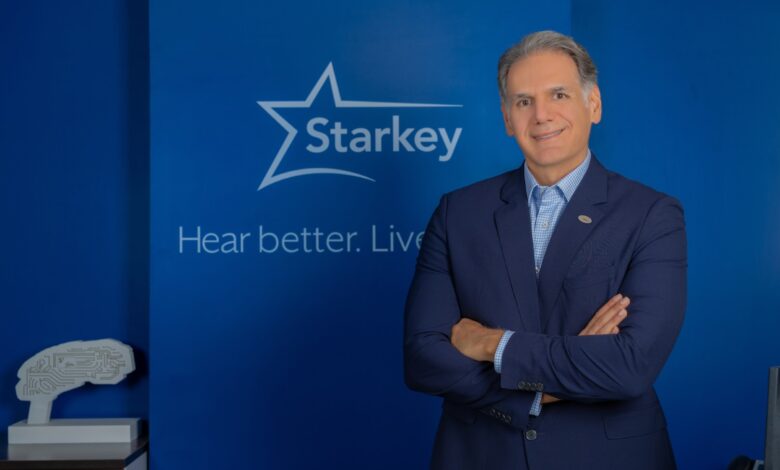
Giscard Bechara, Managing Director, Starkey MEA FZCO, said, “Behind every one of those numbers is someone missing a conversation at the dinner table, struggling in a meeting, or quietly stepping back from family gatherings. Ask patients what frustrates them most and the answer is rarely volume. It is following one voice when everyone is talking at once. That is the problem our AI is built to solve.”
Omega AI+ incorporates four specialised deep neural networks (DNNs), which work together to optimise speech understanding, environmental awareness, sound quality and listening comfort. The processing is handled by Starkey’s G4 Gen AI Neuro Processor, which the company says processes sound up to 2.7 times faster than leading hearing aids that market DNN processing capabilities.
A DNN Dual Compressor has also been introduced to determine when the hearing aid should prioritise speech clarity and when it should preserve natural sound. The approach is intended to reduce the compromises wearers may experience when moving between different listening environments.
The platform’s Enhanced Edge Mode, which provides additional support in challenging acoustic conditions, can now remain active continuously rather than requiring manual activation. This could be useful in public spaces and workplaces where background noise can make conversations difficult to follow.
The technology is also being extended across Starkey’s custom hearing aid range. Rechargeable custom models include DNN 360 technology, designed to improve speech intelligibility, spatial awareness and listening comfort. Custom non-wireless models gain Automatic Edge Mode, while the company’s smallest custom hearing aids now incorporate AI-powered performance.
Beyond sound processing, Omega AI+ includes connectivity and wellbeing features. Support for Auracast™ broadcast audio allows wearers to tune into compatible public and personal broadcasts, such as airport announcements, using a smartphone running the My Starkey app.
Other additions include an updated feedback management system and a notification that alerts wearers when they leave their hearing aids behind. TeleHear AI uses generative AI to help users resolve common hearing-related issues in real time. The platform also incorporates fall detection, automatic respiratory rate monitoring and Balance Builder exercises.
While these capabilities expand what hearing aids can do beyond sound amplification, Starkey says the technology is intended to complement professional hearing care rather than replace it.
“AI does not replace the audiologist. It gives the audiologist and the patient a better starting point, and it keeps working after the patient leaves the clinic. Hearing loss will not solve itself at this scale, so we would encourage every family, every employer and every business leader in the region to treat a hearing check as routinely as a blood pressure check,” added Giscard.