Shaping the Future of AI Through Innovation, Inclusive Leadership and Human-Centred Technology

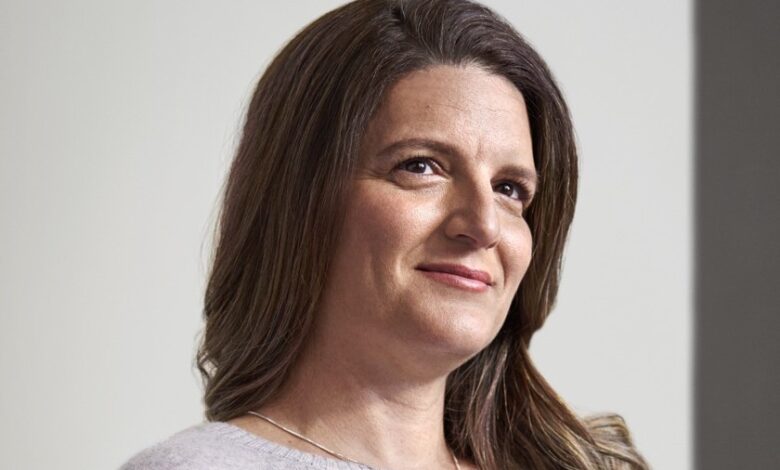
Dr. Rania Khalaf, Chief AI Officer at WSO2, discusses the challenges of building a career in technology, the barriers women continue to face, and the importance of creating teams where people have the freedom to experiment, learn and take ownership.
Can you share your journey into the technology world? What inspired you to pursue a career in this field?
I loved the arts and the sciences growing up. My dad was an engineer, bringing computers home and always talking us through how things work and what machines look like when you take them apart. At MIT, I was accepted for architecture but quickly switched to computer science after taking the introductory class with my friends. I even ended up teaching it and majoring in Electrical Engineering and Computer Science and did my masters in AI, before it was cool.
I loved how quickly we could build things, even whole new worlds. I started at IBM Research “inventing the future,” first with service oriented computing, then cloud, then back to AI. As I transitioned to the C-suite (first at a biotech startup and now at WSO2) my scope has expanded from algorithmic to organizational to business . The constant thread has been using technical expertise as a foundation in leading global teams, technology shifts, and international strategy in service of building things that matter.
What were some of the biggest challenges you faced as a woman, and how did you overcome them?
Ideally, we all get to work and gender doesn’t matter but it’s not so simple. We can look at this from three lenses.
There is a myth of success around the ‘lone genius.’ This is not gender specific, but may impact women more. I’ve been around people who believe their success depends on tearing down others, even on their own teams. It’s a fallacy. Innovation is a team sport.
Research shows competence and likeability are often negatively correlated for women. The need to navigate this trade-off, known as the ‘double bind,’ is distracting, especially early in one’s career. A recent graduate in Canada shared that a mentor told her to never wear a dress to work or it will diminish her credibility. Now I make a special effort to wear a dress when I go on stage.
Then there is biology, uncomfortable but unavoidable. Providing physical and temporal lactation spaces and free period products allows women to work with dignity and with less disruptions. I’ve advocated for this and am glad to see it become a requirement in more locations.
How do you describe your leadership style, and how has it evolved over time?
I’d say it is along three axes:
- Depth and Breadth: You need the technical grounding to set a destination and know if the ship can actually reach it. Collaborate effectively across boundaries.
- Rope: Giving people the space and runway to reach ambitious goals. Support them in getting there and in working with their team.
- Safety: This isn’t a comfort zone; it’s an innovation engine. If a team is afraid to fail, they won’t take risks.
What strategies do you use to motivate and empower your team?
Create together. Give people ownership. Create opportunities for people to be challenged so they can grow.
Have you had any mentors or role models who have significantly influenced your career? How did they impact your journey?
There is no single influence, but a series of lessons and clarity from people along each stage of my life and career. My MIT advisors, Patrick Winston and Trevor Darrell, were fundamental to my technical foundations. My first managers, Dr. Sanjiva Weerawarana and Paco Cubera, taught me to build first and to lead with empathy.
My PhD advisor Prof. Dr. Frank Leymann taught me not to lose the easy points. Danny Sabbah and Giovanni Pacifici forged my executive path, taught me to push back on nonsense even if it came from the top and that ‘vision without execution is hallucination, while execution without vision is random walk.’
Ruchir Puri solved the hardest problems with a smile. Dario Gil worked with us to lead the transformation of a global organisation from its heart and soul. There are many more I have missed. The road is not linear, and the answer is rarely simple.
What advice would you give to young women aspiring to enter the business world/technology world/security world?
Execute effectively, collaborate openly, and lead with empathy. Remember that your life is happening now, so live it. And take care of yourself; when people count on you, it is easy to put yourself last, but you must prioritise your health and relationships or you will not have the strength to help your team.
Can you highlight some of your proudest achievements in your career so far?
We have moved from hype to the reality of building and governing AI agents at scale. I joined WSO2 as Chief AI Officer and launched our AI platform capabilities to help enterprises operate generative AI securely at scale, interconnected with the enterprise digital fabric. Building agents in our integration products, securing agents and their tools with agent identity in our identity and access management suite, and governing LLM interactions with the AI Gateway in our API platform.
I’m excited about how AI is fundamentally changing software development, the interleaving of work among humans and AI and the medley of natural language and code. In our work on Natural Programming, we blend the determinism of code with the nuance of natural language to make programming more expressive. We are now extending our platform work with unified agent management and AI governance. Why? As AI becomes more prevalent, it is imperative to build the scalability and governance foundations to make it easier, safer, and more trustworthy.
How do you manage work-life balance, and what tips do you have for other women striving to achieve this balance?
Work on problems you are excited to solve with people you enjoy collaborating with. If you have kids and are a dual career couple, you’ll find that parents in the community are often helping each other out. Kids grow up faster than you think. Share the house load with your partner, get some help if you can.
Try your best to be present when you are at work and when you are at home, which will make the time spent more meaningful. Remember that no one has it all figured out. What works for one person will very likely not work for another, so find your own way.