Qatar’s adoption of cloud and artificial intelligence is entering a new phase, with government entities and major organisations moving from AI experimentation towards enterprise-scale deployments and agentic workflows.
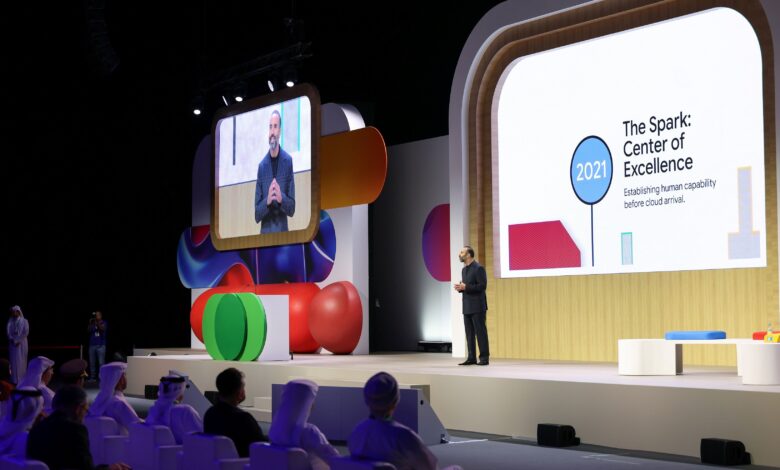
That was a central theme at the Google Cloud Summit Doha 2026, held at the Qatar National Convention Centre (QNCC), where Google Cloud marked the third anniversary of its Doha cloud region. The event brought together more than 2,000 technology executives, developers and strategic partners to examine the growing use of cloud and AI across the country.
Google Cloud announced several initiatives at the summit, including the launch of the MCIT Innovation Lab (iLab) and the Google Cloud National Skilling Program, developed in partnership with the Qatar Digital Academy (QDA).
“Our framework agreement with Google Cloud provides a strategic foundation for advancing cloud and AI adoption across Qatar’s government sector,” said Sami Mohammed Al Shammari, assistant undersecretary for infrastructure and operations affairs at the Ministry of Communications and Information Technology (MCIT). “Today, cloud infrastructure is enabling the next stage of our digital transformation, providing the foundation to integrate advanced and agentic AI capabilities into core government operations. Through this agreement, we are supporting government entities in adopting these technologies at scale, while strengthening the national digital capabilities needed to deliver sustainable impact in line with the Digital Agenda 2030.”
From AI experiments to agentic workflows
The summit highlighted a shift in how organisations are approaching AI, moving beyond standalone models and experimental applications towards agentic systems that can set goals, plan tasks and execute more complex workflows.
Google Cloud demonstrated how Gemini Enterprise can bring together enterprise data and AI capabilities to support these workflows, with the company positioning the technology as part of a broader move from traditional systems of record towards systems capable of taking action.
The approach is supported by Google Cloud’s recent State of AI Infrastructure report, which examines how organisations are adapting their infrastructure as AI moves deeper into enterprise operations. Google Cloud has been working with the Qatari government for five years, and the company is now collaborating with MCIT on a new phase of digital transformation focused on agentic AI.
The newly launched MCIT Innovation Lab (iLab) is intended to provide developers, researchers and enterprises with an environment to experiment with AI technologies and develop applications. The facility includes a multimodal AI studio and integrates with Gemini Enterprise, supporting projects from proof of concept through to enterprise deployment.
Building Qatar’s AI skills base
Alongside technology infrastructure, workforce development was a key component of the summit. Google Cloud and the Qatar Digital Academy launched the Google Cloud National Skilling Program, which aims to provide more than 50,000 learning opportunities across Qatar by 2030.
The programme will focus on three areas: foundational AI skills for the broader workforce, strategic AI development for business and government leaders, and advanced technical training for developers.
The initiative is designed to support the growing demand for AI expertise as organisations expand their use of cloud platforms and intelligent systems.
AI adoption across Qatar
Several major Qatari organisations also shared examples of how they are applying Google Cloud technologies and Gemini Enterprise. In telecommunications, Ooredoo Qatar and Vodafone Qatar highlighted the use of no-code AI agents to automate aspects of internal network management.
In media and sports, beIN MEDIA GROUP and Aspire Zone Foundation discussed agentic AI applications involving live broadcast processing and the translation of athletic telemetry.
Within the public sector, the Council of Ministers highlighted the deployment of centralised data analytics infrastructure and an Enterprise Data Lake for executive reporting. Qatar Museums, meanwhile, launched the Grand Prix Gaming Portal on Google Kubernetes Engine to support interactive engagement with cultural heritage.
In education, Qatar University outlined its deployment of Gemini Enterprise to automate administrative governance and support its Spark AI Research Hub. The University of Doha for Science and Technology (UDST) is also using Gemini Enterprise to prototype specialised AI agents focused on energy, logistics and healthcare workflows.
The Ministry of Endowments and Islamic Affairs (Awqaf) shared applications of AI aimed at shortening media production cycles, handling legal and HR enquiries, and helping mosque imams access verified religious content.
Meanwhile, the Civil Service and Government Development Bureau, together with the National Planning Council, highlighted the use of graph technology for workforce management and scenario forecasting.
Open AI infrastructure and enterprise adoption
“Google Cloud’s open, full-stack AI platform is engineered to give organizations the core foundation they need to scale intelligent systems,” said Ghassan Kosta, Regional General Manager for Qatar, Oman, Bahrain, and Iraq at Google Cloud. “By integrating Gemini Enterprise and investing in workforce development through our national skilling initiatives, organizations can embed cognitive taskforces directly into their primary workflows and operate within an open ecosystem built for the pace of AI innovation.”
The summit also featured a partner exhibition showcasing the regional cloud ecosystem, alongside technical sessions, hands-on labs and co-innovation workshops covering data engineering, security and machine learning architectures.
With the Doha cloud region now marking its third year, Google Cloud is positioning the next phase of its Qatar strategy around combining cloud infrastructure, enterprise AI, agentic workflows and workforce development. For organisations across the country, the focus is increasingly shifting from experimenting with AI to integrating it into everyday operations.