Intel Positions Itself at Center of Agentic AI Shift from PCs to Data Centers

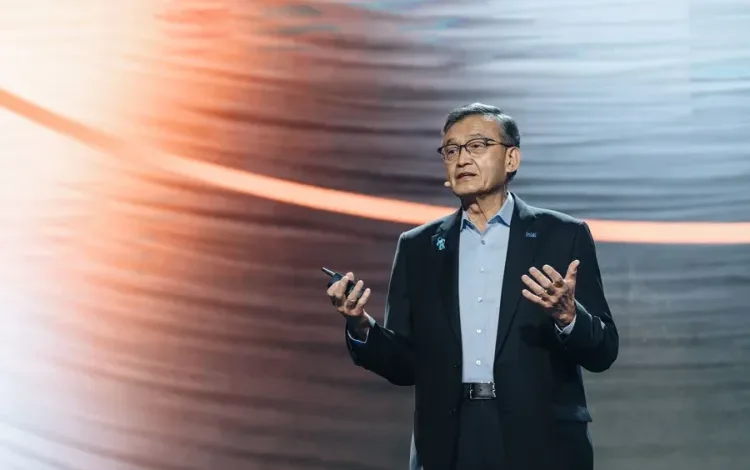
Reporting from Taipei, Taiwan: Intel outlined a broad strategy to support the rise of agentic artificial intelligence, spanning devices from personal computers to large-scale data centers, during its keynote at Computex 2026 in Taipei.
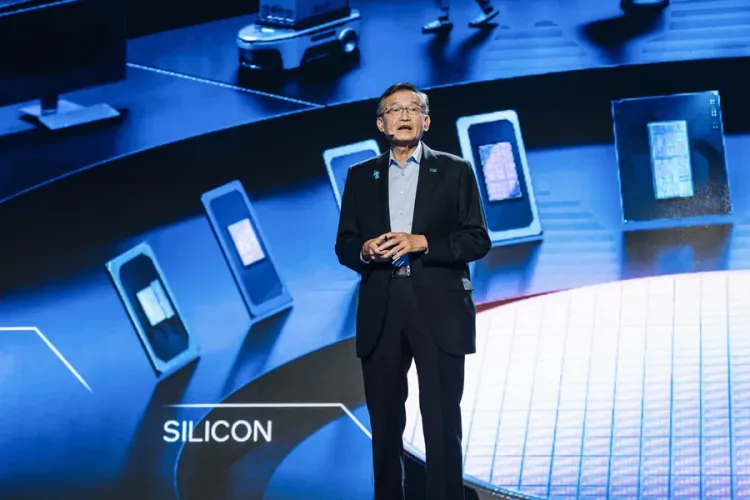
CEO Lip-Bu Tan said the transition to agentic AI will require sweeping upgrades across computing infrastructure, with Intel aiming to deliver silicon across PCs, edge devices, and data centers to power the next generation of workloads.
The company is targeting four major domains—client PCs, edge and physical AI, foundational data centers, and emerging intelligence centers—as part of a unified ecosystem approach.
On the client side, Intel executives highlighted progress in AI-capable PCs. Alex Katouzian, head of Intel’s client computing and AI group, pointed to the latest Core Ultra Series 3 chips, saying they can “transform any PC into an agentic capable platform,” with adoption already underway across dozens of laptop designs.
Demonstrations at the event showed how hybrid AI systems can split workloads between local devices and the cloud. Perplexity CEO Aravind Srinivas presented a system that runs smaller models locally while shifting more demanding tasks to data centers to improve efficiency and privacy.
In the data center, Intel emphasized a shift in workload dynamics. AI inference is expected to account for a growing share of power consumption, with executives noting that agentic AI workloads place greater emphasis on CPUs.
“For agentic AI, the CPU orchestrates the show,” said Kevork Kechichian, who leads Intel’s data center group, as the company introduced its Xeon 6+ processors designed for these environments.
Intel said it is also working with partners to design new server architectures tailored to enterprise AI needs, reflecting changing compute requirements as agent-based systems scale.
Executives highlighted how rising token usage in AI systems is driving demand for more efficient compute designs, while partners including SambaNova showcased new infrastructure combining CPUs, GPUs, and specialized accelerators for distributed inference.
The shift toward agentic AI is also reshaping data center design. Industry partners are developing new architectures to convert existing facilities into optimized inference hubs, reflecting growing demand for scalable and energy-efficient AI systems.
Tan concluded by pointing to Intel’s role in enabling AI across industries, citing collaborations in sectors ranging from healthcare to energy and industrial automation.