Global Smartphone Shipments Decline 6% in Q2 2026, Says Omdia

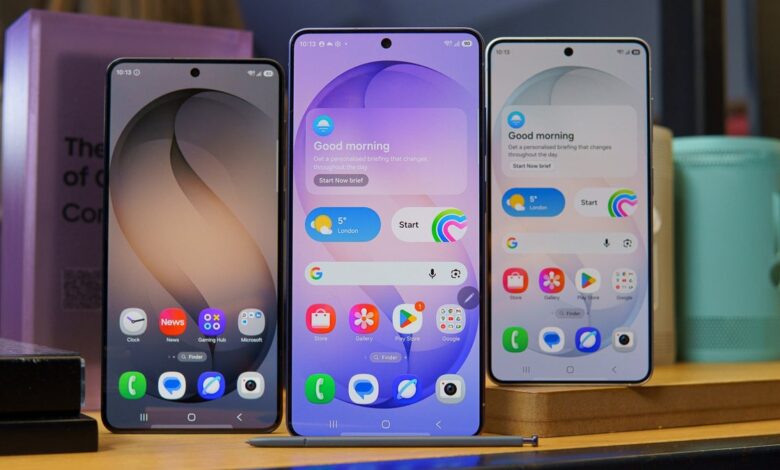
Global smartphone shipments declined 6% year-on-year to 272 million units in the second quarter of 2026 as rising memory prices and supply-side pressures prompted vendors to revise pricing strategies, streamline product portfolios and prioritise profitability, according to new research from Omdia.
The decline follows stronger-than-expected demand in the first quarter, with the market entering an adjustment phase as sustained increases in memory and component costs disrupted supply chains and raised production expenses. Omdia said vendors with stronger supply chains and pricing power were better positioned to navigate the challenging market conditions.
Samsung remained the world’s largest smartphone vendor during the quarter, shipping 60.5 million units, up 5% year-on-year, to capture a 22% market share. The research firm attributed Samsung’s performance to its vertically integrated memory business, which helped mitigate component shortages, while the delayed launch of the Galaxy S26 series also boosted second-quarter demand.
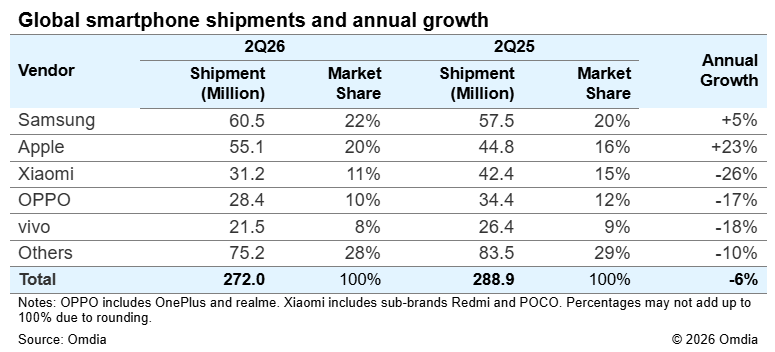
Apple recorded its strongest-ever second quarter, shipping 55.1 million iPhones, a 23% increase from a year earlier, giving it a record 20% market share during what is traditionally its weakest seasonal quarter. Omdia said channel partners increased inventories of the base iPhone 17 ahead of expected price increases and the anticipated launch of the iPhone 18 series later this year.
Xiaomi retained third place with 31.2 million shipments, although volumes fell 26% year-on-year. The company was among the most affected by rising memory costs due to its heavy reliance on entry-level smartphones, particularly in Asia-Pacific and Latin America.
OPPO, including its realme and OnePlus brands, ranked fourth with 28.4 million shipments, down 17%, after reducing its entry-level product portfolio to improve profitability. Vivo completed the top five with 21.5 million shipments, an 18% decline from the same period last year.
According to Omdia, higher costs for memory, storage and application processors have shifted the industry’s focus away from shipment growth towards protecting margins and increasing average selling prices (ASPs). Vendors have responded by raising prices, reducing lower-end product offerings and accelerating their move towards mid-range and premium smartphones.
Regional challenges also weighed on the market. Smartphone shipments in the Middle East declined 18% year-on-year as geopolitical tensions disrupted supply chains, retail activity and consumer demand. Omdia expects these disruptions to ease in the second half of the year as market conditions stabilise.
“Price is once again becoming a competitive differentiator. The current memory cost cycle is driving a structural repricing of the industry, creating a lasting shift in how vendors compete on pricing, profitability and product positioning,” said Le Xuan Chiew, Research Manager at Omdia.
Looking ahead, Omdia expects elevated component costs to continue constraining smartphone shipments through the remainder of 2026, although the pace of decline is expected to moderate as inventories normalise. Vendors are likely to focus on financing programmes, trade-in offers and bundled services to offset higher retail prices and maintain consumer demand.
“Despite seasonal demand from flagship launches, holiday promotions and shopping festivals, smartphone shipments are expected to continue declining over the next two quarters amid persistent cost pressures,” said Amber Liu, Practice Leader at Omdia. “The winners will be vendors that combine pricing power, supply chain resilience and innovative commercial strategies to drive profitability, deepen customer relationships and navigate an increasingly challenging market environment.”