AI Is Redefining Data Center Architecture as Saudi Arabia Accelerates AI Adoption

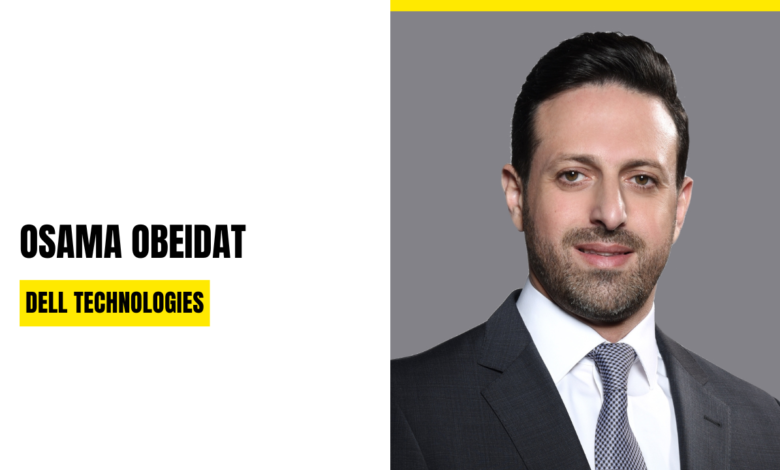
Osama Obeidat, Director, Energy and Oil & Gas, KSA at Dell Technologies, explains how AI workloads are reshaping data center architecture, from high-density compute, power and cooling to networking, cybersecurity and digital twins. He also discusses how Saudi Arabia’s energy sector can overcome infrastructure bottlenecks and accelerate the deployment of AI-ready environments.
How is the rise of AI workloads changing the design and architecture of modern data centers?
The rise of AI workloads is fundamentally transforming modern data center architecture, shifting from isolated silos to deeply integrated, purpose-built environments. In mission-critical sectors like Energy and Oil & Gas, AI demands massive parallel processing, high throughput and ultra-low latency to power predictive analytics, optimize operations, and support faster decision-making at scale.
To support these intensive workloads, data centers are evolving into unified architectures where compute, storage and networking operate as a single, resilient fabric. With AI projected to contribute over $135.2 billion to Saudi Arabia’s economy by 2030 (PwC), local enterprises are aggressively modernizing infrastructure to spearhead this transformation. By deploying integrated solutions like the Dell AI Factory, we empower organizations across the Kingdom to eliminate bottlenecks, fortify supply chain resilience, and accelerate measurable business outcomes from their AI investments.
What are the biggest challenges in scaling infrastructure to support high-density AI compute environments?
One of the primary roadblocks in scaling infrastructure for high-density AI environments is relying on legacy systems that were never designed for today’s complex workloads. For instance, in the energy sector, a main obstacle is slow and siloed data access. When geoscientists or petroleum engineers spend more time waiting for massive seismic and reservoir datasets to load than building models, data becomes a bottleneck rather than an enabler. For companies using AI for predictive asset maintenance or drilling optimization, delayed data access risks unscheduled downtime, compromised safety and significant financial losses.
Another major challenge is resource contention and over-provisioning. Running AI inference and data processing alongside core business applications on general-purpose servers strains resources, leading to degraded performance and higher energy costs. To overcome these hurdles, Saudi organizations are shifting to scalable, purpose-built infrastructure with accelerated compute and integrated management tools to manage mixed workloads reliably and scale capabilities incrementally.
How are power, cooling, and networking requirements evolving with AI-driven infrastructure?
Power, cooling, and networking requirements are evolving dramatically as data centers adapt to high-density AI infrastructure. AI workloads place sustained pressure on energy supplies, driving up power consumption and thermal output across the data center. In Saudi Arabia, where organizations are balancing rapid digital expansion with sustainability goals, improving energy efficiency per workload has become an essential operational priority.
To handle increasing heat density, cooling strategies are shifting from traditional air cooling to advanced liquid cooling and enclosed rear door heat exchangers, which significantly lower energy costs and rack footprints. Because AI models rely on continuous data movement, a robust network fabric is critical to prevent congestion, avoid dropped connections, and keep processors fully supplied with data across hybrid cloud and edge environments.
Where do you see the convergence between physical infrastructure management and cybersecurity today?
Physical infrastructure management and cybersecurity now converge directly at the intersection of IT and Operational Technology (OT). Cyber resilience is no longer treated as a perimeter defense or a back-end IT backup issue. It is designed directly into the infrastructure architecture from the start. For Saudi energy enterprises, aligning with National Cybersecurity Authority (NCA) frameworks and data localization mandates is non-negotiable to protect Critical National Infrastructure.
Infrastructure management now integrates Zero Trust principles, least-privilege access, immutable storage snapshots, and isolated cyber vaults as standard controls. Solutions like Dell PowerProtect Cyber Recovery provide automated, air-gapped vaults that allow organizations to isolate critical data, detect anomalies, and recover with confidence. This convergence ensures that physical infrastructure management directly reinforces data governance, regulatory compliance, and operational continuity.
What new security risks emerge as data centers become more software-defined and AI-orchestrated?
To align with National Cybersecurity Authority (NCA) mandates, Saudi energy leaders are addressing this by implementing structural defenses such as data segmentation and Zero Trust architecture, which assumes any access point can be compromised. Enforcing least-privilege access and embedding immutability at the storage layer ensures AI workloads process only authorized data, containing potential security breaches before they can impact critical physical infrastructure.
How important is real-time simulation or digital twin technology in planning and managing AI infrastructure?
Real-time simulation and digital twin technology are becoming essential tools for planning and managing high-density AI infrastructure. Before deploying physical hardware, digital twins allow data center operators to create virtual models of their environments, simulating workload performance, thermal dynamics, and power allocation in real time. This capability helps IT leaders identify potential performance bottlenecks and power constraints before they impact live operations.
By running predictive simulations, operators can test how infrastructure responds to heavy AI inference loads, evaluate cooling efficiency, and adjust resource placement without risking downtime. Real-time simulation simplifies operational management, enables intelligent power usage, and gives organizations the visibility needed to build resilient, energy-efficient data center foundations tailored to their specific workload requirements.
How are vendors adapting to the need for faster deployment cycles in AI infrastructure environments?
Vendors are adapting to the demand for faster deployment by replacing complex piecemeal builds with turnkey, pre-validated infrastructure solutions. In the Saudi energy sector, where accelerating time-to-value is critical, lengthy infrastructure rollouts delay vital innovations in seismic analysis and predictive maintenance. Pre-tested blueprints, such as Dell Validated Designs for GenAI and the Dell AI Factory, remove configuration guesswork, streamline integration and accelerate time-to-value.
Additionally, vendors are dramatically shortening physical installation timelines. Rapid scale deployment capabilities allow fully integrated custom racks to move from the delivery dock to fully operational status in a customer’s data center within 24 to 36 hours. Flexible consumption models like Dell APEX complement this speed by enabling organizations to deploy AI-ready infrastructure-as-a-service, scaling resources on demand and matching costs to actual usage without requiring massive upfront capital investments.