
Reporting from Tashkent, Uzbekistan: Uzbekistan is stepping up its ambitions to become Central Asia’s leading FinTech hub, with the Central Bank of Uzbekistan (CBU) and the Global Finance & Technology Network (GFTN) launching the inaugural Silk Road Finance & Technology Forum in Tashkent from 24–26 August 2026. The three-day forum, being held at the Central Asian Expo Uzbekistan (CAEx) and the Islamic Civilization Centre, brings together policymakers, central bank governors, investors, development institutions, technology companies and startup founders from Central Asia, the GCC and other markets.
The event comes as Uzbekistan seeks to turn rapid digital adoption and its young population into a larger financial technology ecosystem. The country has a population of more than 37 million, with a large proportion under the age of 30, while digital adoption is approaching 70%, according to the organisers.
$1 Billion Investment Target
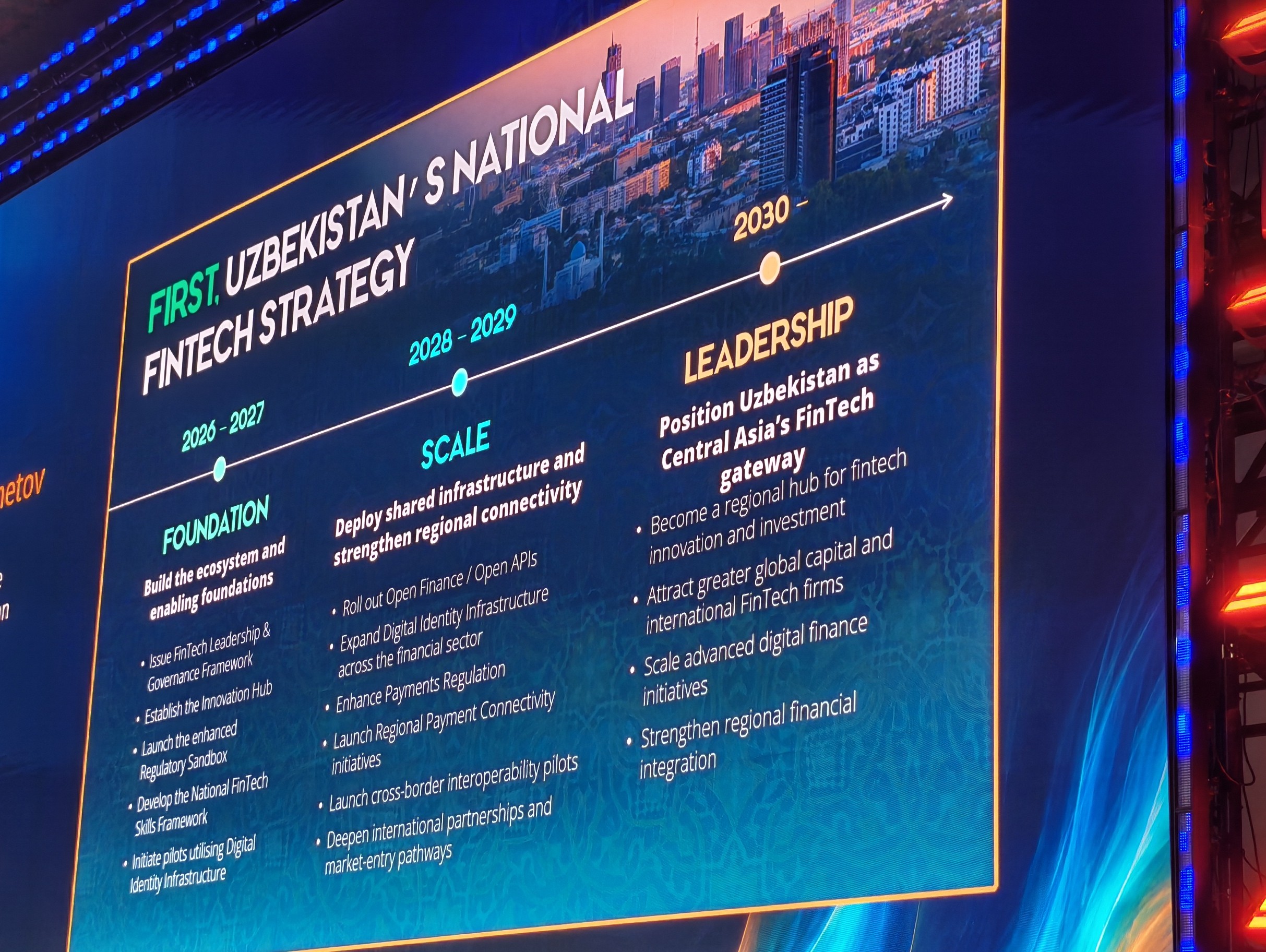
The forum is closely aligned with Uzbekistan’s longer-term FinTech development strategy. A Presidential Decree has established targets through 2030 that include attracting US$1 billion in foreign investment, training more than 5,000 professionals, creating more than 200 licensed market participants and graduating 100 startups from incubation programmes.
The strategy also includes plans to pilot digital currencies and stable tokens, signalling that Uzbekistan intends to develop infrastructure for emerging forms of digital finance alongside conventional banking and payments. The scale of the opportunity extends beyond Uzbekistan itself. Central Asia represents a market of more than 80 million people, described by the organisers as young, digitally savvy and still relatively early in its digital-finance development cycle.
Building the Infrastructure for Digital Finance
Rather than focusing solely on attracting FinTech companies, Uzbekistan is developing a broader regulatory and investment framework intended to support financial innovation. The CBU is building a Regulatory Sandbox 2.0 to enable companies to test new financial products and services in a controlled environment. It is also developing the QFinex Quantum Test Bed and establishing a dedicated US$50 million venture fund.
The country’s policy agenda covers several areas expected to shape the next phase of financial services, including payments, open banking, Buy Now Pay Later and cyber resilience. This approach could be particularly significant for a market where digital adoption is already approaching 70%. As more consumers and businesses move financial activity online, regulators face the dual challenge of enabling innovation while ensuring that new financial models remain secure and resilient.
Five Technologies and Markets at the Centre of the Forum
The Silk Road Finance & Technology Forum is structured around five themes: open banking; digital assets and stablecoins; cross-border payments; Islamic finance; and innovation and investment. The organisers have positioned the event as more than a conventional industry conference. Its objective is to connect regulators and policymakers with the capital, technology and entrepreneurial ecosystem needed to build a regional financial corridor.
The forum is co-hosted with Ant International and forms part of GFTN’s international network, which includes the Singapore FinTech Festival, Point Zero Forum in Zurich, GFTN Forum Japan and the Black Swan Summits.
Looking Beyond Uzbekistan
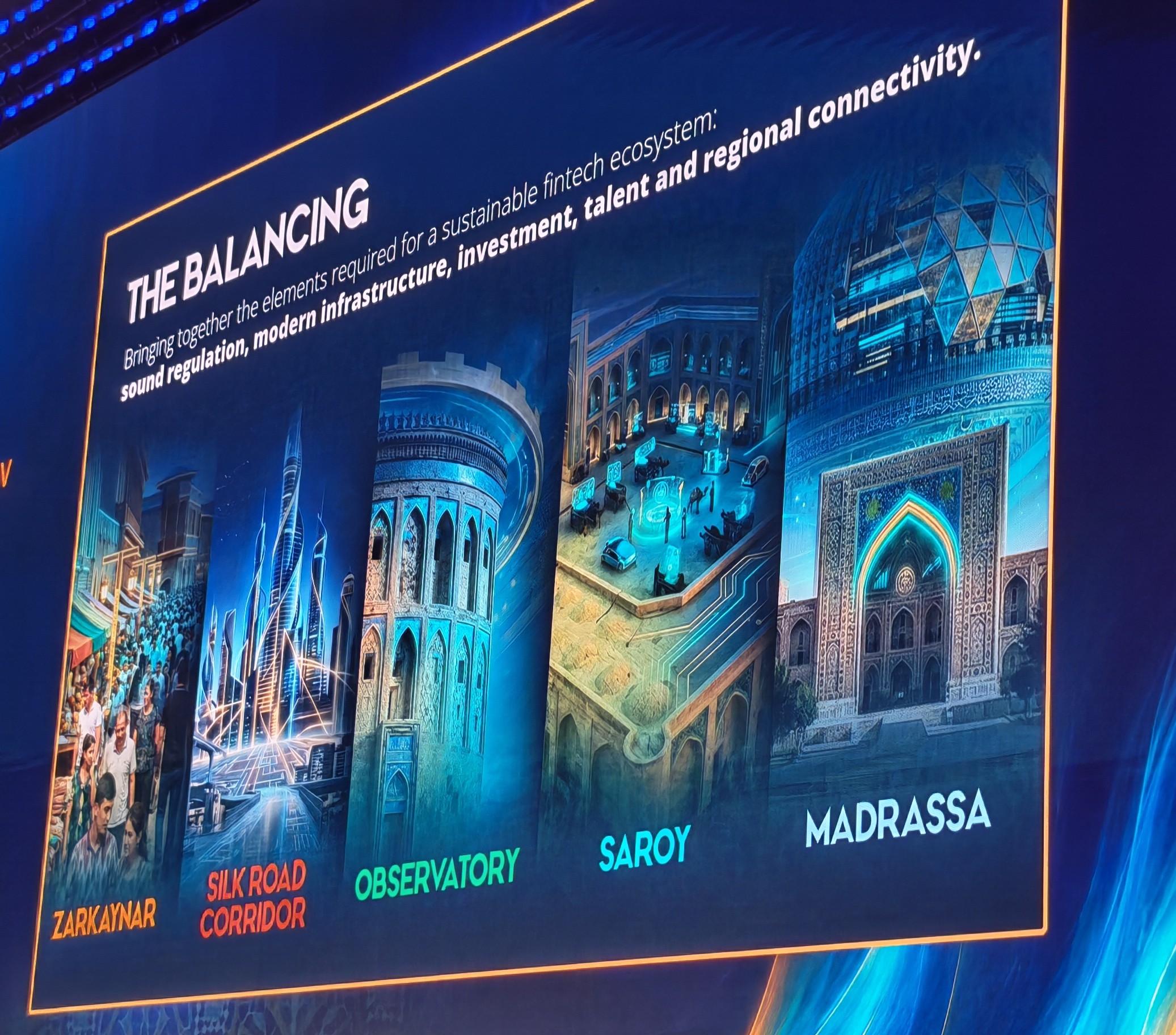
The country’s strategy reflects a broader ambition to make Tashkent a gateway between financial and technology ecosystems across Central Asia, the GCC and international markets. The involvement of GFTN is particularly notable. Headquartered in Singapore and established by the Monetary Authority of Singapore in 2024, GFTN operates across Japan, Germany and India and says its global network connects innovators, entrepreneurs, investors and policymakers from more than 130 countries.
For Uzbekistan, the Singapore connection also provides a model for regulator-led FinTech development. The CBU’s approach consciously draws on Singapore’s experience in developing a globally recognised financial technology ecosystem.
From Ambition to Execution
The most important measure of Uzbekistan’s FinTech push will ultimately be whether the country’s targets translate into investment, companies, skilled professionals and commercially successful financial products.
The headline targets are significant: US$1 billion in foreign investment, 5,000+ trained professionals, 200+ licensed market participants and 100 incubated startups by 2030. Combined with a domestic population exceeding 37 million and a wider Central Asian market of more than 80 million, they provide the foundation for a potentially sizeable regional FinTech ecosystem.
The Silk Road Finance & Technology Forum therefore arrives at a critical point in Uzbekistan’s digital-finance strategy. If the country can combine regulatory experimentation, venture capital, talent development and cross-border connectivity, Tashkent could move from being a fast-growing digital market to becoming a genuine financial technology hub for Central Asia.
The forum’s theme, Al-Jabr, references the Arabic concept of “bringing parts together” and the legacy of ninth-century mathematician Al-Khwarizmi, who came from Khwarezm in present-day Uzbekistan. The organisers say the concept reflects the forum’s goal of connecting different parts of the financial ecosystem—policy, technology, capital and talent—to build the region’s next financial corridor.
As GFTN Group CEO Sopnendu Mohanty put it, “Innovation flourishes when trust, talent and capital converge.” For Uzbekistan, the next four years will determine whether those three ingredients can turn the country’s FinTech ambitions into measurable economic scale.