Alibaba Introduces Qwen Intelligence to Bring Agentic AI to Smartphones

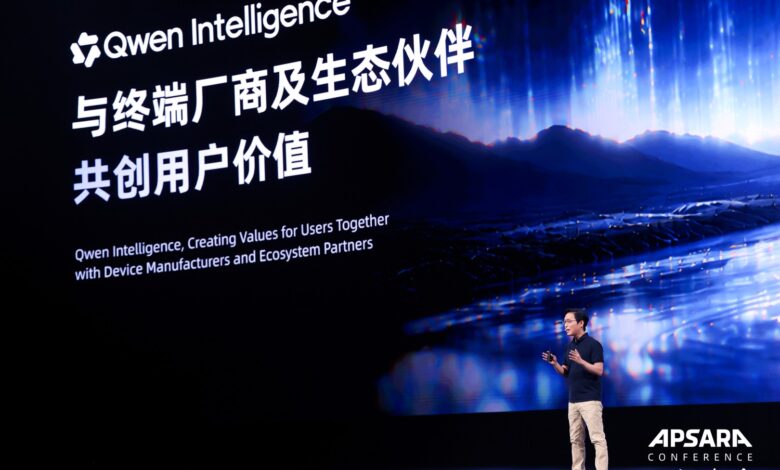
Alibaba has introduced Qwen Intelligence, a full-stack agentic AI platform designed to help smartphone manufacturers build devices capable of planning and carrying out complex tasks across multiple applications. Unveiled at the Apsara Conference in Hangzhou, Qwen Intelligence combines mobile-optimised foundation models with an agent platform and ready-to-use AI agents. The approach is aimed at moving smartphones beyond conventional AI assistants that primarily respond to individual prompts towards systems that can plan, coordinate and execute multi-step tasks.
HONOR is the first smartphone manufacturer to adopt Qwen Intelligence and is working with Alibaba to develop domain-specific models and solutions for its next-generation AI smartphones. HONOR’s Magic9 Series, scheduled to launch on 28 September, and the HONOR Robot Phone are set to be among the first devices to incorporate the technology.
“Agentic smartphones are the primary gateway bridging personal AI and the physical world. Qwen Intelligence integrates mobile-optimized Qwen models with a custom-engineered harness, empowering phone makers to deliver seamless, personal intelligence to their users,” said Steven Hoi, Head of Qwen Mobile AI at Token Foundry and Vice President of Alibaba Token Hub (ATH).
From AI assistants to task execution
The first phase of Qwen Intelligence includes three agents covering planning, mobile interaction and content creation. The Mobile Planner Agent is designed to handle task planning, decomposition, tool orchestration and dynamic adjustments. A request such as arranging a business trip to Shanghai could involve breaking the task into separate actions such as booking flights and accommodation, adding calendar entries and organising an itinerary. Alibaba says the system can also respond to changes, such as a cancelled flight, by using memory and proactive services to identify alternatives.
The Mobile-Use Agent is designed to execute actions across applications using an API-first approach with graphical user interface fallback. Alibaba says the architecture incorporates security boundaries and privacy protections intended to allow cross-app tasks to be completed while maintaining control over how applications and data are accessed.
The third component, the Mobile Creative Agent, is a lightweight model designed for smartphone-based image generation and editing. Alibaba says further capabilities are being developed, including personalised memory and proactive assistance, multimodal interaction and specialised agents supplied in collaboration with ecosystem partners.
A modular architecture for smartphone makers
Qwen Intelligence is structured around three layers. At the foundation is a Qwen-based model optimised specifically for mobile scenarios. Alibaba says this approach is intended to provide stronger on-device capabilities and lower costs than adapting a general-purpose model for smartphones.
The platform layer provides modular components that manufacturers can customise, including independent model deployment, agent-harness customisation, unified tool governance and automated evaluation. Device-cloud coordination is also designed to balance performance, latency and cost.
At the top are specialised agents targeting particular domains and use cases. Manufacturers can deploy the complete platform or select individual components, allowing them to integrate specific models or agents into existing smartphone software and services.
Building a framework for agentic smartphone testing
The launch also addresses a challenge that is becoming more important as AI agents move onto smartphones: measuring how reliably they can perform real-world tasks. Alibaba’s Qwen Intelligence team has developed an open evaluation system built around four benchmarks. MobilePA-Bench, for example, assesses an agent’s ability to plan and complete complex tasks from beginning to end, covering more than 1,000 real-world scenarios and more than 200 commonly used mobile tools.
Other benchmarks examine long-running, cross-application tasks in cloud-phone environments as well as tasks performed on physical devices that reflect everyday smartphone usage. Alibaba says Qwen Intelligence agents have demonstrated leading performance across these evaluations.
HONOR partnership targets agentic smartphone experiences
The collaboration with HONOR represents the first announced deployment of Qwen Intelligence in a commercial smartphone ecosystem. Alibaba and HONOR have co-developed domain-specific models and solutions built around Qwen Intelligence and HONOR’s MagicOS operating system. The companies are positioning the work as a step towards an agentic operating system in which AI can move from responding to individual commands to handling more complex workflows.
According to Alibaba, HONOR AI smartphones powered by the architecture can achieve task accuracy of up to 91.8% and orchestrate workflows exceeding 100 steps. The development reflects a broader shift in smartphone AI from isolated features such as image generation and summarisation towards agents that can interact with multiple applications and services. For manufacturers, the challenge will increasingly be not only adding AI to devices, but ensuring that autonomous actions remain reliable, transparent and appropriately controlled.