AI Adoption is Putting New Pressure on Enterprise Reliability Teams


The rapid deployment of artificial intelligence across enterprise environments is creating a new reliability challenge for IT teams, with site reliability engineering (SRE) and platform engineering functions increasingly responsible for ensuring AI systems remain reliable, observable and scalable. New findings from Dynatrace’s State of SRE and Platform Engineering 2026 study, based on a survey of 919 IT leaders, show that organisations are expanding the role of these teams as AI workloads introduce new operational requirements, telemetry and failure modes.
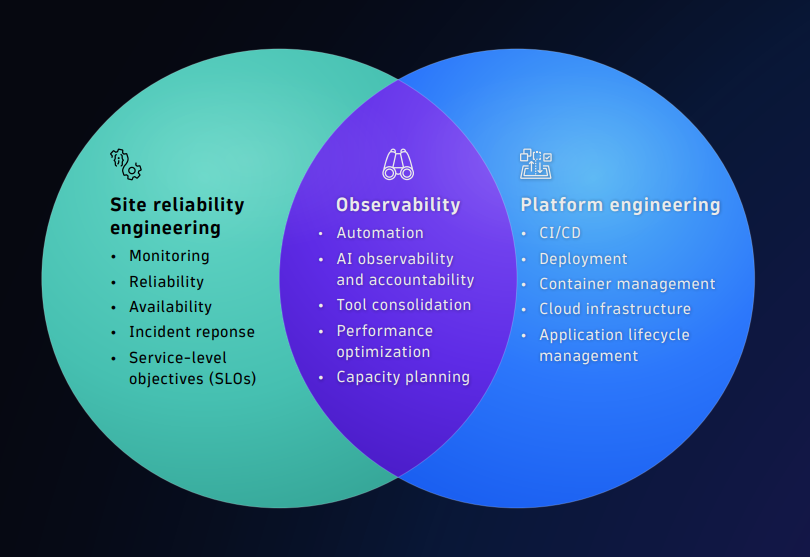
The research points to a shift from traditional application and infrastructure reliability towards managing AI systems whose behaviour, performance and resource requirements can change significantly once they enter production. AI model monitoring has emerged as the leading AI-related priority among SRE teams, with 67% identifying it as their top use case.
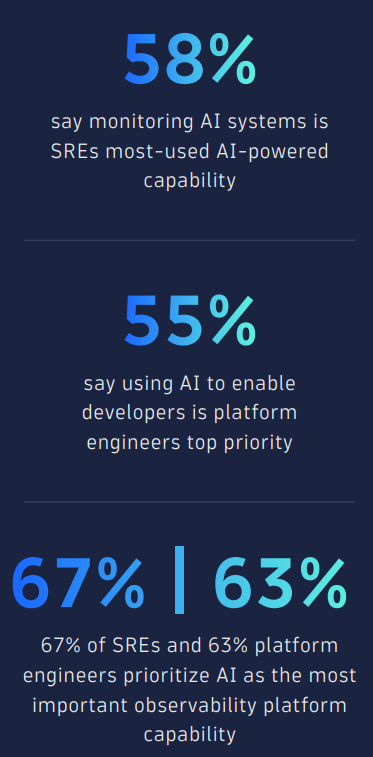
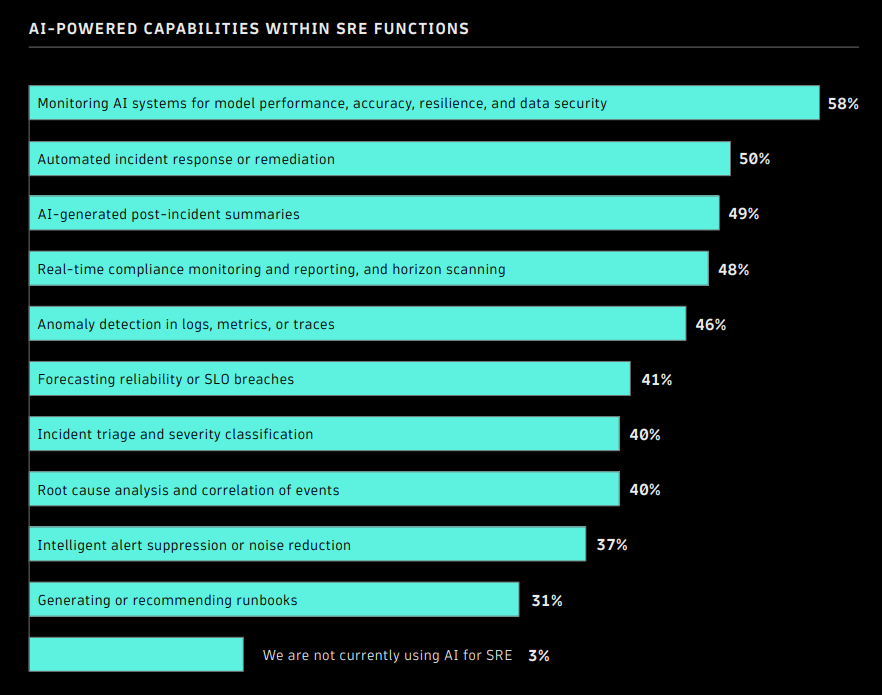
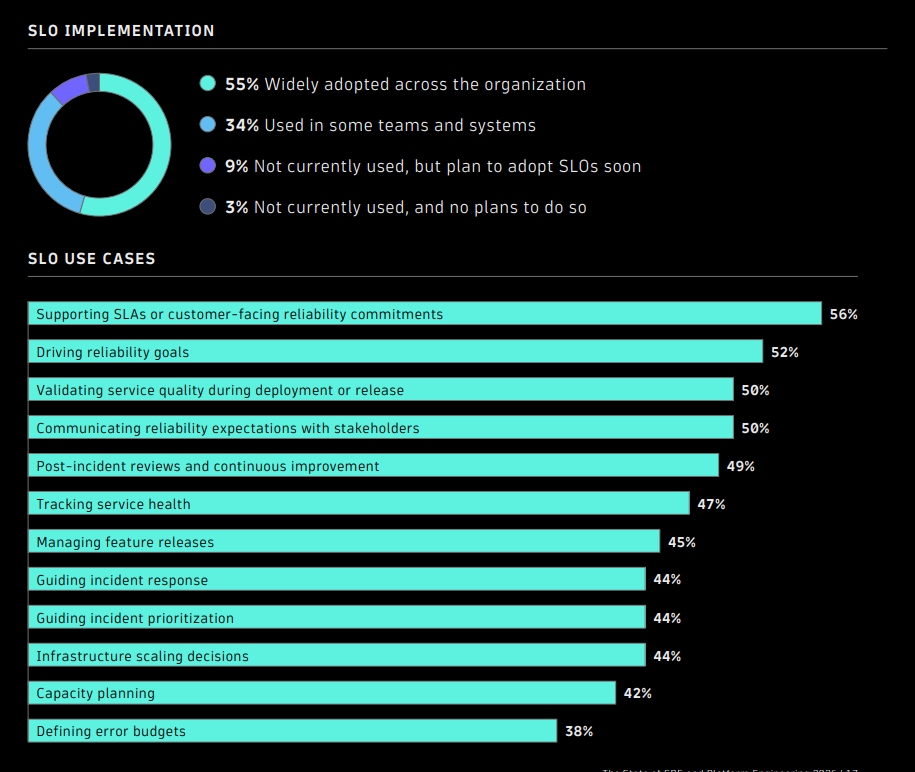
Monitoring model performance and accuracy is already the most widely used AI-powered capability among SRE teams, with 58% reporting its use. At the same time, 89% of SRE teams are using service-level objectives (SLOs) across at least some systems or teams, as organisations seek to apply established reliability practices to increasingly AI-driven environments.
The research also highlights a visibility problem. Nearly half of SRE respondents say the number of data sources and metrics makes it harder to define and manage effective SLOs. The result is a growing requirement for teams to correlate infrastructure, application and AI-specific telemetry rather than monitoring each layer independently.
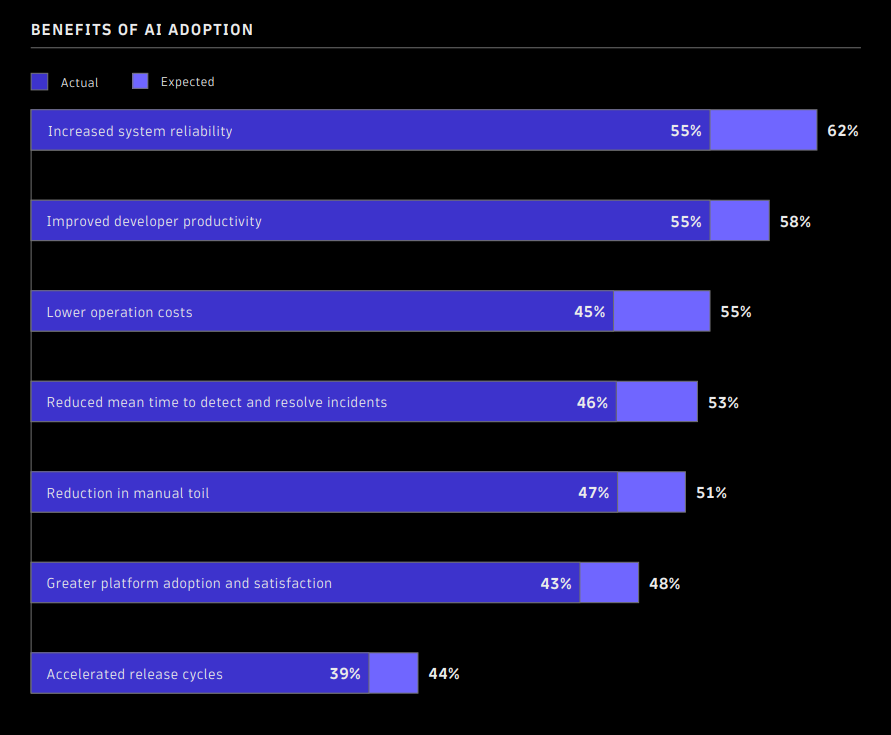
While AI is generally meeting expectations around reliability and developer productivity, the research finds that its impact on cost reduction and mean time to resolution (MTTR) remains weaker. For platform engineering teams, 37% identify integration with existing tools and systems as their biggest challenge, highlighting the difficulties involved in adding AI capabilities to already complex technology environments.
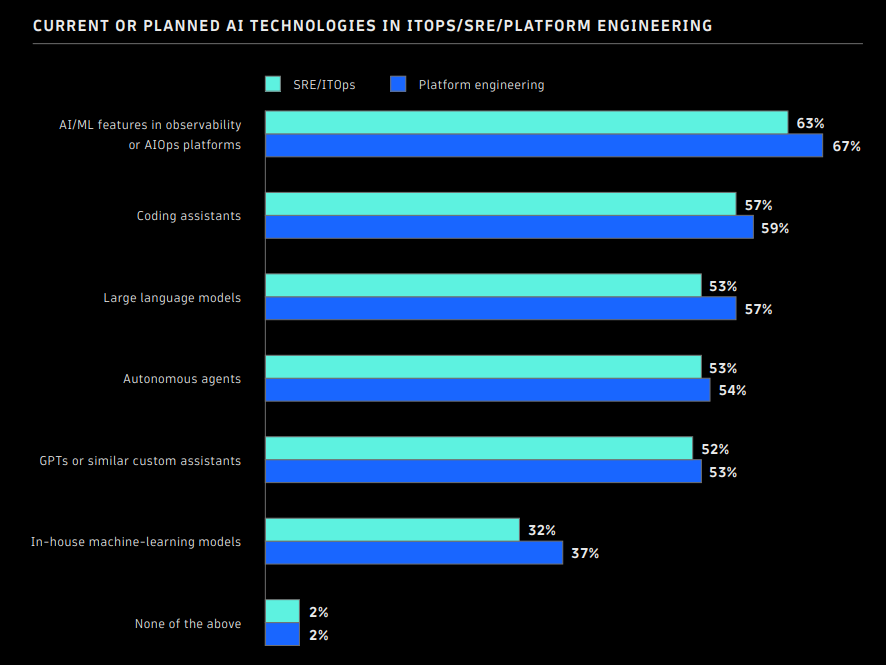
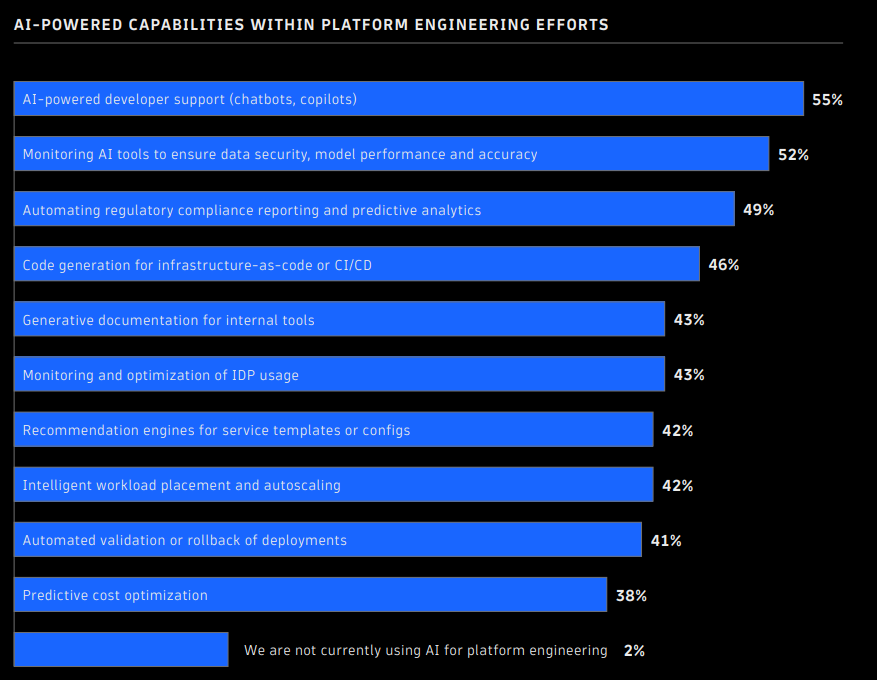
AI adoption is nevertheless becoming embedded in developer platforms. 55% of platform engineers say enabling developers with AI-powered tools, including coding copilots and chatbots, is a priority. Only 40% of platform engineers, however, report that observability is embedded across all stages of the deployment lifecycle.
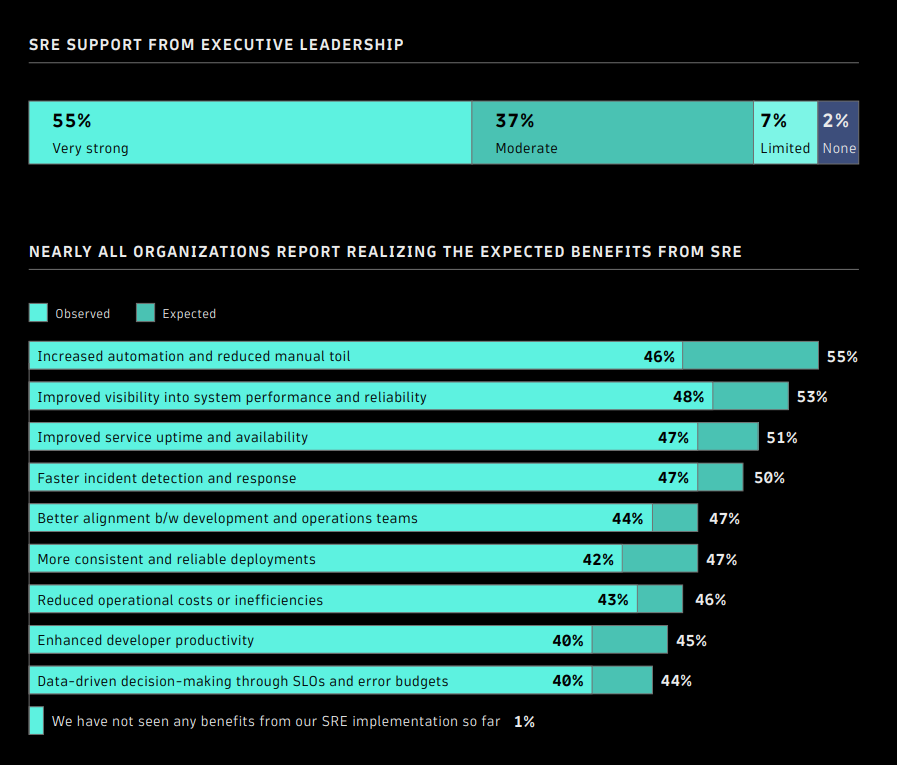
The study suggests that SRE and platform engineering are no longer emerging practices confined to individual technology teams. 92% of organisations report executive leadership support for SRE initiatives, while 89% of organisations practising platform engineering have implemented an internal developer platform (IDP). Of those, 60% report broad adoption across departments.
The functions are also increasingly working together, with 73% of SRE and platform engineering teams reporting collaboration and shared responsibilities across reliability and platform engineering. The growing integration of the two disciplines is significant as organisations attempt to apply existing automation and reliability frameworks to AI workloads. Gartner projects that 80% of enterprises will adopt SRE practices across their organisations by 2028, compared with 30% in 2024.
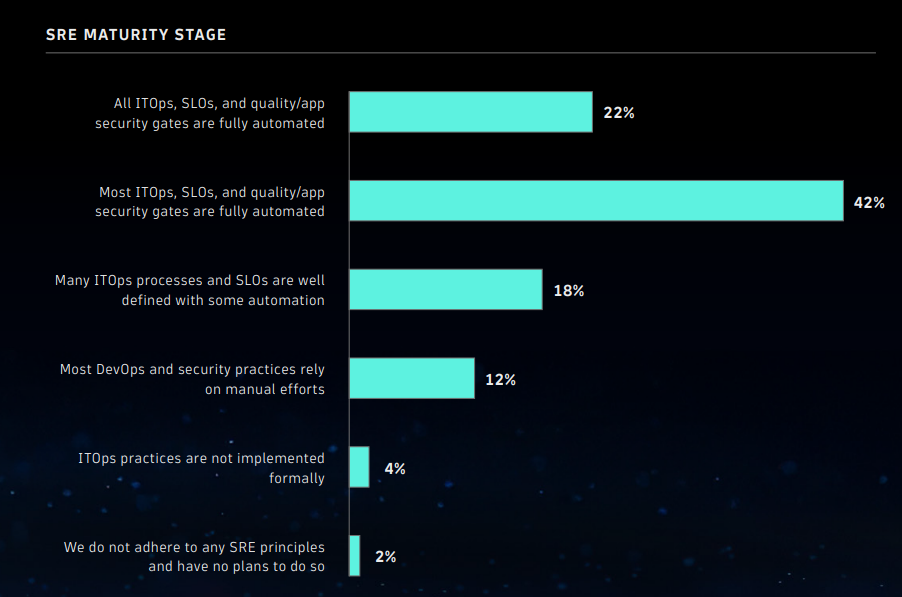
The research points to observability becoming increasingly important as enterprises move from AI-assisted workflows towards more autonomous operations. Around 50% of SREs now use AI-powered capabilities for automated incident response, suggesting a move towards agentic operations in which AI systems can increasingly participate in identifying and responding to incidents.
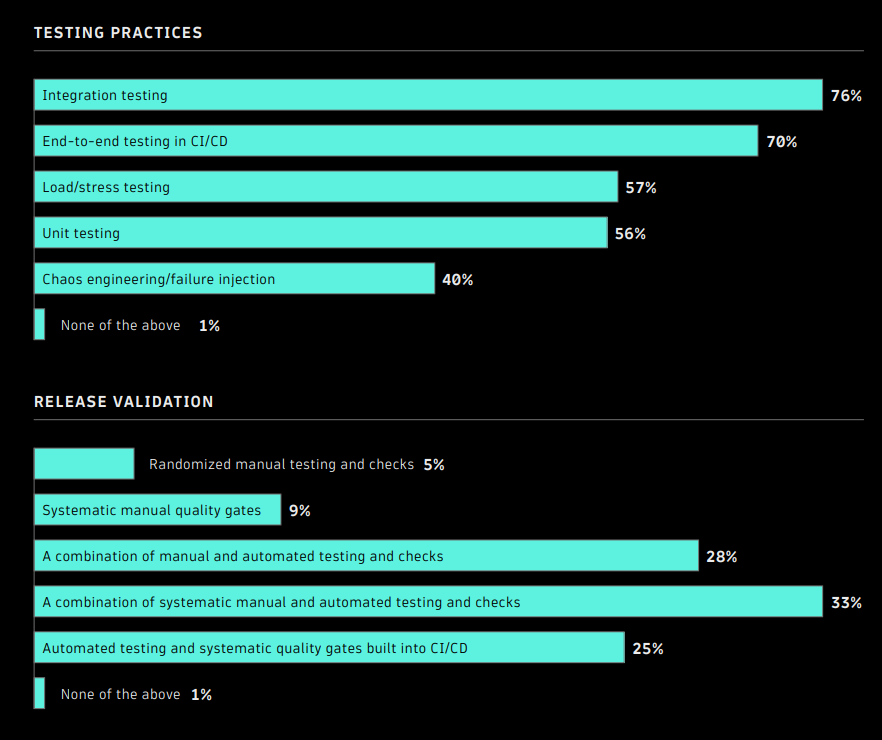
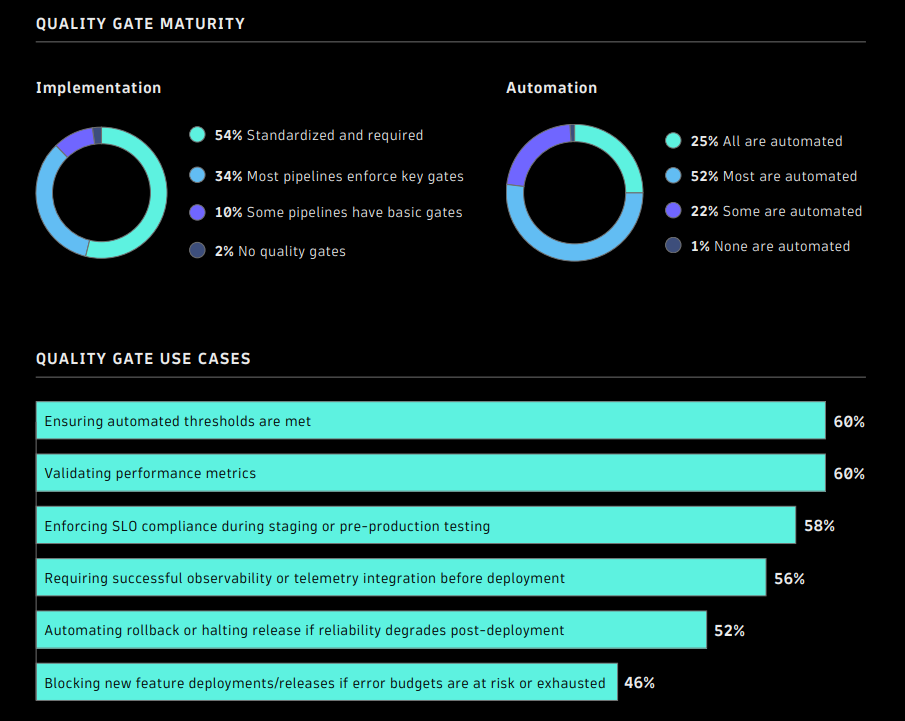
That development also raises the stakes for observability. Autonomous systems need access to reliable operational information, while organisations need mechanisms to determine when automated actions should be permitted, restricted or escalated to humans. The research indicates that organisations are therefore prioritising visibility and human oversight before expanding automation further.
The findings come as Dynatrace seeks to expand its AI observability capabilities through its recently announced intent to acquire Arize, an AI observability company. Dynatrace says the proposed acquisition would bring AI-native evaluation capabilities into its observability platform, addressing the growing divide between teams developing AI models and those responsible for running them in production.
“SRE and platform engineering laid the groundwork for modern digital reliability, but AI is rewriting the rules. Enterprises need to now move from managing systems to orchestrating them, connecting observability, automation, and agentic AI to operate at the speed these initiatives demand, turning insight into action at scale,” said Steve Tack, Chief Product Officer at Dynatrace. “This research also reflects why we recently announced our intent to acquire Arize. AI engineering teams have been evaluating in one set of tools while operations teams monitor in another, and that gap is no longer sustainable as AI moves deeper into enterprise production.”
The findings suggest that the next challenge for enterprises may not simply be deploying more AI, but building the operational foundations required to keep increasingly autonomous systems under control. For SRE and platform engineering teams, that means combining observability, automation, AI evaluation and human oversight as AI moves from experimentation into core production environments.