HP Expands Saudi Arabia Commitment with AI R&D, Local Manufacturing and New Innovation Garage

HP has outlined a series of developments across artificial intelligence, local manufacturing, education and workforce development in Saudi Arabia, as the company expands its support for the Kingdom’s Vision 2030 technology and innovation ambitions.
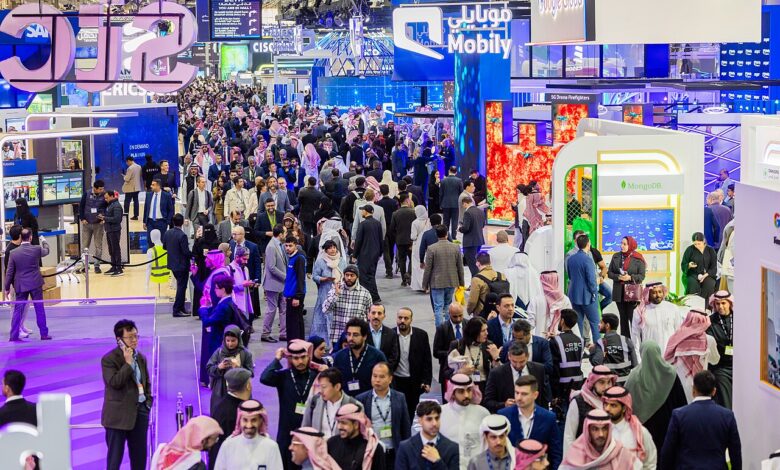
Announced at LEAP 2026, the developments build on commitments HP made at last year’s event and include the commercial production of HP products at its Riyadh manufacturing facility, the expansion of locally developed AI solutions through its AI R&D Center of Excellence in Dhahran, and the launch of the HP AI Academy and Garage 2.0, a new incubator aimed at supporting startups and emerging innovators.
“Saudi Arabia is a key innovation partner for HP, and over the past year we have moved from commitment to delivery,” said Fadle Saad, Managing Director, MENA Regional Headquarters, HP Inc. “By advancing local AI development, manufacturing and skills together, we are supporting the Kingdom’s ambition to build a more innovative, technology-led economy under Vision 2030.”
HP’s AI R&D Center of Excellence (CoE) in Dhahran, first announced at LEAP 2025, has developed into an active hub for enterprise AI research and locally relevant applications. The centre is working across enterprise AI, Arabic-language AI, applied research and talent development. Among the solutions being developed is HP Agent One, an enterprise agentic AI platform designed to manage IT service requests and incidents from initiation through resolution.
HP Agent One supports Arabic-language interactions, allowing it to understand requests, create and route tickets, resolve issues and escalate cases to human operators when required. The platform can integrate with existing enterprise systems and operate on premises, allowing organisations to retain sensitive data within their own infrastructure.
Another solution, FlowMaster, uses optical character recognition and multimodal AI to analyse documents and automate administrative processes. The system can validate information and compliance, identify inconsistencies and recommend actions.
HP said applications such as FlowMaster could help government, public-sector and regulated organisations reduce processing times for activities including permits and citizen requests. The Dhahran centre is also working with academic institutions on training and knowledge transfer, while its research into Arabic large language models includes work focused on the Najdi dialect. Using Saudi datasets, researchers are developing country-specific AI applications, including a platform designed to help predict student dropout risks.
HP’s manufacturing facility in Riyadh, which opened in October 2025, has moved into ongoing commercial production. The facility is now manufacturing and shipping HP products to customers across Saudi Arabia, with production expected to scale further throughout 2026. Beyond manufacturing, HP said the facility was contributing to the development of the local supply chain through relationships with Saudi suppliers, local manufacturing talent development and collaboration with government and industry stakeholders.
HP also announced Garage 2.0, an incubator designed to support startups and help transform early-stage ideas into solutions aligned with Saudi Arabia’s AI and future-of-work ambitions. The initiative takes its inspiration from the original HP Garage in Palo Alto, where Bill Hewlett and Dave Packard founded the company. The new programme brings together startups, educators, industry participants and HP experts to encourage collaboration, learning and technology development.
The programme is intended to support Saudi innovators as AI continues to reshape industries and employment, with a focus on education, skills development and access to technology. “Saudi Arabia has created remarkable momentum in innovation, and the opportunity now is to ensure the next generation has the skills, confidence and opportunities to build on it,” said Saad. “By fostering learning, collaboration and access to technology, we aim to help empower Saudi innovators to turn bold ideas into real-world impact.”
HP said Garage 2.0 would complement its wider investments in education, innovation and digital transformation in the Kingdom. The company’s HP AI Academy has been introduced as a platform for AI education and capability development, built around the themes “Learn AI. Lead AI. Shape AI.”
The academy is designed to support lifelong learning, workforce readiness, AI leadership and institutional capability-building. A key programme within the academy is HP AI Foundry, launched in May 2026 through edX. Its first three courses comprise 20 modules covering AI fundamentals, practical applications and AI’s impact on society, with no technical prerequisites.
A second phase will add courses covering AI at Work, AI Strategy and Sustainable AI, bringing the programme to six courses and 48 modules. The expanded curriculum will address workplace implementation, strategy, governance and organisational change.
The programmes build on HP’s existing education initiatives in Saudi Arabia, which the company said have reached 1.5 million beneficiaries through programmes including HP Gaming Garage and the HP Cambridge EdTech Fellowship.
Through its partnership with Tuwaiq Academy, part of the Saudi Federation for Cybersecurity, Programming and Drones (SAFCSP), HP has delivered nine training programmes and certified more than 180 learners in game development and emerging technology skills.
HP also works with the Ministry of Communications and Information Technology (MCIT), National eLearning Center (NeLC) and Saudi Electronic University (SEU) through the FutureX platform. The collaboration provides a nano degree in the design and development of video games based on HP Gaming Garage coursework. The company has also partnered with organisations including the Human Resources Development Fund (HRDF) and Savvy Games on skills and education initiatives.
Taken together, HP’s latest developments mark an expansion of its Saudi strategy beyond technology sales into local AI development, manufacturing, startup support and workforce skills. The company said the initiatives were intended to contribute to the development of a stronger local technology ecosystem and support Saudi Arabia’s longer-term Vision 2030 objectives.